Eurosatory 2026: What It Means for Procurement
Eurosatory 2026 drew 2,600+ exhibitors to Paris. Of the show's 7 headline deals, only 2 were signed contracts, the rest were MOUs or a letter of intent.

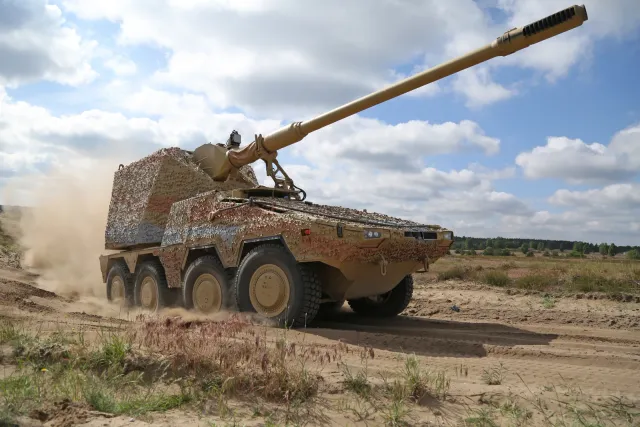
U.S. Army photo by Maj. Alexander Watkins, public domain, via Wikimedia Commons
Two of the seven headline procurement announcements to come out of Eurosatory 2026 were actual signed contracts. The other five were memoranda of understanding, a single letter of intent, or a program still, in the supplier’s own words, “expected to be signed this year.” Eurosatory closed on June 19 in Villepinte, France, the biggest edition in its 59-year history, by exhibitor count and floor space. That scale produced a genuine flood of news. It also produced the usual gap between what a trade-show press release implies and what a buyer can actually bank on. This is the first in a recurring series covering major defense trade shows through that lens: not what was on the floor, but what a procurement office should actually do with it.
What actually happened at Eurosatory 2026, and when?
Eurosatory ran June 15-19, 2026, at the Paris Nord Villepinte exhibition centre, the biennial land and air-land defense show that has run in Paris since 1967. This edition drew more than 2,600 exhibitors from 68 countries across roughly 185,000 square meters, according to Shephard Media’s show roundup. Six capability clusters got dedicated exhibition treatment this year: autonomous systems, counter-UAS, AI-driven battlefield networking, directed energy, electronic warfare, and space as an operational domain. That cluster list is itself a signal. A show organizer does not build a themed hall around directed energy or space unless exhibitor demand and buyer interest already justify the floor space.
Which of the headline deals were real contracts, and which were paper?
Sorting through show-week coverage, seven announcements stand out as the deals a procurement-focused reader would actually want to track. Only two of them are contracts with a counterparty obligated to deliver something specific, on a schedule, for a price (even an undisclosed one).
| # | Announcement | Parties | Status | What it means for buyers |
|---|---|---|---|---|
| 1 | NLAW replenishment | France’s DGA / Saab | Signed contract | Deliveries run 2026-2030, trainers included, option to order more. Unit cost cited by French sources at EUR 60,000-100,000, not confirmed in the contract itself. |
| 2 | Counter-UAS command-and-control subcontract | EOS/MARSS, selected by BAE Systems | Signed contract (as subcontractor) | MARSS’s NiDAR platform becomes the C2 layer for BAE’s Anti Threat System (BATS). EOS also announced a $10M AI hub in Nice, up to 150 jobs over three years. |
| 3 | Protected-mobility partnership | Roshel (Canada) / Daimler Truck (Germany) | MOU / partnership framework | A framework to jointly develop armored vehicles for NATO and allied buyers. No vehicle spec, no numbers, no delivery date yet. |
| 4 | UGV engineering-reconnaissance partnership | Milrem Robotics / CNIM Systèmes Industriels | MOU | Joint development of unmanned engineering-reconnaissance capability. Pre-product. |
| 5 | UGV-missile integration | Milrem Robotics / Frankenburg Technologies | MOU | Integrating Frankenburg’s Mark I missile onto Milrem’s Type-X/Vector UGV family. Pre-integration, not a fielded weapon. |
| 6 | Counter-UAS letter of intent | U.S. Army Secretariat + NATO allies/partners | Letter of intent | Signed at a ceremony during the show; commits signatories to coordinate on counter-UAS interoperability, not to buy a specific system. |
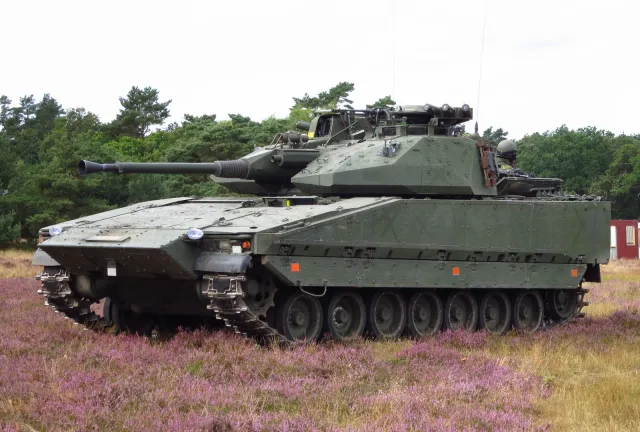
| 7 | Nordic CV90 MkIV buy | Norway, Finland, Sweden, Lithuania / BAE Systems Hägglunds | Awaiting signature | 400-plus vehicles to a near-common spec, described by BAE as likely worth “billions of dollars.” Best offer submitted; contract expected later in 2026. |
Memoranda of understanding, letters of intent, and unsigned frameworks outnumber actual signed contracts five to two, so only the France-Saab NLAW order can currently be modeled into a delivery schedule.
The France-Saab NLAW order is the cleanest case: a named agency, a named contractor, a delivery window, and an option clause, reported by Janes. Everything else on this list is either a framework for a future deal, a coordination pledge, or a program the supplier itself says isn’t signed yet. None of that makes the MOUs meaningless, industrial partnerships routinely precede real production contracts by a year or more, but a procurement officer reading Eurosatory coverage should file “MOU signed at Eurosatory” and “contract signed at Eurosatory” in two very different buckets.
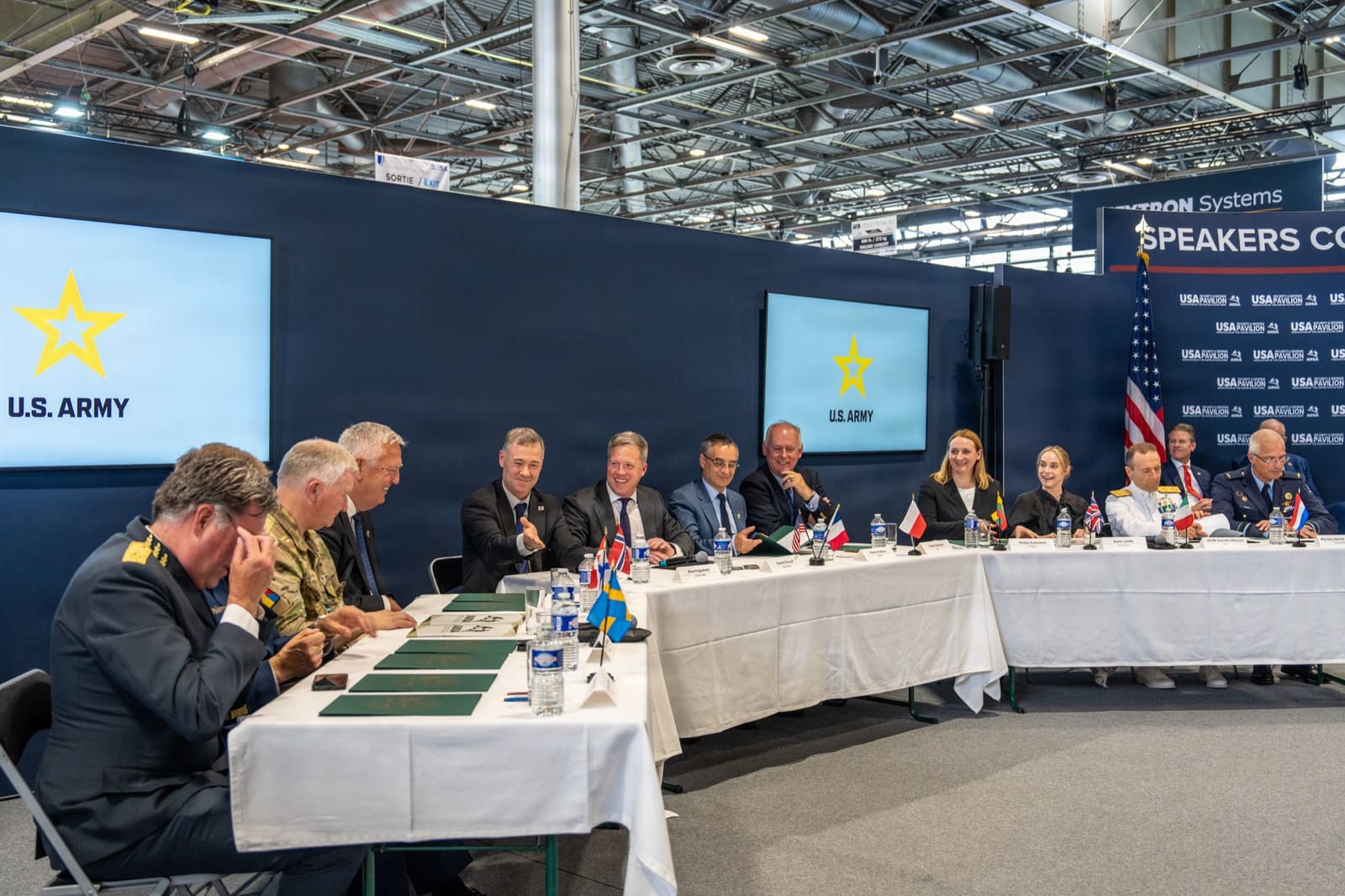
What does the counter-drone signing spree actually commit anyone to?
Counter-drone was the single most repeated theme of the show. Ondas Holdings displayed its MODUS mobile counter-UAS platform; DroneShield and MARSS showed detection and defeat systems; EOS Defence expanded its air-defense line and, separately from the NATO letter of intent, was selected by BAE Systems to provide the command-and-control layer for BAE’s Anti Threat System, backed by a real $10 million investment in a Nice engineering hub. Counter-UAS also got its own dedicated cluster at the show, alongside autonomous systems, a level of programming emphasis Eurosatory does not extend to every capability area.
Set against that, the ceremony where Secretary Driscoll signed a counter-UAS letter of intent with NATO allies is the weakest instrument on this list in strict contractual terms. A letter of intent signals political alignment on interoperability and, likely, future joint procurement. It does not obligate a single signatory to buy a single interceptor. The buyer-relevant read: the counter-drone market is real and growing fast enough to justify a $10M standalone facility investment from one mid-size player, but the multinational coordination step announced at the ceremony is still a promise to talk, not an order.
Why is armored-vehicle production the quiet story of the show?
The loudest headlines went to drones. The bigger dollar figures sat with wheeled and tracked vehicles. The Nordic CV90 program, still unsigned, is described by BAE Systems Hägglunds itself as likely worth billions of dollars for 400-plus CV90 MkIV vehicles split across Norway, Finland, Sweden and Lithuania, per Shephard Media’s reporting. Estonia was originally part of that group and dropped out earlier in 2026, a reminder that even a near-final multinational buy can lose a signatory before ink hits paper.
Support infrastructure for heavier vehicles also got real floor space. General Dynamics European Land Systems and Germany’s FFG showed a prototype Piranha Heavy Mission Carrier Advanced Recovery Vehicle, built on a Piranha 10x10 platform specifically to recover and support heavier wheeled artillery like the RCH 155, according to Shephard’s land-systems coverage. That is a tell worth noting for anyone tracking artillery buys: when a manufacturer builds a dedicated heavy recovery vehicle around a specific howitzer platform, it is a bet that platform is entering, or already in, real production volume, not a one-off demonstrator. On the unmanned-ground-vehicle side, a large UGV built on Patria’s TRACKX platform with a Renk HSWL 076 transmission previewed the same pattern one tier down: established wheeled-vehicle manufacturers extending their platforms into uncrewed variants rather than competing UGV-first startups building from scratch.
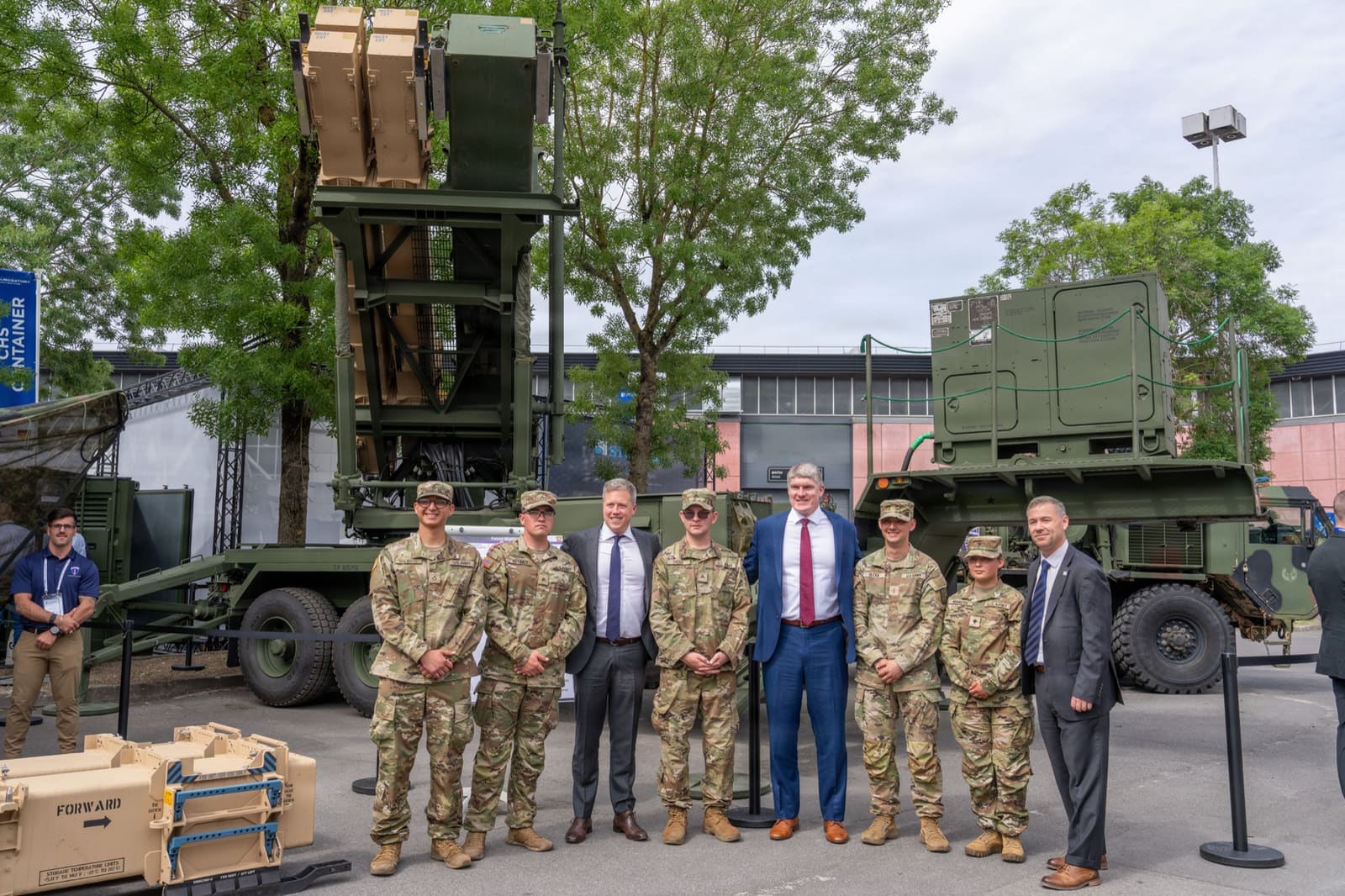
Milrem Robotics used the show to formalize five separate partnerships (Hanwha, EOS Defence, Poland’s PGZ finalized in the preceding three months, plus CNIM and Frankenburg signed at Eurosatory itself), and its CEO said first deliveries of the company’s large Vector UGV to a UAE customer are targeted for 2029-30, per Shephard’s coverage of Milrem’s announcements. A three-to-four-year gap between an MOU and first delivery is normal for this category. It is also a useful benchmark: if a competing UGV vendor claims a shorter timeline off a fresh Eurosatory MOU, that claim deserves the same scrutiny as any other unverified performance figure in this database.
What should a buyer actually take from Eurosatory 2026?
Three things, in order of how directly they affect a procurement decision. First, exactly one weapons contract on this list, France’s NLAW order, is signed, priced (directionally), and dated. Treat it as the only Eurosatory 2026 announcement you can currently model into a delivery schedule. Second, counter-drone spending intent is real and broad-based, visible in a dedicated exhibition cluster, a genuine facility investment in Nice, and a multinational political commitment, but none of that is yet a specific system order; expect the actual contracts to land through 2026 and 2027, not at the show. Third, the vehicle-support ecosystem, recovery vehicles built around specific howitzers, UGV variants of established wheeled platforms, is a better production-volume signal than any single new-platform unveiling, because manufacturers do not build dedicated support hardware for programs they expect to stay small.
None of the seven deals above should be read as evidence of anything happening at the speed a press release implies. Run your own comparison of the platforms actually named here in the Advisor, or check where CV90, NLAW, RCH 155, Piranha and Patria AMV rank against peers by type before treating a Eurosatory headline as a fielded capability.
Systems in this comparison
Every system covered above, with its photo and, where available, a video. Tap a card to open the full spec sheet.
Compare these side by side →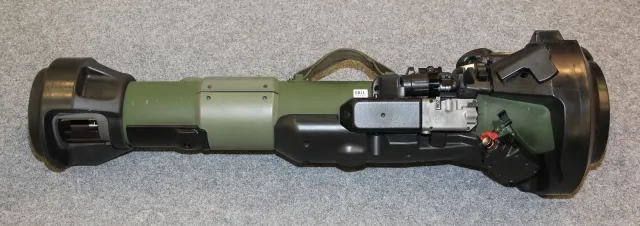
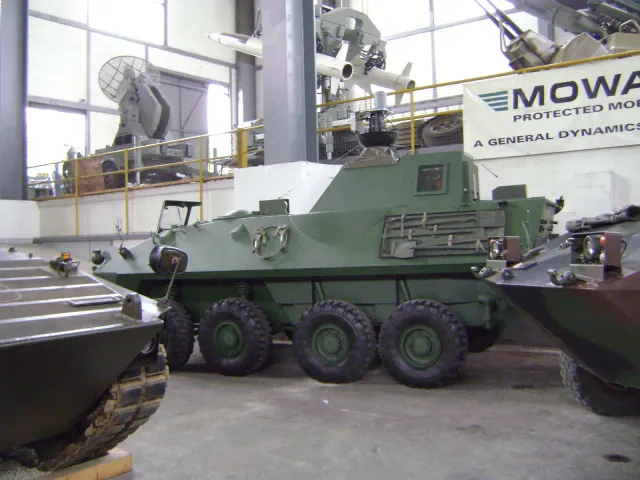
IFV / APC
Piranha (8x8)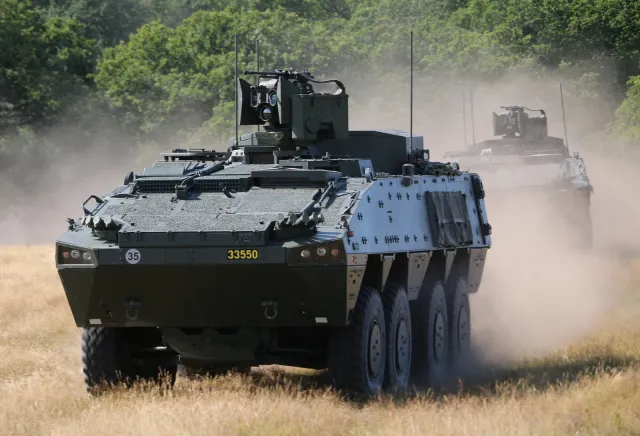
IFV / APC
AMV (Armoured Modular Vehicle)Frequently asked questions
When was Eurosatory 2026 held, and how big was it? +
June 15-19, 2026, at the Paris Nord Villepinte exhibition centre. Trade press put it at more than 2,600 exhibitors from 68 countries across roughly 185,000 square meters, the largest edition in the show's 59-year history.
What was the only fully signed weapons contract announced at Eurosatory 2026? +
France's DGA ordered NLAW anti-tank missiles from Saab, with deliveries running 2026 to 2030, indoor and outdoor trainers included, and an option to order more. French military sources cited a per-unit cost of roughly EUR 60,000 to 100,000, but the contract's total value was not disclosed.
Is the Nordic CV90 program a done deal? +
No. As of the show, BAE Systems Hägglunds said its best offer had been submitted for a joint buy of 400-plus CV90 MkIV vehicles by Norway, Finland, Sweden and Lithuania. The company itself described the contract as expected to be signed later in 2026, not signed at Eurosatory.
What does the NATO counter-drone signing at Eurosatory 2026 actually commit member states to? +
It is a letter of intent, not a procurement contract. U.S. Army Secretary Dan Driscoll signed it with NATO allies and partners to coordinate on counter-UAS capability development. No state committed to buying a specific system in a specific quantity.
What's the biggest procurement-relevant trend to watch out of Eurosatory 2026? +
Memoranda of understanding and partnership frameworks outnumbered signed contracts more than 2 to 1 among the show's headline deals. Buyers and analysts should track which of these convert into priced, dated contracts over the following 12 months rather than treating a show-week press release as a commitment.
Related reading


