Pentagon Accelerates Low-Cost Cruise Missile with FAMM Framework
The Department of War signed multiyear frameworks with Anduril, CoAspire and Zone 5 to validate and mass-produce 28,000 low-cost cruise missiles by 2031.

U.S. Air Force Research Laboratory courtesy photo, DVIDS, public domain
The Department of War signed multiyear framework agreements with three companies, Anduril, CoAspire and Zone 5, to validate and eventually mass-produce a new generation of low-cost, air-launched cruise missiles under the Family of Affordable Mass Missiles (FAMM) program, according to the department’s own July 15 release, independently corroborated by Military Times and Air & Space Forces Magazine. Air & Space Forces’ reporting, drawn from budget documents, puts the program at 28,000 missiles across fiscal years 2027 through 2031 for roughly $12.6 billion, an average of about $450,000 per missile against a Tomahawk Block V unit cost of roughly $1.89 million, per Pentagon budget figures reported by The War Zone.
What the Pentagon actually signed
The agreements are not production contracts. They are framework deals covering testing and qualification, the step that has to happen before any missile is competitively selected for an actual buy. “The Arsenal of Freedom of the 21st Century requires doing business differently,” Michael P. Duffey, Under Secretary of War for Acquisition and Sustainment, said in the department’s release, describing the deals as “expanding the defense industrial base, fielding capabilities faster, and attracting private investment to fund innovation and increase manufacturing output.”
The structural piece that matters most to industry is contracting certainty. Congress gave the Department of War five-year multiyear authorization for FAMM in the fiscal 2026 National Defense Authorization Act, and the department is now seeking a seven-year extension in the FY2027 NDAA and appropriations bill specifically to give newer entrants like CoAspire and Zone 5, neither of which has built a major U.S. missile program before, the demand-signal stability to invest in their own supply chains without waiting for annual budget cycles to confirm the government will actually keep buying. The procurement model uses firm-fixed-price contracting with a guaranteed minimum quantity floor, splitting production shares across all qualified vendors so multiple lines stay warm and can surge if one falls behind, while contractors that beat their production schedules become eligible for additional quantities.
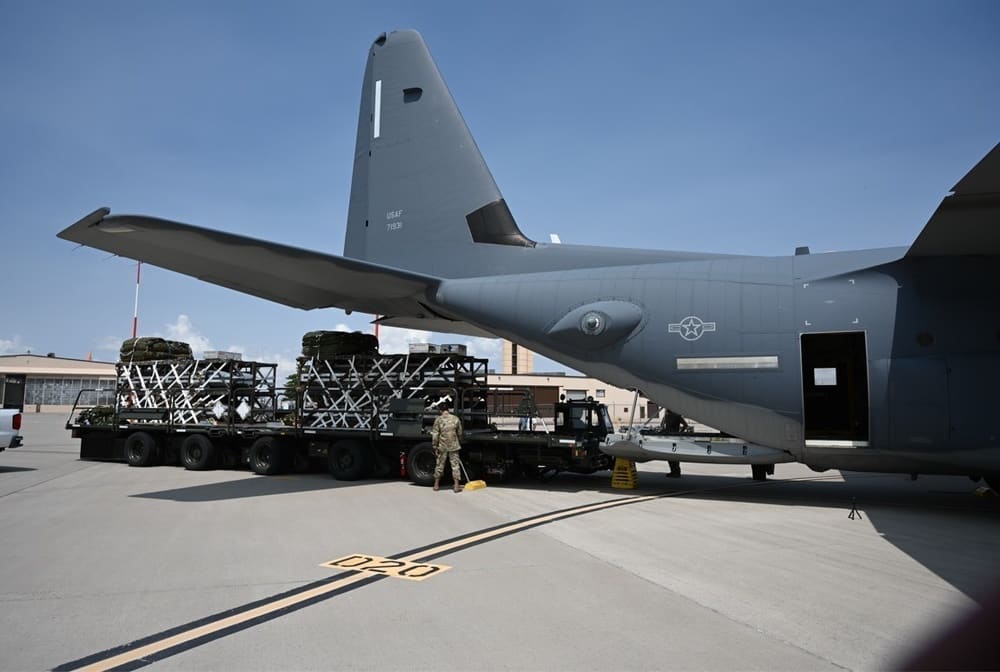
Three missiles, three approaches to the same problem
Each vendor is chasing the same target cost with a different manufacturing approach, and all involve figures that are company claims pending independent government validation rather than confirmed performance data.
Anduril’s entry is the Barracuda-500, an air-launched member of the same Barracuda family as the Barracuda-500M already tracked in WeaponSpecs’ systems database, a related but distinct surface-launched variant the Army is separately procuring at least 3,000 units of starting in 2027. Anduril’s own published figures for the Barracuda line put range at more than 500 nautical miles with roughly a 45-kilogram warhead, and the missile is built for launch from standard 20-foot ISO shipping containers converted into box launchers, from cargo aircraft via the Rapid Dragon-style palletized system, or dropped conventionally from fighters and bombers.
CoAspire’s Rapidly Adaptable Affordable Cruise Missile, or RAACM, takes the additive-manufacturing route furthest: the airframe is 3D-printed with no custom tooling required during assembly, a deliberate choice to cut the labor and setup cost that drives up traditional missile prices. RAACM shares its physical footprint with a standard MK-82 general-purpose bomb, meaning any aircraft already certified to carry a GBU-38 guided bomb, F-15E, F/A-18, F-16 or F-35, can carry it with no new integration work, and the company has also shown it configured for cargo-plane pallet release and ship-deck launch.
Zone 5, the smallest and newest of the three, offers what Air & Space Forces’ reporting identifies as the AGM-188 Rusty Dagger in lugged and palletized variants; the company was acquired by Norway’s Kongsberg in June 2026, giving it access to an established European defense manufacturer’s production and supply infrastructure even as a relative newcomer to U.S. munitions contracting.
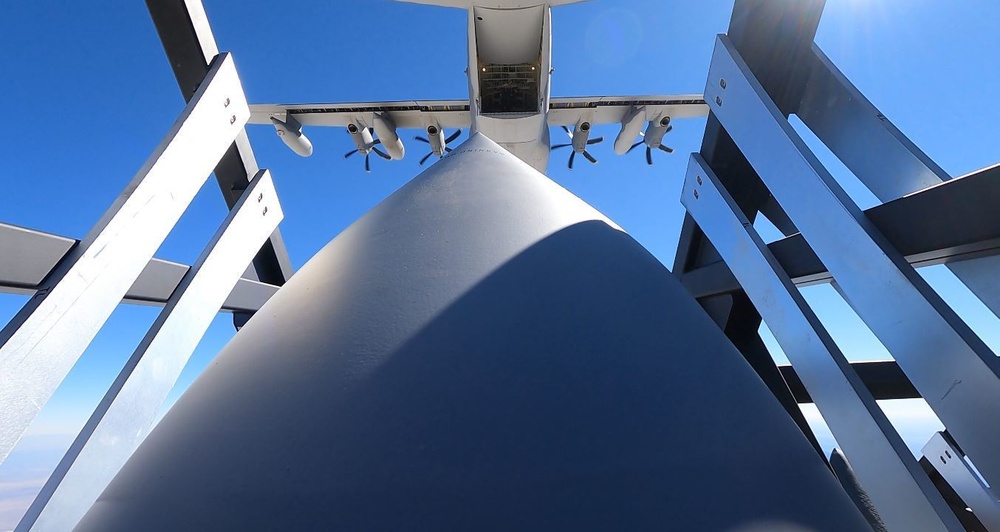
The math behind “affordable”
Air & Space Forces’ budget-document breakdown shows a gradual ramp: roughly 1,000 missiles in FY2027 for about $355 million, climbing to a targeted 7,990 missiles in FY2031 for about $4.13 billion, a five-year total near 28,000 missiles and $12.6 billion. That averages roughly $450,000 per missile across the ramp, though Military Times separately reported a longer-term target closer to $218,000 per round at full-rate production, a vendor cost model rather than a government-confirmed figure. Either number sits well below Tomahawk’s roughly $1.89 million or the JASSM-ER’s reported price above $1.3 million, the two weapons FAMM is meant to supplement, not replace.
FAMM's figure is the five-year program average ($12.6 billion across roughly 28,000 missiles per Air & Space Forces' budget-document reporting); Tomahawk Block V's figure is drawn from Pentagon budget documents as reported by The War Zone. Both are averages, not fixed prices, and FAMM's number will move as testing and qualification proceed.
FAMM builds on a companion effort, the Low-Cost Containerized Missile program, which applies the same additive-manufacturing approach to a ground-launched variant; officials have framed both as converting stockpile mass into a strategic asset rather than a budget liability. Retired Col. Mark Gunzinger, quoted by Air & Space Forces, called the missiles “short- and long-term solutions” to depleted munitions stockpiles.
What isn’t settled yet
None of the three vendors has a missile fielded today. The frameworks buy testing and qualification time, not hardware in inventory, and “ground and flight tests” are described only as happening in “coming months,” with no dates disclosed. The seven-year multiyear authority the program needs still requires FY2027 congressional approval; until then, the current five-year NDAA authorization is the only legal basis it has. Anduril’s 2027 delivery target is a company projection, not a locked date.
Sources
- Department of War Announces Landmark Agreements With New Entrants to Accelerate Low-Cost, Air-Launched Cruise Missiles — GlobalSecurity.org (mirroring Department of War release), Jul 15, 2026
- US Air Force turns to cheaper cruise missiles it can buy by the thousand — Military Times, Jul 15, 2026
- Pentagon announces multiyear deals to buy thousands of affordable cruise missiles — Air & Space Forces Magazine, Jul 15, 2026
- What The Navy's Ship-Launched Missiles Actually Cost — The War Zone, May 1, 2024
Systems mentioned
Every system named in this story, with its photo and, where available, a video. Tap a card to open the full spec sheet.
Compare these side by side →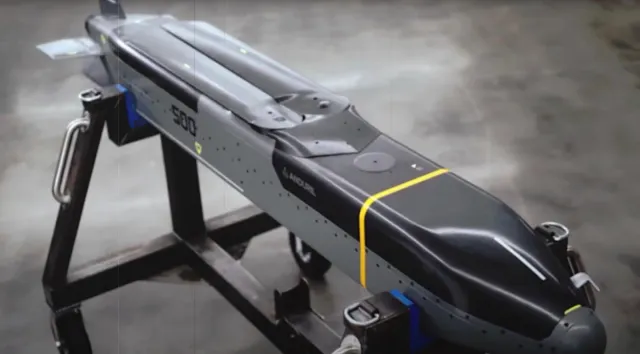
Missile
Barracuda-500M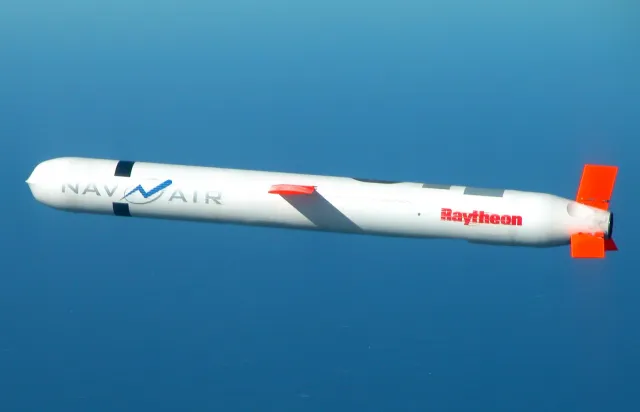
Missile
Tomahawk Block VFrequently asked questions
Why does the U.S. need 28,000 low-cost cruise missiles? +
Pentagon planners have said publicly for years that existing cruise missile stockpiles, built around Tomahawk and JASSM at $1.3 million to nearly $2 million apiece, are too small and too expensive to sustain a high-volume, multi-theater conflict against a peer competitor. FAMM is designed to buy strike mass: enough missiles to matter in sustained attrition, not just a limited number of exquisite ones.
What actually makes these missiles cheaper than Tomahawk or JASSM? +
Simplified, additively manufactured airframes with far fewer parts and no custom tooling, software-defined guidance instead of bespoke hardware, and a firm-fixed-price multiyear contract structure that gives vendors the production-volume certainty to invest in their own supply chains. CoAspire's RAACM, for example, is 3D-printed and shares its physical dimensions with a standard MK-82 bomb, meaning no new aircraft integration work is required.
When do these missiles actually enter service? +
Not yet. The framework agreements cover testing and qualification, not production. The Department of War is separately seeking a seven-year multiyear procurement authorization in the fiscal 2027 defense bill; only after missiles pass validation and win a competitive production award do deliveries begin, with FY2027 budget documents penciling in roughly 1,000 missiles as a first tranche.
Is FAMM replacing the Tomahawk? +
No. Tomahawk remains the Navy's primary ship- and submarine-launched land-attack weapon for high-value targets, at a reported unit cost of roughly $1.89 million based on Pentagon budget documents. FAMM is an Air Force program built to supplement that inventory with a much larger volume of cheaper, air-launched weapons for engagements where Tomahawk's price and production rate can't keep pace with demand.
More news


