Five Nuclear Subs Publish the Exact Same 25 Knots
Nuclear boats average 26.5 knots submerged, conventional boats 20.2, but the published number understates the real divide. Here is what submerged speed hides.

Via Wikipedia, Virginia-class submarine (shown for identification)
Of the 35 submarine classes in the WeaponSpecs database, 31 publish a submerged speed, and the split by propulsion is stark: nuclear boats average 26.5 knots, conventional (diesel-electric and AIP) boats 20.2. That three-knot gap on paper is misleading in both directions. Five Western nuclear boats, the US Los Angeles, Ohio and Virginia classes, the UK Vanguard and France’s Triomphant, all publish an identical 25 knots, a number the US Navy itself describes only as “over 25 knots” while analysts put the real figure at 30 to 33. Meanwhile the three fastest published figures on the whole list, Russia’s Akula at 33 and Yasen at 31, and China’s Type 093 at 30, are state claims with no independent confirmation. The spec that actually separates the two fleets, sustained submerged transit speed, does not appear on a spec sheet at all.
Key takeaways:
- Of 35 submarine classes in the WeaponSpecs database, 31 (89%) publish a submerged speed. Nuclear boats average 26.5 knots, conventional (diesel-electric and AIP) boats 20.2.
- Five Western nuclear boats (US Los Angeles, Ohio, Virginia; UK Vanguard; France Triomphant) publish an identical 25 knots, a deliberate floor: the US Navy lists “over 25 knots” while the real figure is classified and analysts estimate 30 to 33.
- The three highest figures, Akula 33, Yasen 31 and Type 093 Shang 30 knots, are all Russian and Chinese state claims, not independently verified.
- Every conventional boat sits in a narrow 19 to 22 knot band, but that is a battery sprint holdable for about an hour. An AIP boat’s sustainable submerged transit speed is only 4 to 6 knots.
- The spec that actually divides the fleet, sustained submerged speed, is not published at all.
Why do five nuclear submarines all publish exactly 25 knots?
A round number repeated across five different navies and three different shipbuilders is not a coincidence of hydrodynamics, it is a publication policy. The US Virginia-class submarine, the older Los Angeles and Ohio classes, Britain’s Vanguard, and France’s Triomphant all clear the “25 knots” bar and stop there. Actual top speed is one of the most closely guarded figures a navy holds, because it bounds an adversary’s targeting solution and reveals reactor and hull performance that took decades and billions to develop. So the public figure becomes a floor, not a ceiling. The US Navy’s own language for its attack boats is “in excess of 25 knots,” and open-source estimates built from propulsion plant output and hull form put the Los Angeles class closer to 30 to 33 knots submerged. For a buyer comparing published data sheets, the practical lesson is that a Western nuclear boat’s 25 should be read as “at least 25,” while everything above it on a comparison chart is either an older, less guarded design or a claim from a government with less incentive to round down.
Who claims the fastest boats, and can we trust the number?
Nuclear boats hold every slot above 22 knots; conventional boats pile into a three-knot band from 19 to 22. The three highest figures (Akula, Yasen, Type 093) are Russian and Chinese state claims, not independently verified. The one nuclear boat in the pack, the US Columbia, is a not-yet-commissioned ballistic-missile boat built for quiet, not speed.
Sitting at the top of that chart are Russia’s Akula-class submarine at a claimed 33 knots and the newer Yasen-class submarine at 31, with China’s Type 093 Shang close behind at 30. None of these figures comes from an independent test, a third-party trial, or a released engineering document. They are manufacturer or Ministry of Defense claims, repeated across open-source references without a verification trail, and Russian and Chinese figures throughout this dataset should be read that way by default. That does not mean the numbers are fiction, both navies build genuinely fast reactor-driven hulls, but a buyer using this chart to rank threats should treat 33 and 31 as ceilings claimed by the source, not measurements confirmed by anyone outside it, while treating the UK’s 29-knot Astute-class submarine figure as closer to a hard number precisely because Western navies under-round rather than over-round.
Why does every conventional submarine stall at 20 knots?
Look at the bottom two-thirds of the chart above and the pattern is almost mechanical: boat after boat, from Sweden’s Gotland to Germany’s Type 212A to Japan’s Soryu, lists 20 knots submerged, with the whole conventional fleet packed into a 19 to 22 knot band. That uniformity is not a coincidence of naval architecture converging on one answer, it is a shared physical ceiling. A diesel-electric or AIP boat’s underwater speed comes from a battery bank, and 20 knots is roughly the maximum draw that bank can sustain before it empties, typically inside an hour. Once the battery is spent, the boat has to slow down or snorkel. Sustained transit at anything near that headline figure is not realistic, and the number that actually matters for a mission planner, how fast the boat can go and keep going, is dramatically lower.
“The maximum submerged transit speed of a submarine utilizing a conventional AIP system is still only 4 to 6 knots,” wrote Sarah Kirchberger, director of the Institute for Security Policy at Kiel University, and Christopher Carlson, a retired US Navy captain, in an analysis for CIMSEC (September 2024).
A reactor holds its published speed indefinitely, and the Western 25 is itself a conservative floor. A conventional boat's 20 knots is a battery sprint of roughly an hour; its sustainable submerged transit on an air-independent plant is only 4 to 6 knots. Illustrative figures for one representative boat of each type, not a fleet average.
That 4 to 6 knot figure is the real dividing line in this whole dataset, and it never shows up in a spec sheet comparison because manufacturers publish peak sprint speed, not endurance speed. A buyer sizing a boat for its intended role needs to ask for both numbers separately, since the gap between the two tells you far more about how the boat will actually operate on patrol than the published top speed ever will. Germany’s Type 212A submarine and Sweden’s Gotland-class submarine, both AIP designs built around exactly this tradeoff, illustrate the point: their fuel cells buy near-silent loitering at single-digit speed for weeks, and the 20-knot figure on their data sheet is a burst capability held in reserve, not a cruising speed.
So what does submerged speed actually buy?
Speed is a decision variable, not a virtue. A nuclear boat that can hold 25 to 33 knots indefinitely buys sustained repositioning across an ocean basin, the ability to keep pace with a carrier strike group, and area-denial coverage across a wide patrol zone, which is exactly why every blue-water navy that can afford a reactor builds one. A conventional boat trades that reach for a dramatically lower price per hull, a smaller crew, and, when running on battery or AIP at single-digit speed, an acoustic signature that can be harder to detect than a reactor plant running its cooling pumps. Neither approach is objectively better; they are sized to different missions, ocean transit and forward presence for nuclear boats, ambush from a fixed patrol box for conventional ones. For a fuller breakdown of that tradeoff, including cost and endurance, see our guide to nuclear versus AIP submarines, and browse the full submarine class database for the complete propulsion and armament picture across all 35 classes.
Every submarine class ranked by published submerged speed
Based on our analysis of the 31 of 35 submarine classes in the WeaponSpecs database that publish a submerged speed.
| # | Class | Origin | Propulsion | Submerged speed (kn) | Status |
|---|---|---|---|---|---|
| 1 | Akula-class (Project 971) | Russia | Nuclear | 33 * | active |
| 2 | Yasen-class | Russia | Nuclear | 31 * | active |
| 3 | Type 093 Shang | China | Nuclear | 30 * | active |
| 4 | Astute class | United Kingdom | Nuclear | 29 | active |
| 5 | Borei-class | Russia | Nuclear | 29 * | active |
| 6 | Type 094 Jin | China | Nuclear | 26 * | active |
| 7 | Los Angeles-class Submarine | United States | Nuclear | 25 | legacy |
| 8 | Ohio-class Submarine | United States | Nuclear | 25 | active |
| 9 | Triomphant class | France | Nuclear | 25 | active |
| 10 | Vanguard class | United Kingdom | Nuclear | 25 | active |
| 11 | Virginia-class Submarine | United States | Nuclear | 25 | active |
| 12 | Arihant class | India | Nuclear | 24 | active |
| 13 | Suffren class | France | Nuclear | 24 | active |
| 14 | Type 209 | Germany | Diesel-electric | 22 | active |
| 15 | Chang Bogo-class submarine | South Korea | Diesel-electric | 21.5 | active |
| 16 | Walrus class | Netherlands | Diesel-electric | 21 | active |
| 17 | A26 Blekinge-class | Sweden | AIP (diesel) | 20 | announced |
| 18 | Columbia-class Submarine | United States | Nuclear | 20 | announced |
| 19 | Dosan Ahn Changho-class submarine | South Korea | AIP (diesel) | 20 | active |
| 20 | Gotland-class | Sweden | AIP (diesel) | 20 | active |
| 21 | Kalvari class | India | Diesel-electric | 20 | active |
| 22 | Kilo-class (Project 636.3) | Russia | Diesel-electric | 20 | active |
| 23 | Reis-class | Turkey | AIP (diesel) | 20 | active |
| 24 | Scorpene class | France | Diesel-electric | 20 | active |
| 25 | Soryu-class | Japan | AIP (diesel) | 20 | active |
| 26 | Taigei-class | Japan | Diesel-electric | 20 | active |
| 27 | Salvatore Todaro class (U212A) | Italy | AIP (diesel) | 20 | active |
| 28 | Type 039A/B Yuan | China | AIP (diesel) | 20 | active |
| 29 | Type 212A | Germany | AIP (diesel) | 20 | active |
| 30 | Type 214 | Germany | AIP (diesel) | 20 | active |
| 31 | S-80 Plus | Spain | AIP (diesel) | 19 | active |
* Russian and Chinese figures are manufacturer or state claims, not independently verified. Western nuclear figures are official floors (“over 25 knots”); actual top speeds are classified.
Reading down that table, the story is less about who tops the list and more about where the bands break: the six boats above 25 knots are Russian, Chinese and one British hull whose figures deserve the most scrutiny in this whole dataset, the five-way tie at 25 is a Western publication convention rather than five identical hulls, and the long run of 20s at the bottom is a battery limit shared by nearly every conventional navy on earth regardless of budget or hull design.
Run any two of these classes head to head, alongside sensors, weapons and cost, with the comparison tool or get a mission-fit recommendation from the procurement advisor.
Sources
- Neither Fish nor Fowl: China's Development of a Nuclear Battery AIP Submarine (Kirchberger & Carlson), CIMSEC
- Los Angeles-class submarine, Wikipedia (official over-25-knots figure; actual classified; analyst 30-33 kn estimate)
- Nuclear submarine, Wikipedia
- Air-independent propulsion, Wikipedia
- The Navy's Los Angeles-Class Submarine Has a Message for NATO and the Russian Navy, 19FortyFive
Systems in this comparison
Every system covered above, with its photo and, where available, a video. Tap a card to open the full spec sheet.
Compare these side by side →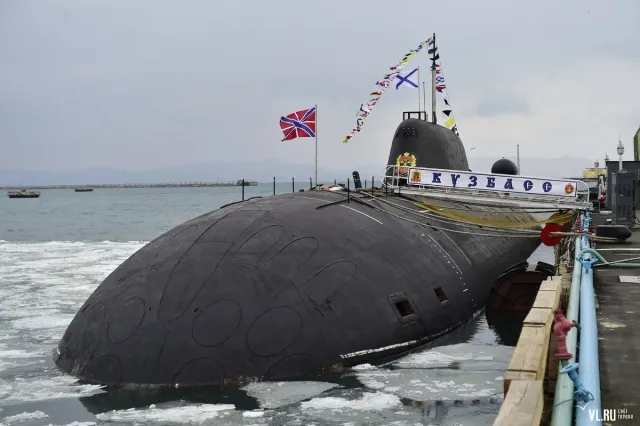
Submarine
Akula-class (Project 971)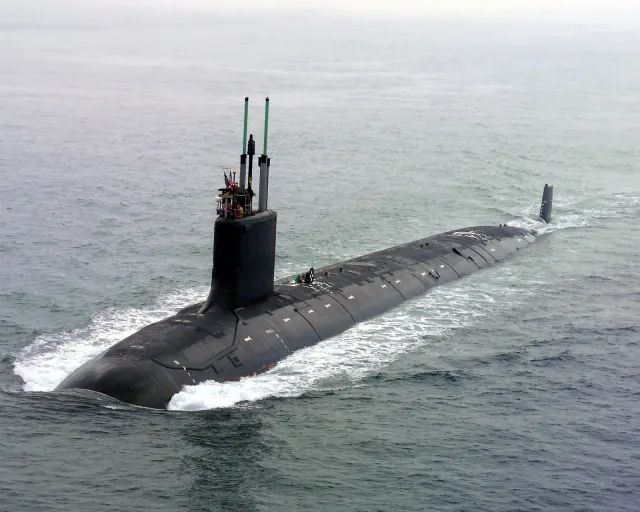
Submarine
Virginia-class Submarine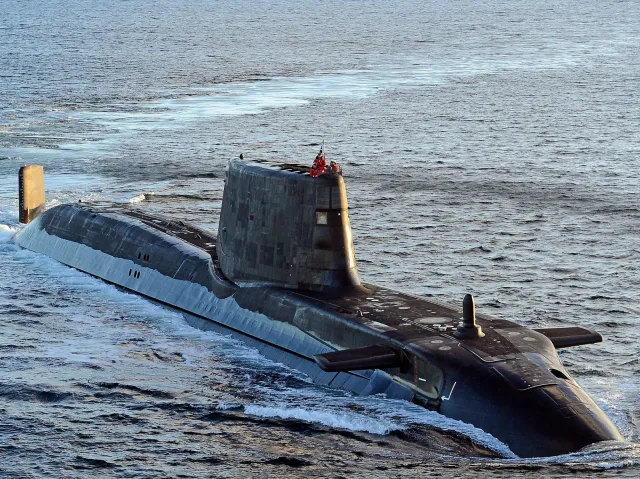
Submarine
Astute class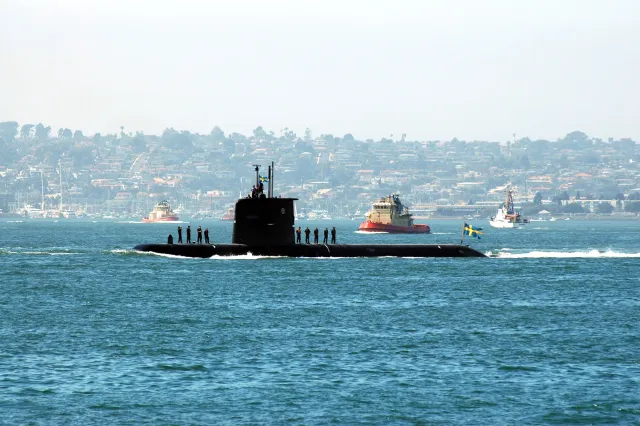
Submarine
Gotland-class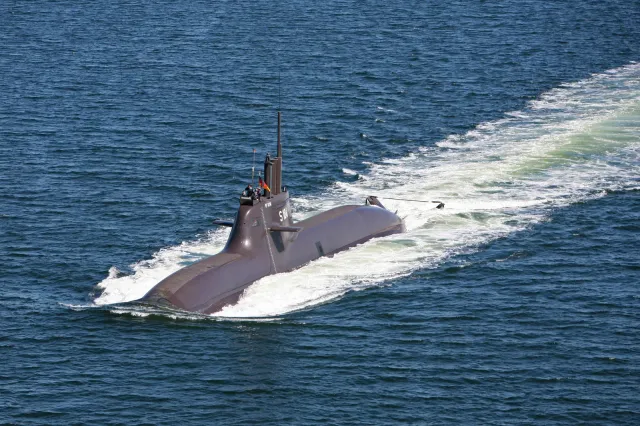
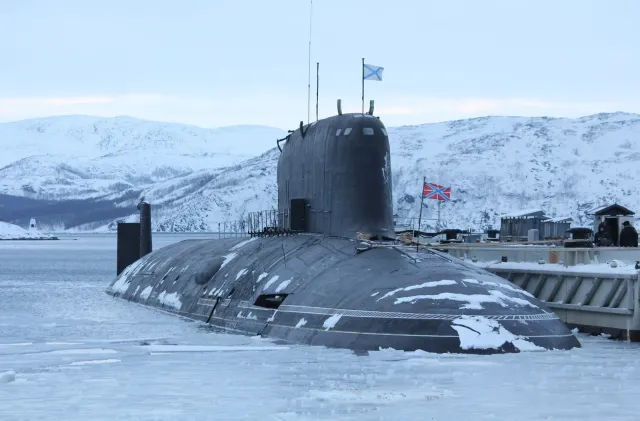
Submarine
Yasen-classFrequently asked questions
What is the fastest submarine in the WeaponSpecs database by submerged speed? +
Russia's Akula-class at a claimed 33 knots, followed by the Yasen-class (31) and China's Type 093 Shang (30). All three are Russian or Chinese state figures and are not independently verified.
Why do so many nuclear submarines list exactly 25 knots? +
Western navies publish a conservative floor rather than the classified true top speed. The US Navy states its attack submarines make over 25 knots; published analyst estimates put the Los Angeles class at 30 to 33 knots.
How fast can a diesel-electric or AIP submarine go underwater? +
Most publish about 20 knots, but that is a short battery sprint. Sustainable submerged transit on an air-independent propulsion plant is only about 4 to 6 knots.
Are nuclear submarines always faster than conventional ones? +
On sustained submerged speed, effectively yes. A reactor holds high speed indefinitely while a conventional boat drains its battery in under an hour. On a brief sprint the gap narrows, and a well-run AIP boat can be harder to detect.
Does a higher published submerged speed make a submarine better? +
Not by itself. Speed buys repositioning and the ability to escort fast surface groups. Conventional boats trade it for lower cost and acoustic stealth inside a fixed patrol area.
Related reading


