K9 Thunder Is Now Built Under License in Four Countries
South Korea's K9 Thunder is license-built in four countries, tied for the most of any system in a 61-system WeaponSpecs license-production census.

Via Wikipedia, K9 Thunder (shown for identification)
South Korea’s K9 Thunder self-propelled howitzer is now built under license in four countries: Turkey, India, Poland, and Egypt. That’s good for second place in a curated WeaponSpecs pass through 61 well-documented systems checked for licensed foreign production, just behind three systems tied at five countries apiece, and it makes K9 Thunder the most active of the modern, commercially-driven systems on the list, the only one still visibly adding countries in real time. Of the 61 systems checked, 35 came back with at least one sourced license-production entry, 72 entries in total spread across 39 countries. The other 26 turned up no reliable documentation of licensed production at all, a gap worth pausing on before the ranking itself.
These 61 systems were chosen as the strongest candidates for cross-border manufacturing history, not pulled at random. Even with that head start, 26 came back empty: open-source, English-language reporting on who builds a given weapon abroad is thin even for well-known, widely exported programs, and a missing entry here means undocumented, not disproven.
Ranking Systems by License-Production Countries
Ranked by countries known to build each system under license, three systems tie for the top spot at five each, and five more tie for second at four.
| System | Origin Country | Systems Type | Countries With License Production | Count |
|---|---|---|---|---|
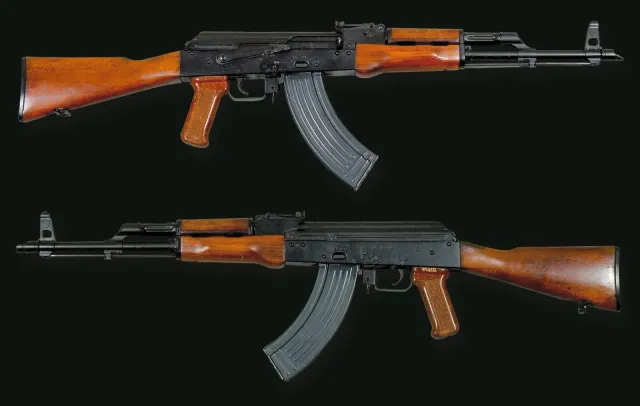
| AKM | Soviet Union | Assault rifle | Poland, East Germany, Bulgaria, Hungary, Egypt | 5 |
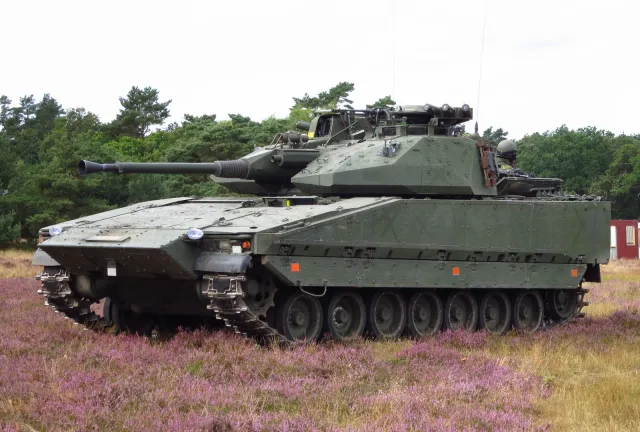
| CV90 | Sweden | Infantry fighting vehicle | Norway, Netherlands, Denmark, Finland, Switzerland | 5 |
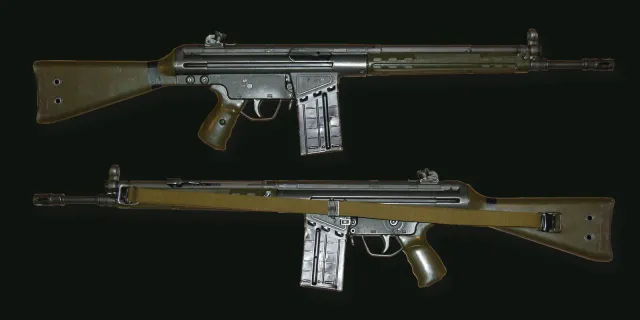
| G3 | West Germany | Battle rifle | Pakistan, Turkey, Portugal, Greece, Iran | 5 |
| AK-47 | Soviet Union | Assault rifle | China, Bulgaria, East Germany, Hungary | 4 |
| Beretta 92 | Italy | Pistol | Turkey, Chile, Egypt, United States | 4 |
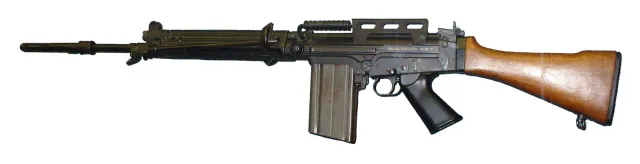
| FN FAL | Belgium | Battle rifle | United Kingdom, Australia, Canada, Austria | 4 |
| K9 Thunder | South Korea | Self-propelled howitzer | Turkey, India, Poland, Egypt | 4 |
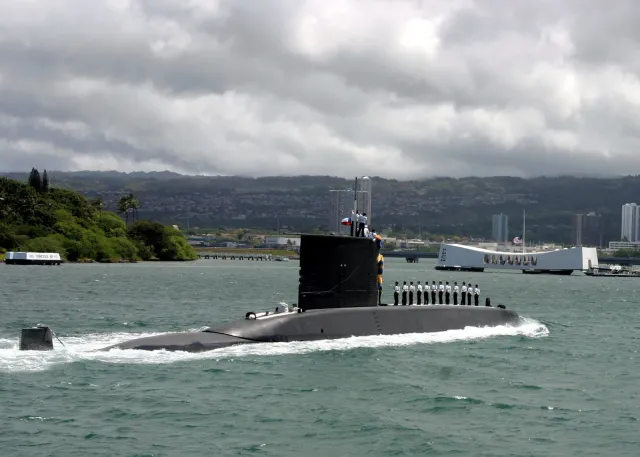
| Type 209 | West Germany | Submarine | South Korea, India, Indonesia, Turkey | 4 |
The split in that table matters more than the ranking itself. The AKM, AK-47, G3, FN FAL, and Beretta 92 spread through license production for political and alliance reasons, and every one of those chapters is closed. The CV90, K9 Thunder, and Type 209 spread for commercial and industrial reasons instead, a buyer negotiating local manufacturing as part of the sale, and those counts are still growing today.
Cold War alliances built the Kalashnikov’s numbers
The AKM and its predecessor the AK-47 were license-built across the Warsaw Pact through state-directed technology-sharing, not competitive sales. Poland, East Germany, Bulgaria, and Hungary stood up domestic Kalashnikov lines as members of the same political bloc, and Egypt picked up AKM production through a separate Soviet-aligned arrangement. No government is opening a new AKM line today. We’ve covered this production history in more depth in our own coverage of how the AK-47 outproduces every tank and jet combined; the count here is frozen in place, not a live trend.
G3, FAL, and Beretta 92 followed the same Cold War logic
West Germany’s G3 rifle spread through Cold War security partnerships to Pakistan, Turkey, Portugal, Greece, and pre-1979 Iran, a mix of NATO cohesion and bilateral defense ties rather than open-market competition. The FN FAL followed a similar path inside NATO, adapted into a common pattern by the United Kingdom, Australia, Canada, and Austria. The Beretta 92 pistol’s four countries, Turkey, Chile, Egypt, and the United States, sit in the same bloc-alignment category, including the US variant adopted as the M9. All three are settled counts from a settled era.
K9 Thunder is the fastest-moving system in this dataset
Each of the K9 Thunder’s four license-production countries carries a recent, dated, sourced deal. Poland’s Huta Stalowa Wola builds the AHS Krab on a K9-derived chassis, and Army Recognition reported that Hanwha Aerospace and HSW signed a further contract worth roughly $280 million in April 2025 for 87 more Krab units. India’s Larsen & Toubro builds the K9 Vajra-T at its Hazira, Gujarat facility, and Quwa Defence News reported a $254 million follow-on order that same month for 100 more howitzers, building on the first 100-unit batch delivered between 2017 and 2021. Egypt received its first locally produced K9A1EGY units in December 2025, according to Zona Militar, under a technology-transfer arrangement. Turkey’s version, the T-155 Fırtına, has already seen combat: Hurriyet Daily News reported it was used to strike targets in Syria.
That four-country count is already behind the actual pace of dealmaking. By June 2026, Korea Herald reported that Hanwha had announced a partnership to pursue local K9 production in the United Arab Emirates, a fifth country not yet reflected in this census. Defence Industry Europe separately reported that Hanwha Defense USA began production of a wheeled K9 variant for the US market in March 2026, a different track entirely from the tracked-chassis exports above. Neither move shows up in the table on this page, and that gap is the point: a license-production count on any spec sheet is a snapshot taken on a specific date, not a live feed, and for the most actively marketed system here it goes stale faster than most.
Type 209 shows a design can span both eras
The Type 209 submarine started as a Cold War-era German design and never stopped adding countries. South Korea license-built it as the Chang Bogo class decades ago, per background reporting from Euro Defense Security, and that program became the direct root of South Korea’s own indigenous submarine industry, still active today. India’s Mazagon Dock Shipbuilders built Type 209-derived Shishumar-class boats under a 1981 technology-transfer deal with Germany, its first domestically assembled submarines, as The Diplomat has reported. Indonesia’s PT PAL launched its first locally built, Type 209-derived submarine in 2019, according to Naval News, and Turkey rounds out the four. The Type 209 shows a Cold War-origin license can keep spawning new domestic industrial capacity long after the original political rationale has faded.
CV90 is the cleanest modern industrial network
The Swedish-designed CV90 is built under license in five NATO- and Nordic-aligned countries: Norway, the Netherlands, Denmark, Finland, and Switzerland, through a parts-and-assembly network BAE Systems Hägglunds actively manages rather than a Cold War alliance structure. That network keeps expanding: Euro Defense Security reported that BAE Systems Hägglunds contracted Norway’s Ritek to help produce new CV90 variants for Sweden. It is owned by a single manufacturer’s ongoing industrial planning, not by geopolitics the way the AKM’s five countries are. Browse the infantry fighting vehicle category to see how it compares to its peers, or check the K9 Thunder’s system page, the Type 209’s page, and the CV90’s page directly, alongside the artillery and submarine categories.
What this means for reading any co-production count
A four-country figure for the K9 Thunder is already understated the moment the UAE partnership and the wheeled US variant are counted, and that is the honest lesson here, not a flaw to apologize for. Any published license-production count is a floor rather than a ceiling: it reflects what was documented as of the date it was compiled, not what is currently in negotiation. A buyer evaluating a co-production or offset deal should treat a manufacturer’s historical count as a starting point and ask a more direct question: is this OEM still actively signing new local-production agreements right now, not just how many it has signed in the past.
Sources
- Turkey hit Syria with S. Korean-designed howitzers
- South Korea's Hanwha Aerospace and Poland's HSW deepen partnership to deliver 87 new Krab self-propelled howitzers
- Egyptian Armed Forces receive their first locally-produced K9 Thunder self-propelled howitzers
- Hanwha Aerospace wins $254M K9 howitzer deal with India
- Hanwha Aerospace to produce K9 Howitzers in UAE
- South Korea's Hanwha begins production of wheeled K9 howitzer, with first tests set for early 2026
- The Republic of Korea's Indigenous Submarine Programmes
- Germany to Upgrade Two Indian Attack Submarines
- Indonesia's PT PAL Launched Its First Locally Built Submarine for TNI AL
- BAE Systems Hägglunds Contracts Norway's Ritek to Produce New CV90 Variants for Sweden
Systems in this comparison
Every system covered above, with its photo and, where available, a video. Tap a card to open the full spec sheet.
Compare these side by side →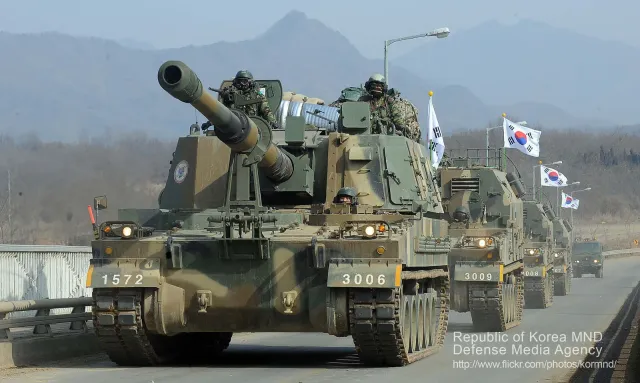
Related reading


