 Russia Legacy
 Kalashnikov Concern
AKM
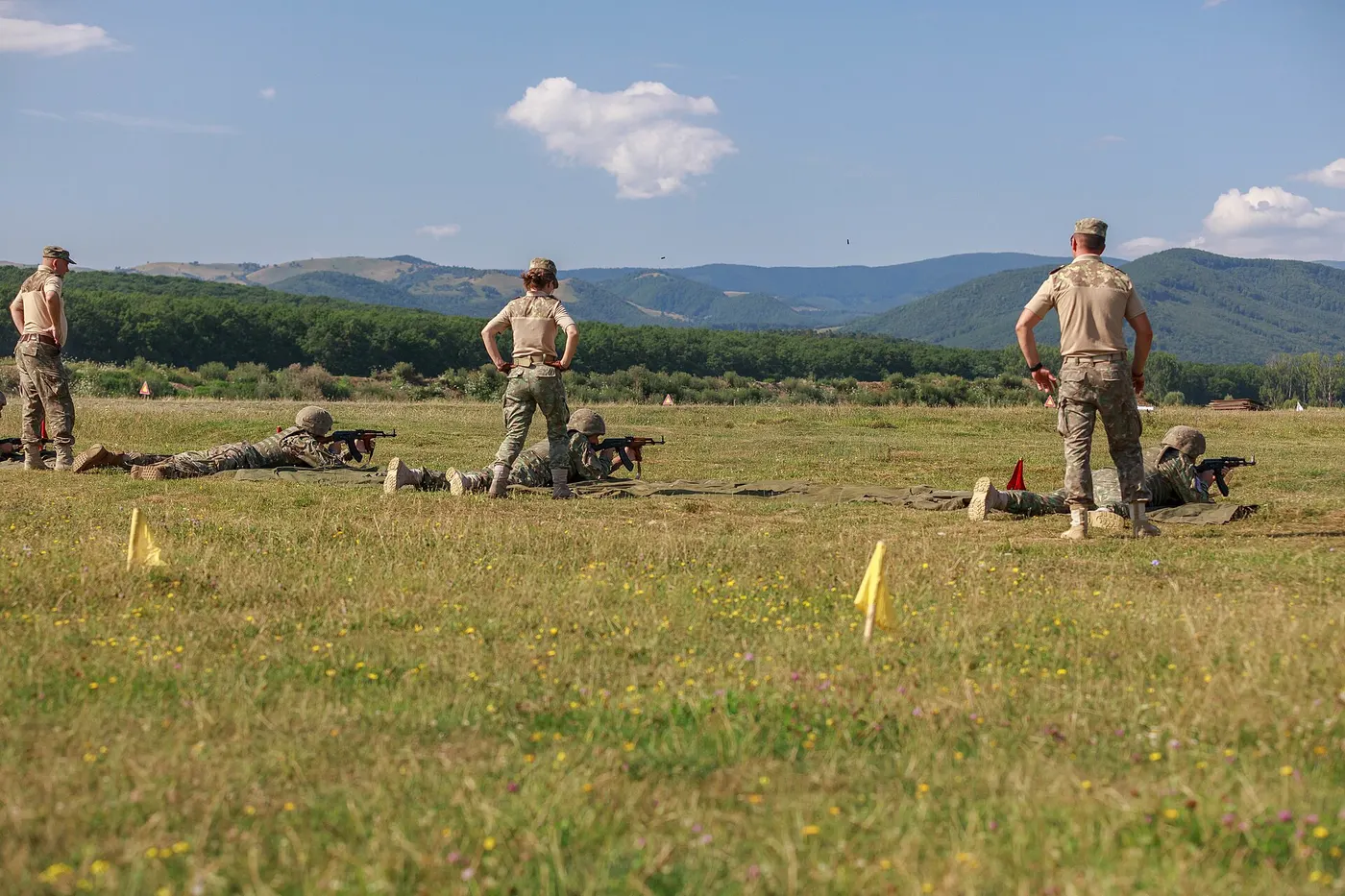
A modernized, lighter version of the AK-47 using stamped-steel receiver construction instead of milled steel, cutting production cost and weight while retaining the same 7.62x39mm chambering. It became the most widely produced small arm of the Cold War and armed dozens of Warsaw Pact and allied militaries.
In service since 1959 · 80 operator countries
Compiled from public sources ·primary reference ↗ ·last verified 2026-07-02
350
m range
600
rpm
715
m/s
30
rds
Procurement snapshot
Availability & export
Russian state channel
Rosoboronexport monopoly; Western sanctions exposure and payment/logistics risk for many buyers.
Channel: Rosoboronexport (state)
Fielded & proven
Widely fielded · 80 operators
In service since 1959. Status: legacy · ~50,000,000 built.
Lifecycle cost (est.)
No public unit price to model from. Why so few systems publish one →
Interoperability
Derived guidance from public data, export regime by country of origin, lifecycle from the GAO ~30% acquisition rule. Verify eligibility, pricing and offsets with the manufacturer and your acquisition authority.
Full specifications
Performance
Speed, range, altitude and engagement capability.
| Effective range Distance at which the weapon reliably hits point targets. Higher extends engagement envelope. | 350 m |
|---|---|
| Rate of fire Rounds per minute (cyclic). Higher increases suppression and hit probability. | 600 rpm |
| Muzzle velocity Projectile speed leaving the barrel. Higher means flatter trajectory and better armor penetration. | 715 m/s |
Firepower
Armament, payload and guidance.
| Main armament Primary weapon: main gun, cannon or missile type. | 7.62×39 mm |
|---|---|
| Caliber Bore diameter of the main gun or rifle. Larger throws heavier projectiles; not simply better, ammunition commonality matters. | 7.6 mm |
| Ammunition Rounds carried (main gun) or standard magazine capacity. | 30 |
Physical
Dimensions, weight and crew.
| Length Overall length including gun/probe where applicable. | 0.88 m |
|---|---|
| Empty weight Weight without fuel, ammunition or crew. | 3 kg |
| Crew Personnel required to operate. Fewer reduces exposure; autoloaders trade a loader for mechanical complexity. | 1 |
| Barrel length Barrel length, longer improves muzzle velocity and accuracy, shorter improves handling. | 415 mm |
Program
Cost, production scale and operators.
| Units built Total production run. Higher means proven manufacturing, mature logistics and spares availability. | 50,000,000 |
|---|---|
| Operator countries Number of countries operating the system. More operators means broader support ecosystem. | 80 |
Specifications compiled from public Kalashnikov Concern and reference sources ↗. Published defense figures are approximations, treat comparisons as directional. Last verified 2026-07-02.
Compare with rivals
See how it stacks up
Head-to-head comparisons
AKM vs
 FAL
FAL  M4A1
M4A1  HK416 A5
 Frequently asked questions
How many crew does the Kalashnikov Concern AKM require? +
The Kalashnikov Concern AKM requires a crew of 1.
What is the main armament of the Kalashnikov Concern AKM? +
The Kalashnikov Concern AKM's primary weapon is the 7.62×39 mm.
What is the Kalashnikov Concern AKM used for? +
The Kalashnikov Concern AKM is a rifle & long arms typically used for infantry combat.
How many countries operate the Kalashnikov Concern AKM? +
The Kalashnikov Concern AKM is operated by 80 countries.
Similar systems
Related coverage