Syrian Civil War: Timeline & Latest Developments
Syria's uprising began March 15, 2011 in Daraa and grew into a multi-sided war drawing in ISIS, Russia, Iran, Turkey and a US-led coalition; Bashar al-Assad's government fell to a lightning HTS-led offensive on December 8, 2024, and a fragile transitional government under Ahmed al-Sharaa is now managing sectarian violence, Kurdish integration and reconstruction into 2026.
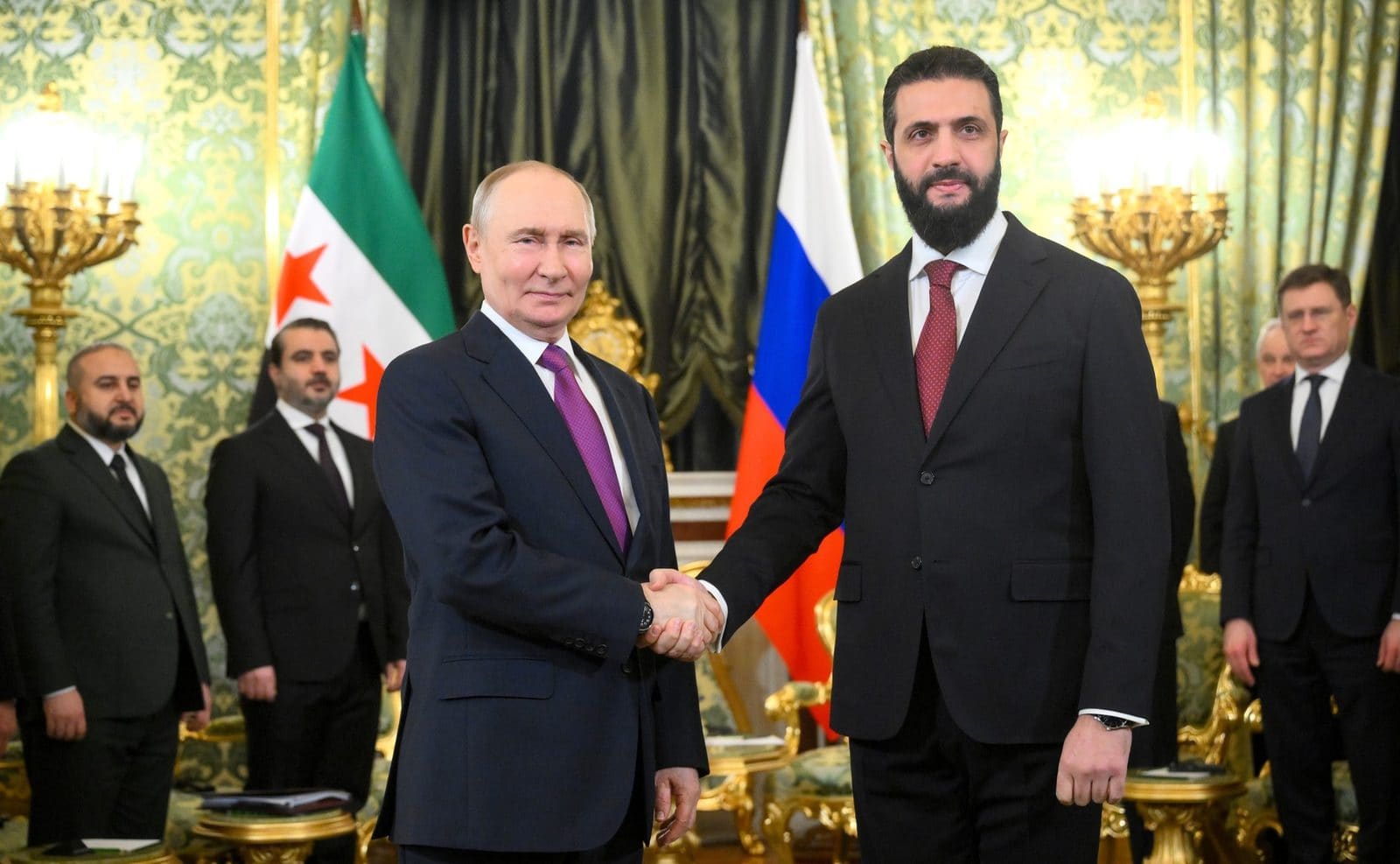
Presidential Executive Office of Russia (kremlin.ru), CC BY 4.0, via Wikimedia Commons. Depicts Vladimir Putin hosting Syrian President Ahmed al-Sharaa at the Kremlin, January 28, 2026, part of the current transitional period covered in this event.
Syria’s war began as a peaceful protest movement and became one of the most complex conflicts of the century, drawing in a former government, a fractured opposition, a transnational terrorist caliphate, a Kurdish-led autonomous force, two direct foreign military interventions, and a US-led coalition, before ending with a rebel offensive nobody, including the rebels themselves, expected to succeed as fast as it did.
The spark was local. On March 6, 2011, Syrian security forces arrested and tortured teenagers in Daraa for painting anti-government graffiti. Protests demanding their release spread nationwide by March 15, a date now marked as the start of the Syrian revolution, and a crackdown that killed dozens of demonstrators and then besieged Daraa itself with tanks and thousands of troops pushed the movement from the street into armed rebellion. Defected army officers formed the Free Syrian Army that July, giving the opposition a military banner even as it remained fragmented among hundreds of local factions.
By 2012 the uprising had become a multi-sided civil war. Jabhat al-Nusra, al-Qaeda’s new Syrian affiliate, entered the fight and would later rebrand and merge into Hayat Tahrir al-Sham, the group that eventually led the 2024 offensive that toppled Assad. Aleppo split into government- and opposition-held halves in a siege that ran more than four years. In August 2013, sarin rockets killed hundreds of people in the Damascus suburb of Ghouta, an attack the UN Secretary-General called a war crime; the UN’s Human Rights Council commission of inquiry later linked the sarin’s chemical signature to army stockpiles, and both the government and Russia disputed the government’s responsibility throughout. Iran and Hezbollah entered directly that same year, and their intervention at Qusayr helped stabilize a government that had been losing ground for two years.
A separate front opened as ISIS, having seized Raqqa in January 2014, declared a caliphate that at its peak controlled roughly 60 percent of Syrian territory. A US-led coalition began airstrikes that September, and the Kurdish-led YPG and YPJ merged with Arab and other local factions in October 2015 to form the Syrian Democratic Forces, the coalition’s ground partner. SDF fighters, backed by coalition air power, retook Raqqa in October 2017 and eliminated the caliphate’s last territorial foothold at Baghouz in March 2019, though an ISIS insurgency and roughly 40,000 detained ISIS-linked suspects in SDF-run camps remained unresolved problems years later.
Russia’s direct intervention, launched September 30, 2015 at Assad’s request, proved decisive for the government’s survival. Alongside Iranian-backed forces, Russian air power helped retake east Aleppo in December 2016 and, after a bombing campaign Human Rights Watch said included unlawful strikes on civilians, Eastern Ghouta in April 2018; a chemical attack on Ghouta’s town of Douma that same April killed 43 people and was later attributed by OPCW investigators, with reasonable grounds, to a Syrian Air Force helicopter. A separate axis of conflict ran between Turkey and Kurdish forces: Ankara’s Operation Olive Branch captured Afrin in 2018 and Operation Peace Spring pushed into SDF-held northeastern Syria in 2019, displacing hundreds of thousands. Idlib, the last major opposition stronghold, was fixed by a Russian-Turkish ceasefire in March 2020 after a Syrian government offensive killed dozens of Turkish soldiers, and the front line it established held largely frozen for more than four years.
Even the fastest return movement UNHCR has tracked in the region reversed well under a quarter of the war's peak displacement within Assad's first 18 months out of power, and the peak figures themselves are historical high points, not current snapshots of an already-shifting picture.
The end, when it came, was abrupt. HTS and allied factions launched a surprise offensive out of Idlib on November 27, 2024, and took Aleppo within days. Assad flew to Moscow to ask for help; Russia, absorbed elsewhere and unwilling to commit further, did not intervene in force. Hama and Homs fell in the following days, and on December 8, 2024, opposition forces entered Damascus as Assad fled to Russian asylum, ending 53 years of Assad family rule in an offensive that took just 11 days. Israel struck Syrian military assets roughly 600 times in the following week and occupied a southern buffer zone it still holds. Investigators opened Sednaya prison and began documenting mass graves near Damascus that Syrian rights advocates estimate could hold tens of thousands of victims of the fallen government’s detention system, long documented in part through the smuggled Caesar photographs.
Syria’s transition since has been genuinely contested rather than settled. Ahmed al-Sharaa, HTS’s former leader, was named transitional president in January 2025 for a five-year term under a March 2025 Constitutional Declaration. His government signed an integration agreement with SDF commander Mazloum Abdi that same month, but implementation stalled over the following year. Sectarian violence killed more than 1,400 people in Alawite coastal areas in March 2025 and roughly 1,000 more, including 539 Druze civilians, in Suwayda that July, violence the UN commission of inquiry and Amnesty International both said likely involved war crimes and extrajudicial executions by government-aligned forces. Against that backdrop, Washington lifted most sanctions in mid-2025, hosted al-Sharaa at the White House that November, and by January 2026 even Moscow, Assad’s longtime patron, was hosting his successor at the Kremlin. Human Rights Watch’s 2026 assessment describes a country with a functioning but heavily centralized government, no elections yet scheduled, continued Israeli occupation in the south, and more than 90 percent of the population below the poverty line, a transition still very much in progress rather than a war cleanly concluded.
Full Timeline (most recent first)
Al-Sharaa reshuffles government amid nepotism criticism
Al-Sharaa carried out Syria's first government reshuffle since Assad's ouster, replacing his brother as head of the presidential office along with the information minister, agriculture minister and several provincial governors, after criticism that the transitional government had concentrated posts among his own network; the reshuffle coincided with the opening of trials against Assad-era officials.
Putin hosts al-Sharaa in the Kremlin
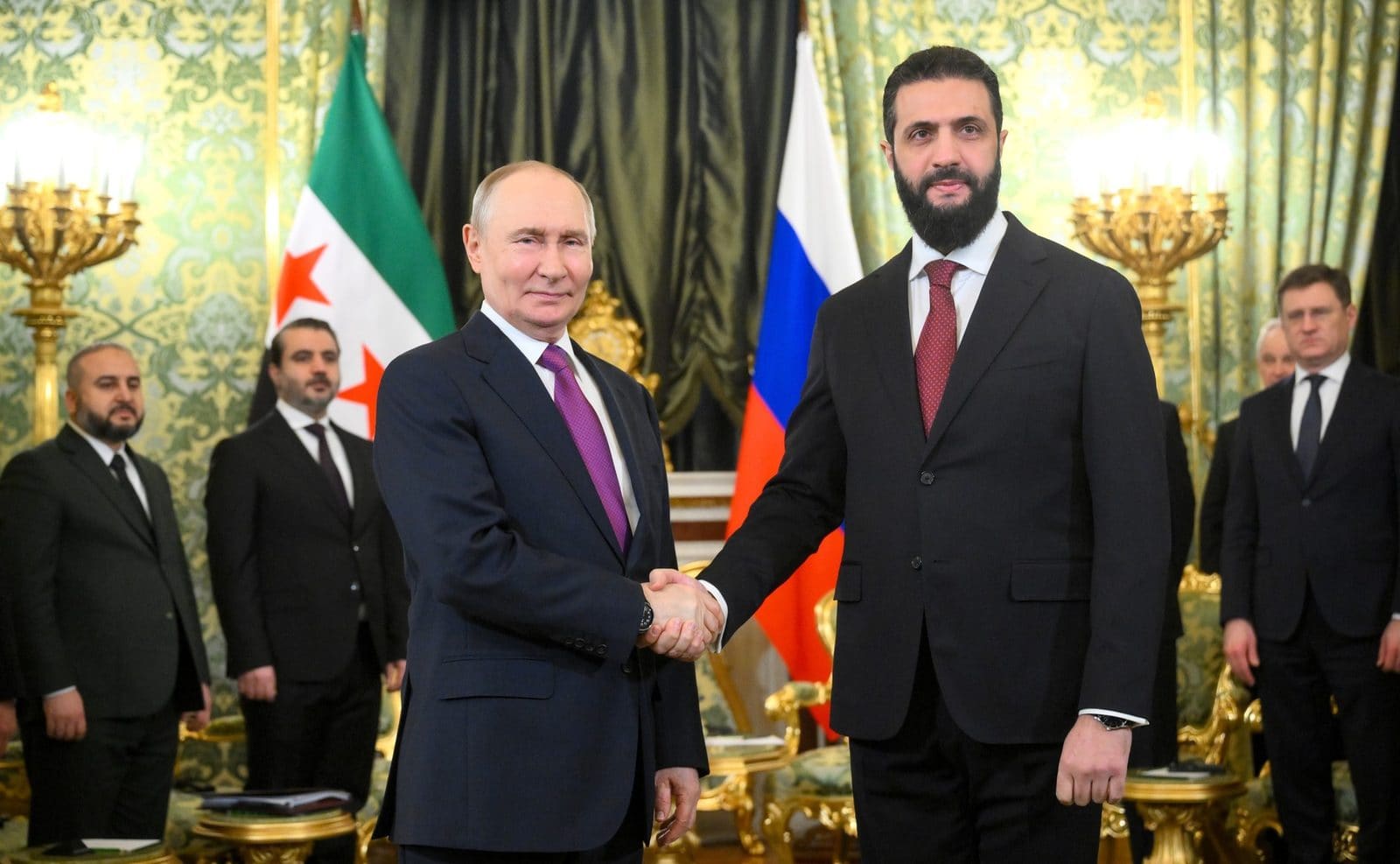
Vladimir Putin met Ahmed al-Sharaa at the Kremlin, a striking reversal in which Russia, which had granted Assad asylum and armed his government for nearly a decade, opened direct talks with the leader who toppled him, amid unresolved questions over the future of Russia's Khmeimim and Tartus bases.
Al-Sharaa declares Kurdish ceasefire, restores citizenship and language rights
Al-Sharaa declared a ceasefire between government forces and Kurdish forces, recognized Kurdish as one of Syria's national languages, and announced the restoration of citizenship to Kurdish Syrians who had been stripped of it under Assad-era policy, even as implementation of the March 2025 SDF integration deal remained contested on the ground.
Al-Sharaa makes first Syrian presidential visit to the White House
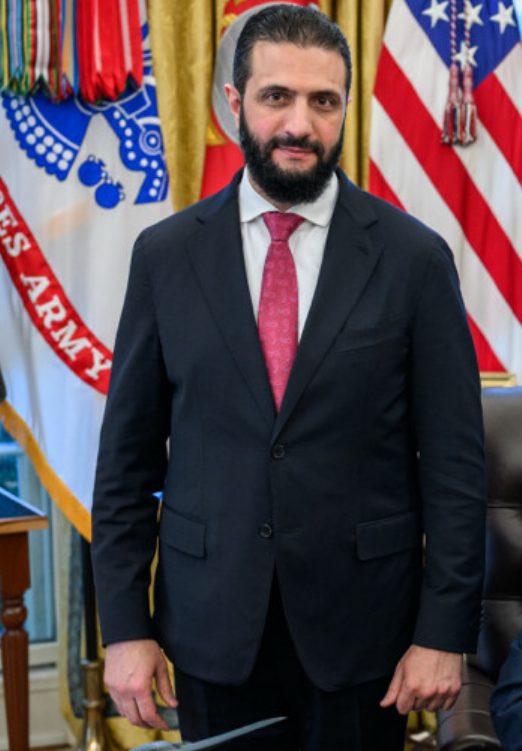
Al-Sharaa met President Trump at the White House, the first visit by a Syrian head of state, as the US Treasury extended sanctions relief for a further six months; the meeting followed their first encounter in Riyadh in May 2025.
Amnesty documents extrajudicial killings of Druze in Suwayda
Amnesty International published an investigation presenting evidence that government forces and affiliated militias extrajudicially executed dozens of Druze people during the Suwayda violence, adding independent corroboration to the UN commission's earlier findings.
UN commission finds war crimes likely by both sides in coastal violence
The UN Independent International Commission of Inquiry on Syria said it found reasonable grounds that both government-aligned forces and armed groups affiliated with the former regime likely committed war crimes during the March coastal violence, including unlawful killings and torture.
Suwayda violence kills roughly 1,000, including hundreds of Druze civilians
Clashes between Sunni Bedouin clans and Druze armed groups in Suwayda drew in government security forces and escalated into one of the deadliest episodes of the post-Assad period; Human Rights Watch documented roughly 1,000 deaths including 539 Druze civilians, with at least 196 people extrajudicially executed, a finding Amnesty International's own September investigation corroborated with evidence implicating government-affiliated forces.
Trump signs executive order lifting most US sanctions on Syria
President Trump formally signed an executive order revoking most US sanctions on Syria, following an earlier pledge and the removal of terrorism designations against al-Sharaa, a move intended to unlock reconstruction investment though Caesar Act sanctions require Congress to repeal permanently.
Violence between Druze militias and government-aligned forces breaks out
Sectarian clashes broke out between Druze militias, transitional government military units and allied militias, with human rights groups documenting extrajudicial killings of Druze civilians in an early round of violence that preceded a much larger escalation in July.
Constitutional Declaration ratified for a five-year transition
Al-Sharaa ratified a provisional Constitutional Declaration setting a five-year transitional period through 2030 and concentrating governing authority in the presidency, a structure Human Rights Watch and other observers said left limited institutional checks.
Al-Sharaa and SDF commander Mazloum Abdi sign integration agreement
President al-Sharaa and SDF commander-in-chief Mazloum Abdi signed an agreement in Damascus to integrate SDF military and civilian institutions, including three divisions and two specialized brigades, into the Syrian state, affirming Kurdish rights and rejecting partition while establishing a ceasefire between Damascus and the SDF.
Mass killings of Alawite civilians on the Syrian coast
Over roughly ten days from March 6 to 17, armed groups aligned with the transitional government, engaged in a declared counter-insurgency against Assad-loyalist remnants, killed more than 1,400 people in Alawite-majority coastal areas, according to a Syrian Observatory for Human Rights tally reported by Al Jazeera; the UN commission of inquiry later found the killings, which included summary executions and property destruction, likely amounted to war crimes.
Ahmed al-Sharaa named transitional president
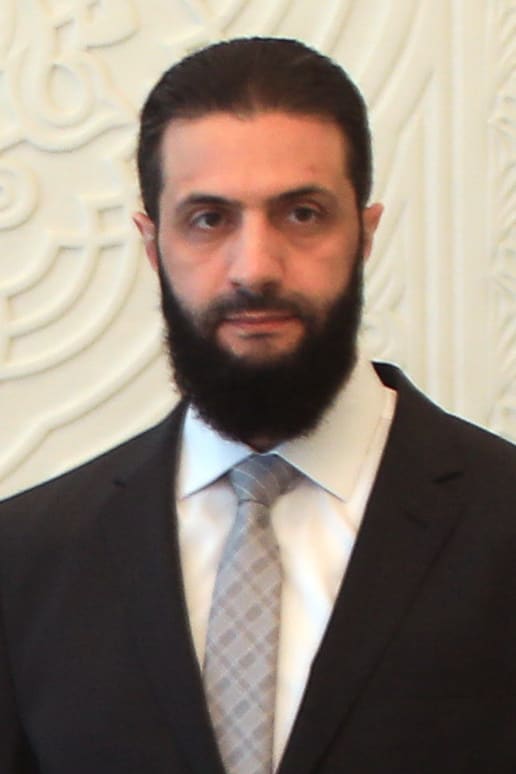
Syria's General Command formally named HTS leader Ahmed al-Sharaa transitional president at a Syrian Revolution Victory Conference in Damascus, mandated under a later Constitutional Declaration to serve a five-year transitional term before elections.
US-led coalition continues counter-ISIS operations with new Syrian partners
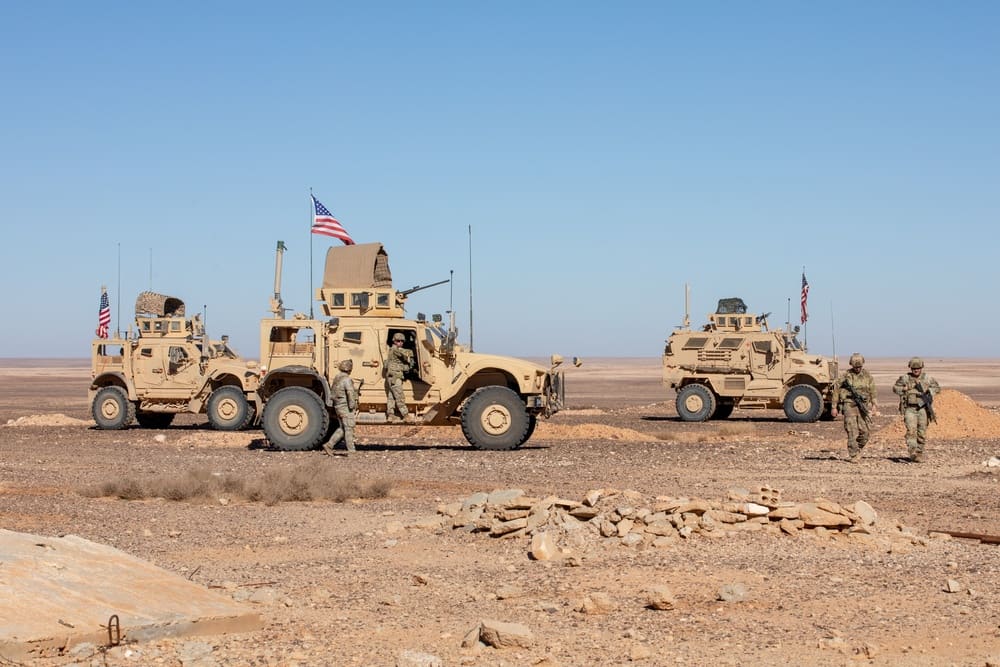
US Army soldiers with the coalition's Task Force Armadillo conducted partnered patrols in Syria's deconfliction zone, underscoring that the anti-ISIS mission and roughly 40,000 detained ISIS-linked suspects held in SDF-run camps remained a live security question independent of the change in Damascus.
Mass graves and Sednaya prison expose scale of Assad-era detention
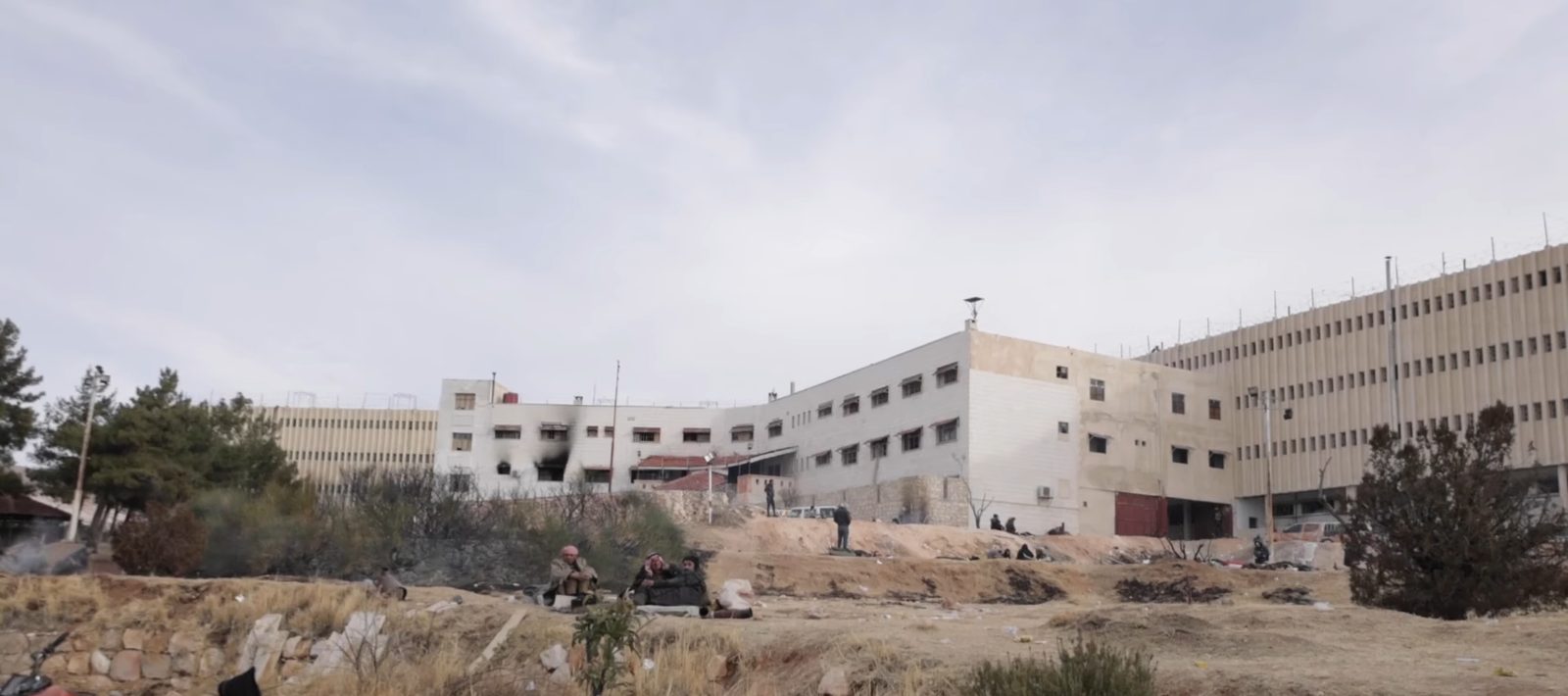
As opposition forces opened Sednaya prison and freed roughly 3,000 detainees, investigators began documenting mass graves near Damascus that the US-based Syrian Emergency Task Force estimated could hold the remains of tens of thousands of people, part of a detention and disappearance system the UN commission of inquiry had already documented through the Caesar photographs and other evidence years earlier.
Israel strikes Syrian military assets roughly 600 times, occupies buffer zone
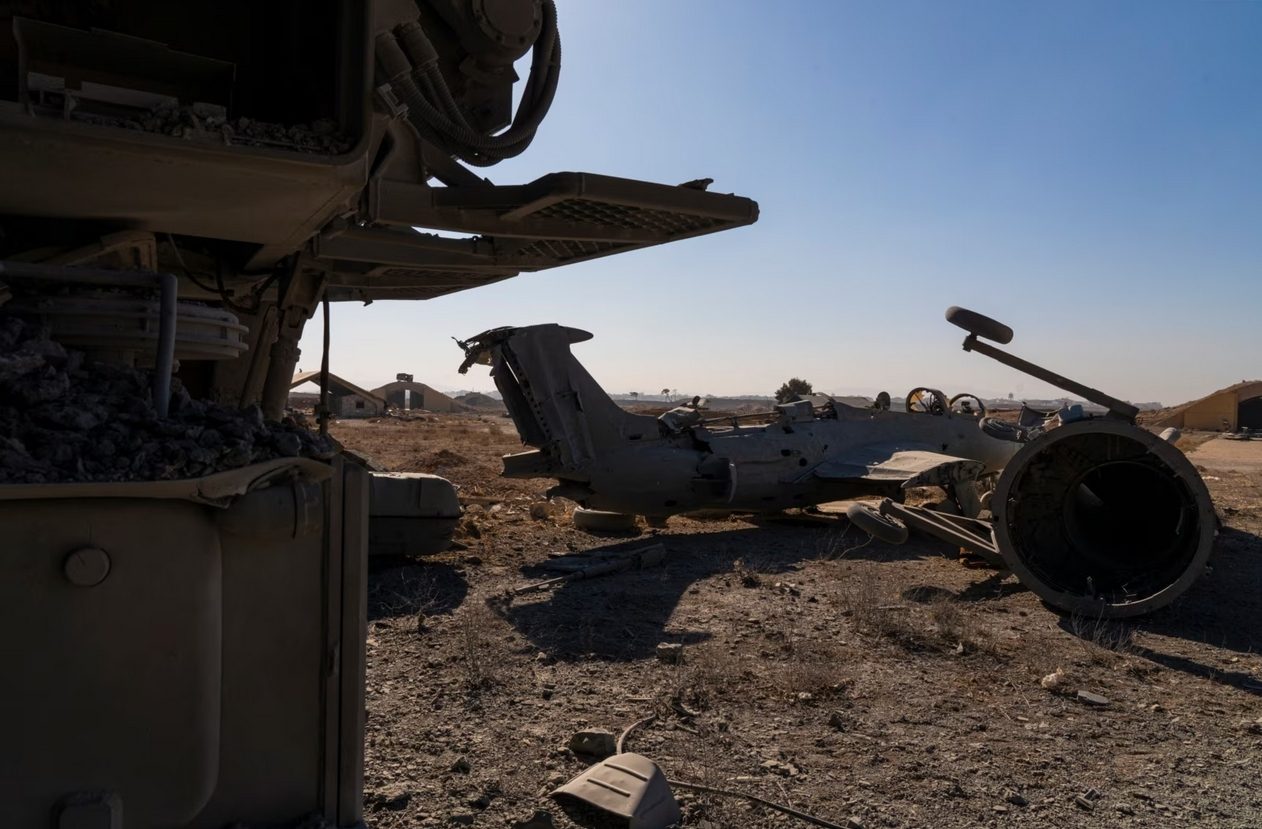
In the days after Assad's fall, Israel struck Syrian military infrastructure, air defenses and naval vessels around 600 times, saying it aimed to prevent weapons from reaching hostile actors, and moved troops into the demilitarized buffer zone in southwestern Syria it has continued to occupy since.
Damascus falls, Assad flees to Moscow, ending 53 years of family rule
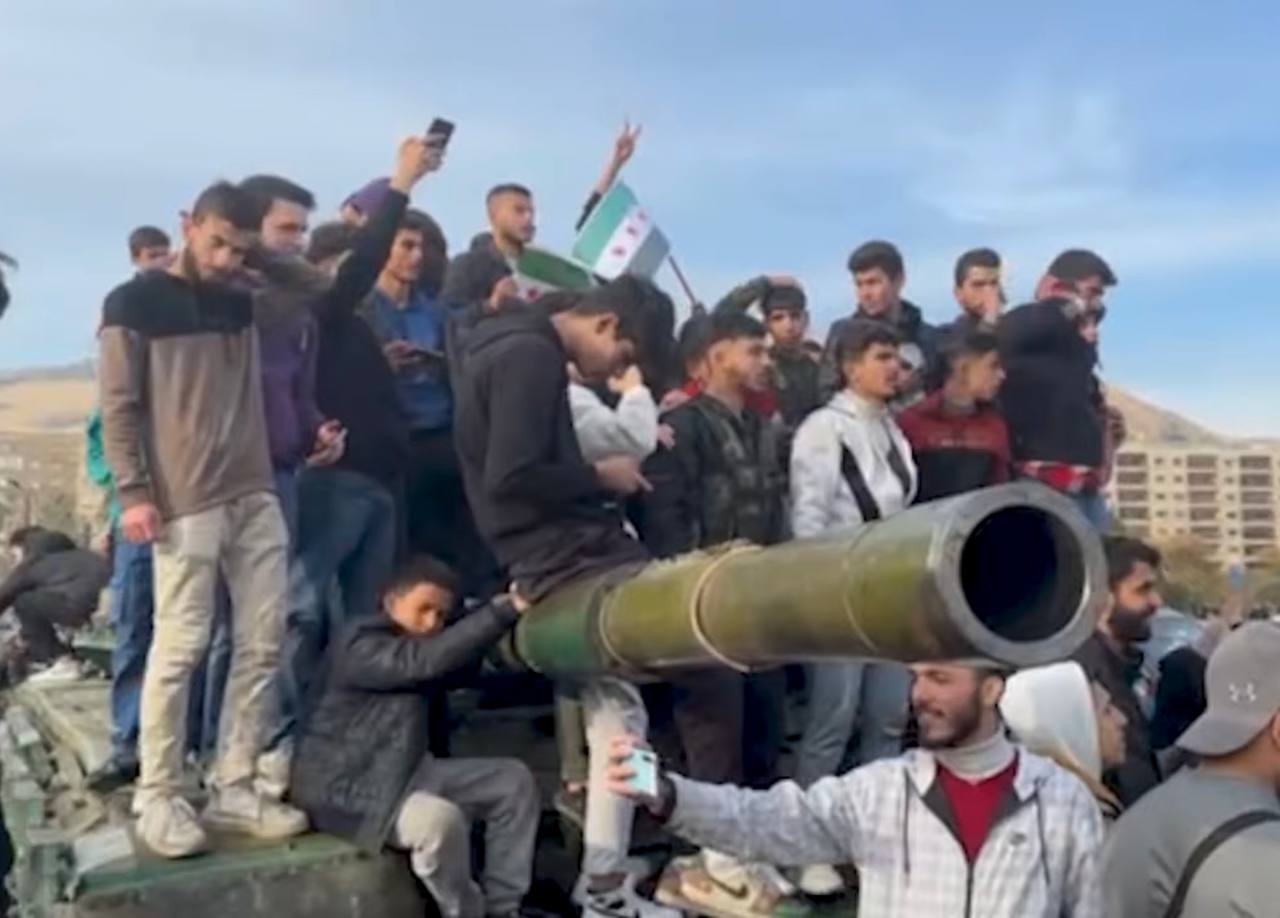
Opposition forces entered Damascus and freed detainees from Sednaya prison as Bashar al-Assad flew out of the country and was granted asylum in Russia, ending the 53-year rule of the Assad family in an offensive that took just 11 days from its opening moves near Aleppo.
Homs falls, opposition forces reach Damascus's outskirts
Homs fell to opposition forces while a separate Southern Operations Room offensive advanced from the south to within roughly 20 kilometers of Damascus, closing off the capital's routes to the coast and effectively isolating Assad's government.
Hama falls to advancing opposition forces
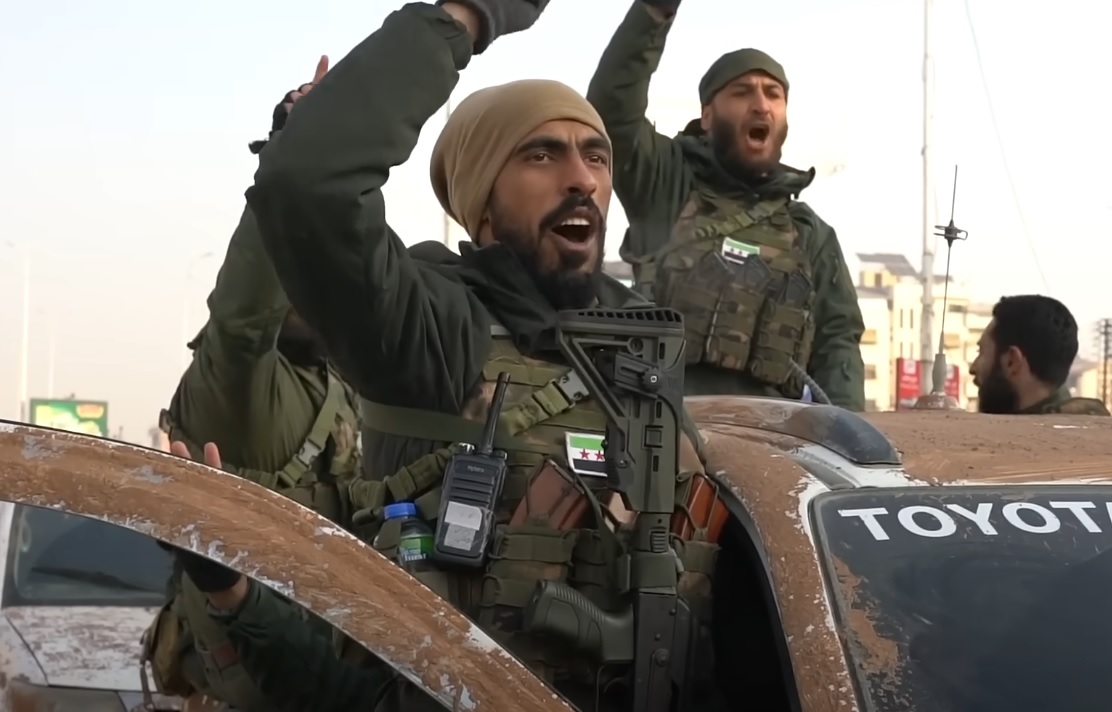
HTS-led forces captured Hama, opening the road south toward Homs and Damascus and confirming that government lines were collapsing faster than either side had anticipated.
Aleppo falls to opposition forces
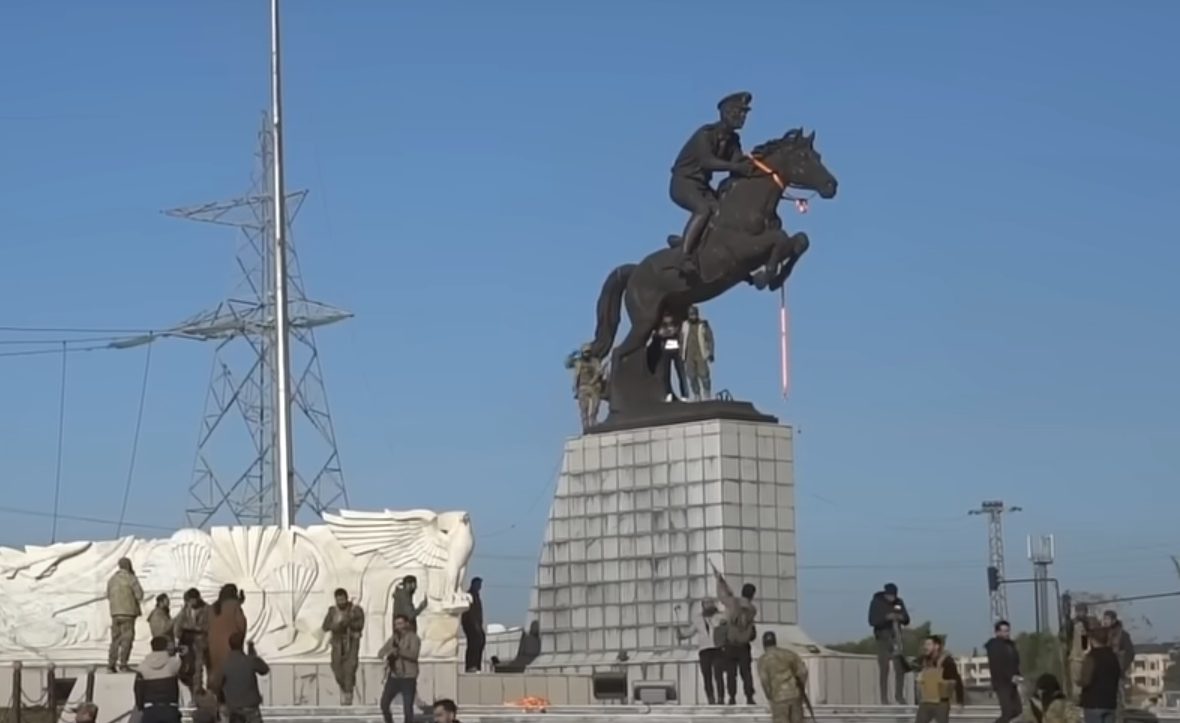
Opposition forces took control of Aleppo, Syria's largest city, four days after the offensive began, as Assad traveled to Moscow the next day to request Russian military aid, a request Russian officials did not grant.
HTS-led coalition launches surprise offensive, storms Aleppo
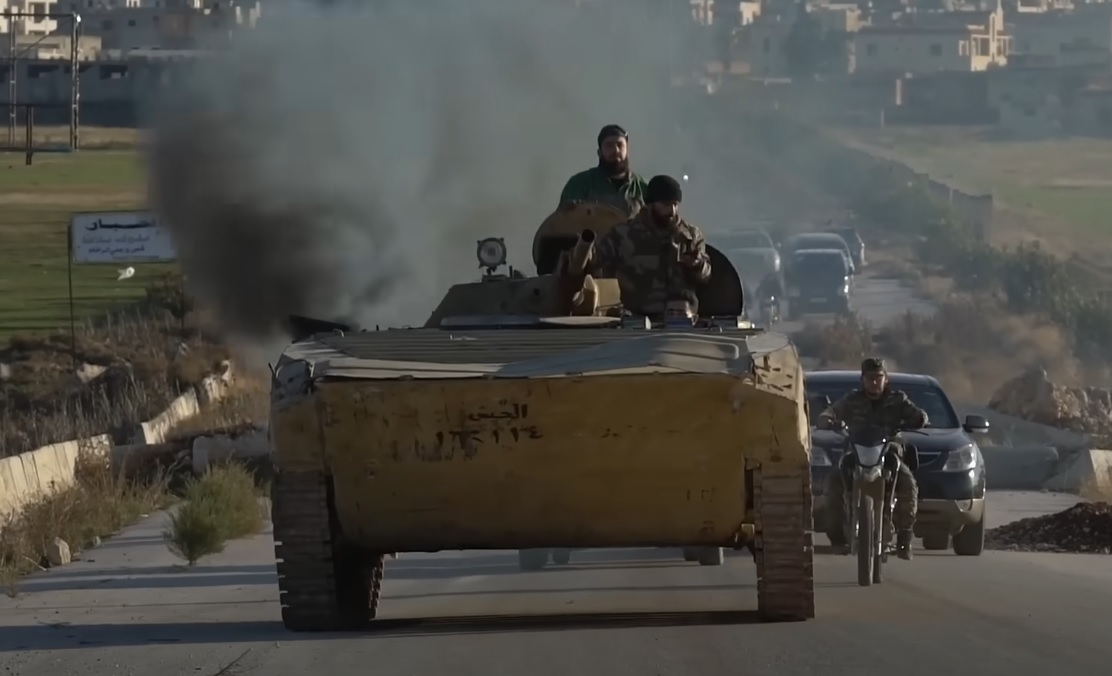
Hayat Tahrir al-Sham, alongside the Turkish-backed Syrian National Army and southern opposition factions, launched a surprise offensive out of Idlib that overran demoralized government defenders around Aleppo within days.
Putin and Erdogan agree an Idlib ceasefire
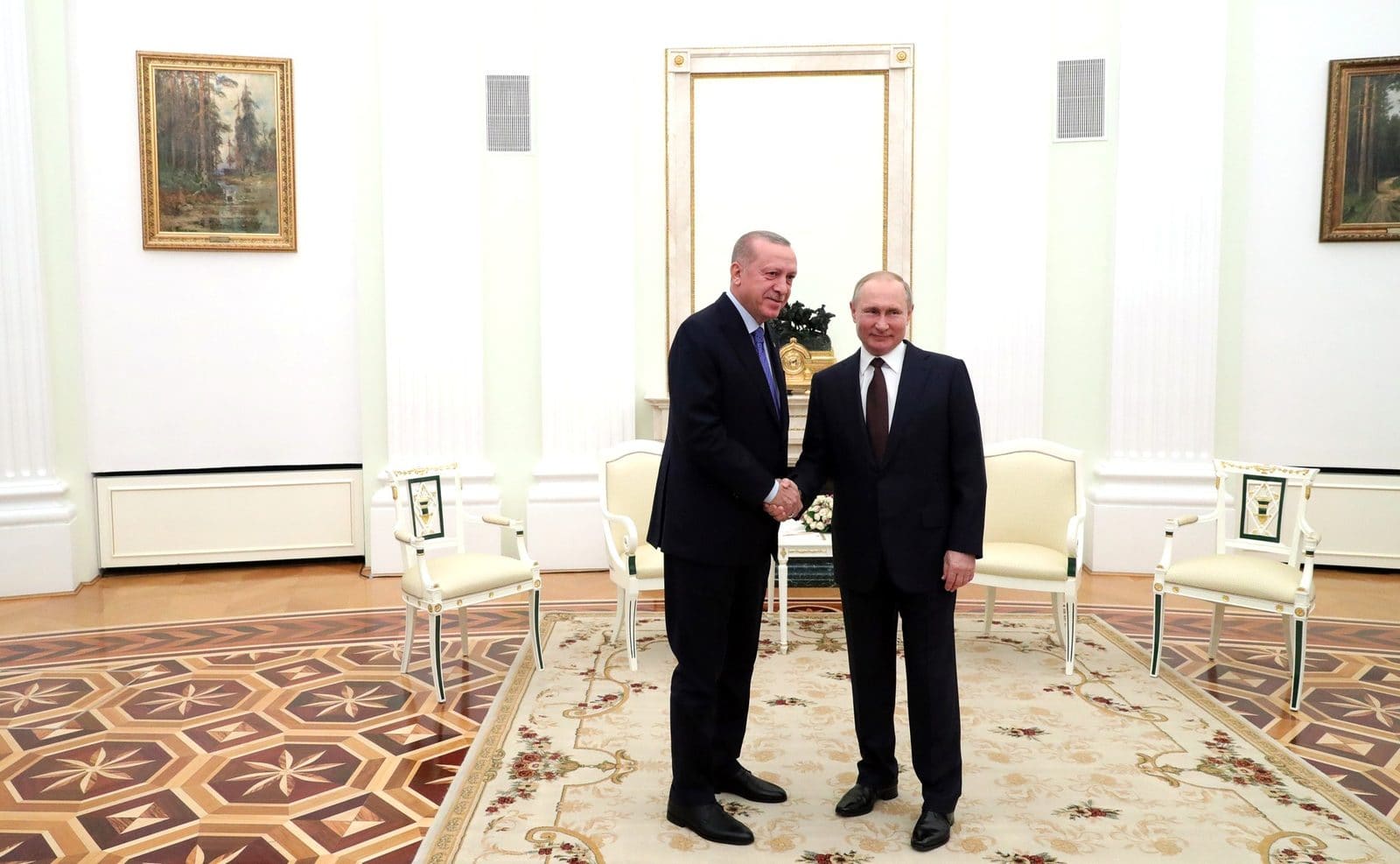
Russian President Vladimir Putin and Turkish President Recep Tayyip Erdogan agreed a ceasefire effective midnight March 6, establishing a security corridor along the M4 highway and joint Russian-Turkish patrols; the front line it fixed held largely frozen for more than four years.
Syrian government strike kills dozens of Turkish soldiers in Idlib
A Syrian government offensive to retake Idlib's M4 and M5 highways led to direct clashes with Turkish forces; a strike on Turkish positions killed 34 or more Turkish soldiers, the deadliest single loss for Turkey's military in Syria and the closest the war came to direct Turkish-Russian confrontation.
Turkey launches Operation Peace Spring against the SDF
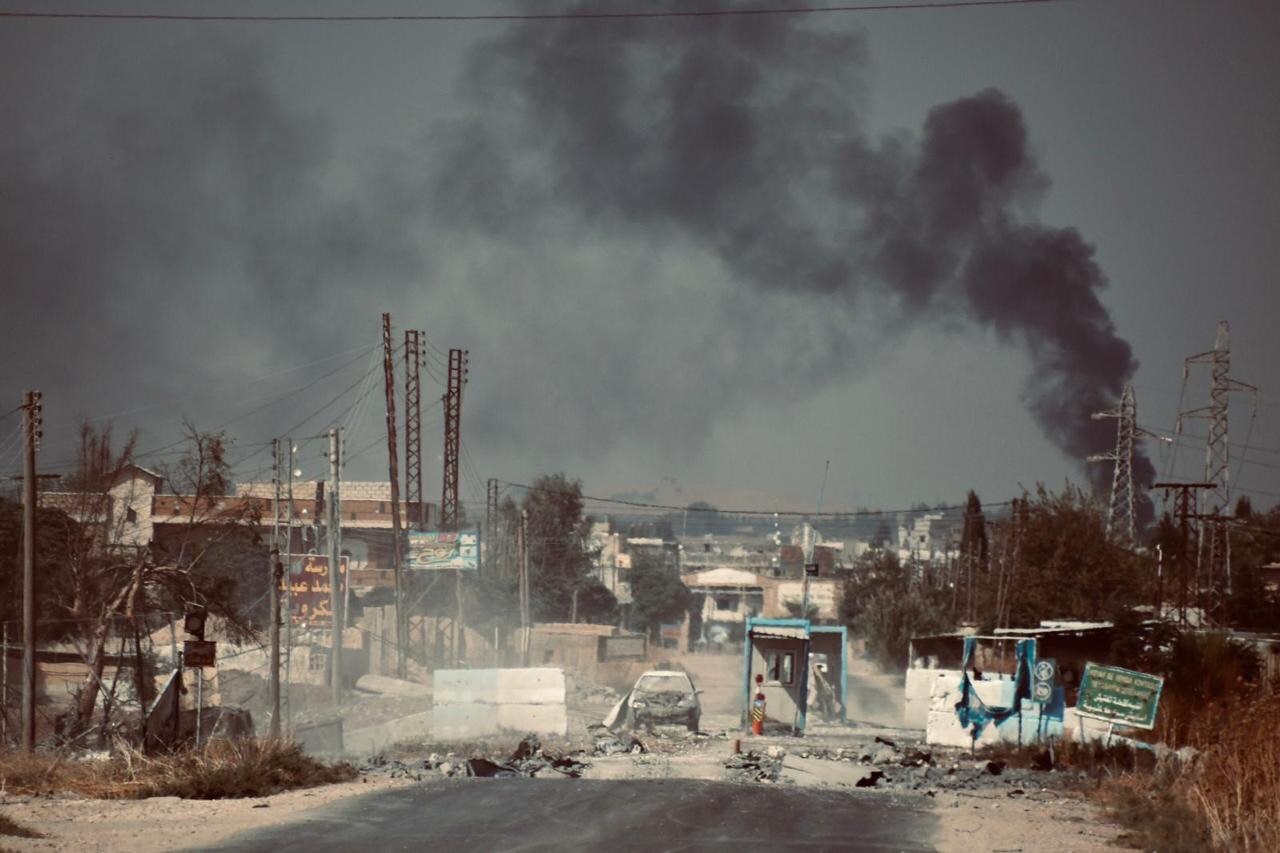
Turkey launched airstrikes and a ground offensive into northeastern Syria against the SDF, stating the goal was to clear its border of Kurdish forces it links to the PKK; the operation displaced more than 300,000 people and killed more than 70 civilians in Syria, and about 20 in Turkey, according to reporting compiled by monitors.
Battle of Baghouz ends, ISIS loses its last territory
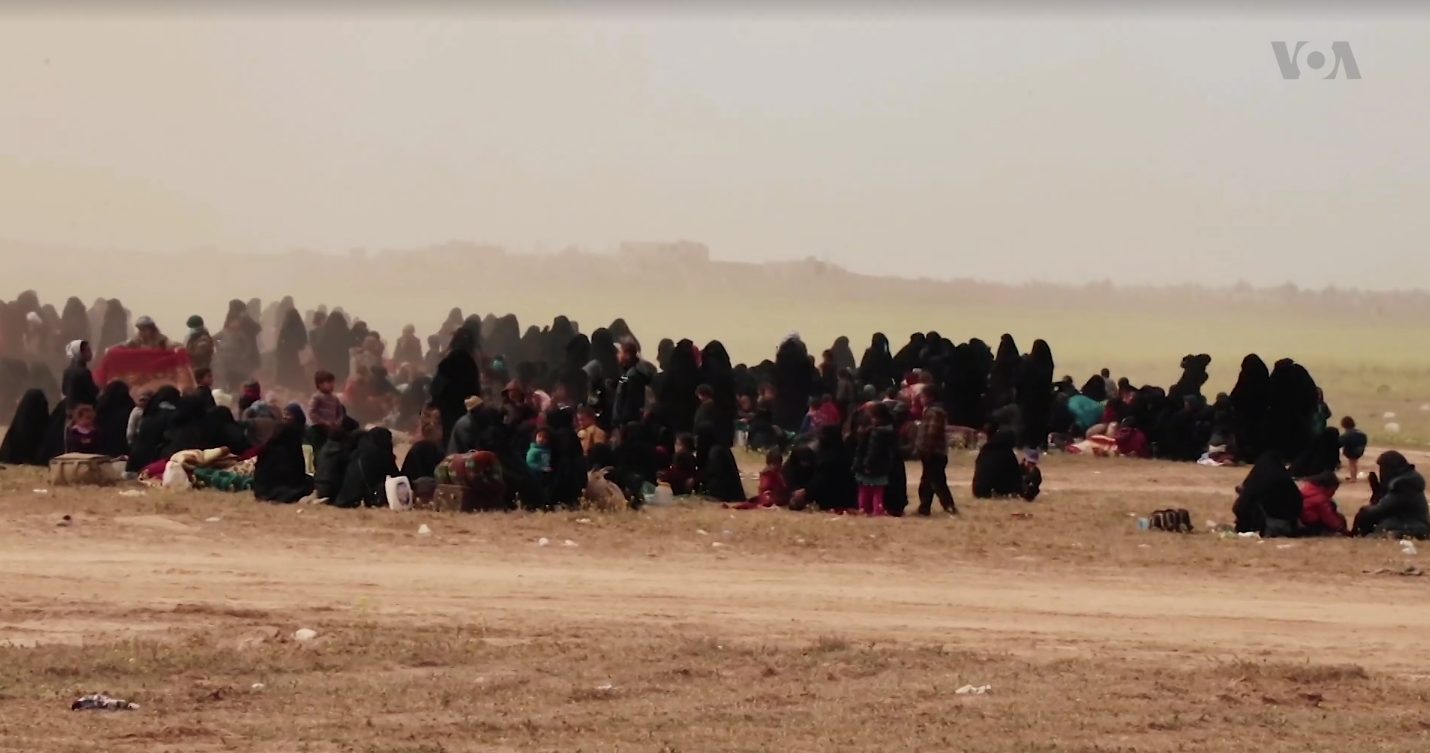
The SDF's final siege of Baghouz Fawqani, ISIS's last territorial holdout on the Euphrates, ended in the group's defeat, formally eliminating the caliphate's claim to any territory, though sleeper cells and an insurgency continued.
Sochi agreement creates an Idlib de-escalation zone
Russia and Turkey agreed at Sochi to designate Idlib province a de-escalation zone, deploying Turkish observation posts to hold off a feared government offensive into the last major opposition-held territory.
Eastern Ghouta falls to government forces
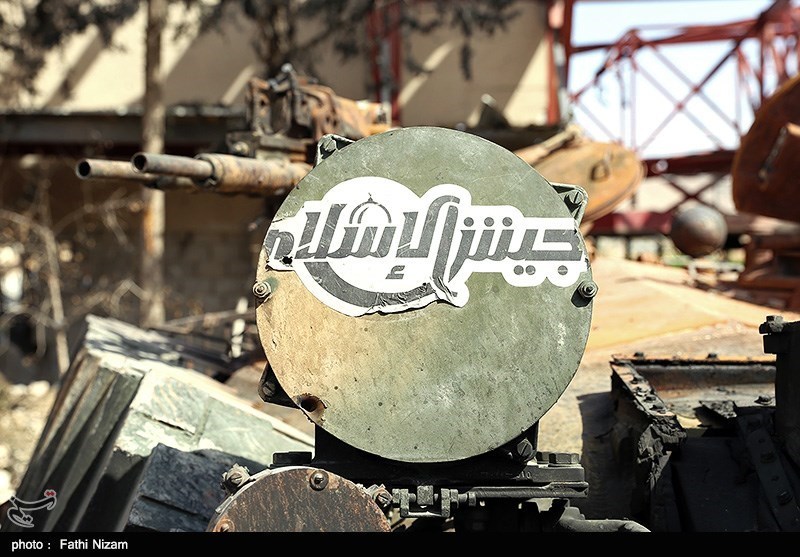
Government forces completed their capture of Eastern Ghouta, ending a nearly seven-year rebellion near the capital after a negotiated evacuation moved remaining rebel fighters and roughly 105,000 displaced residents to Idlib province.
Chemical attack on Douma kills dozens
A chemical attack on the Eastern Ghouta town of Douma killed 43 people. A 2023 OPCW Investigation and Identification Team report concluded with reasonable grounds that a Syrian Air Force helicopter dropped chlorine-filled cylinders on the town, a finding Russia has disputed.
Turkish-backed forces capture Afrin
Arab and Turkmen militias of the Syrian National Army entered Afrin city after a two-month assault, completing Turkey's capture of the district and displacing tens of thousands of Kurdish residents.
Siege of Eastern Ghouta intensifies
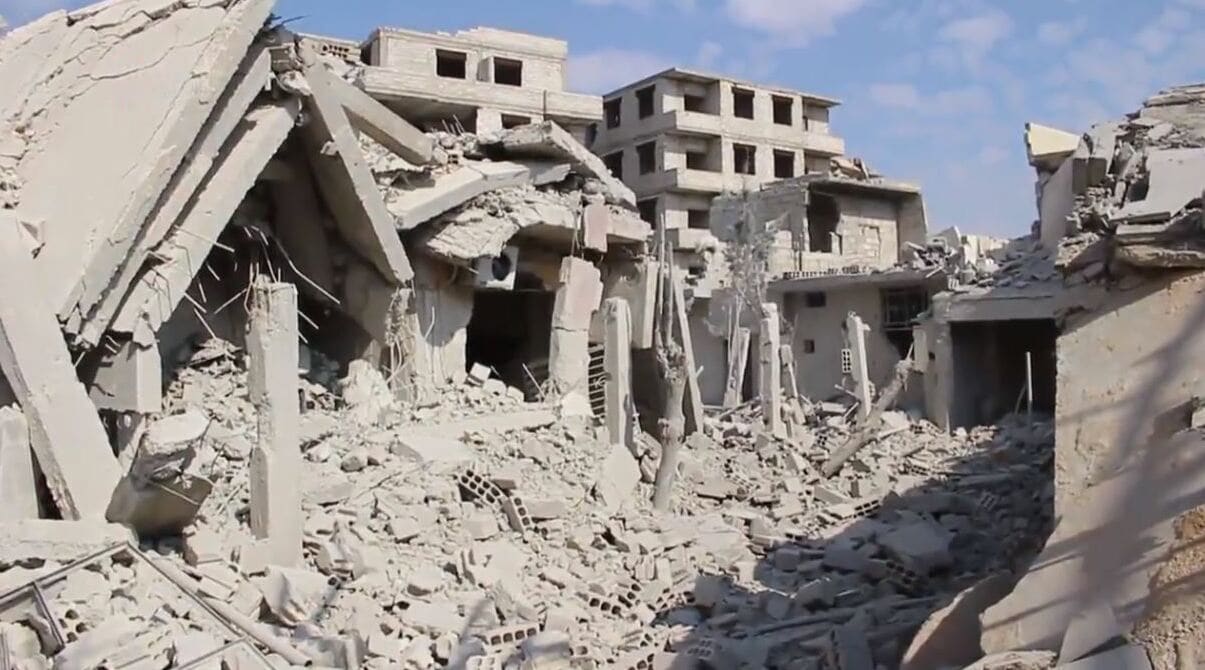
Syrian and Russian forces launched an intense bombing campaign against the besieged Eastern Ghouta suburbs of Damascus, which Human Rights Watch and other monitors said included unlawful strikes on civilian areas.
Turkey launches Operation Olive Branch into Afrin
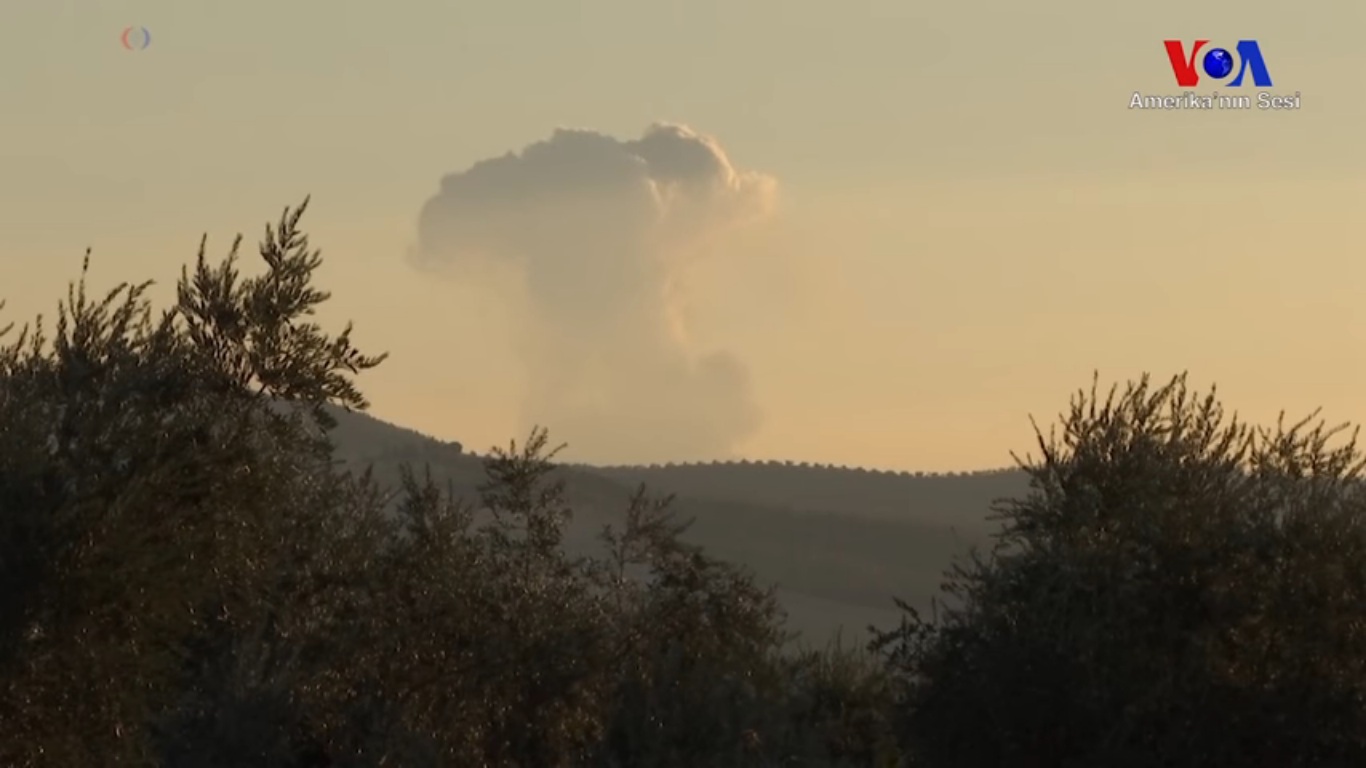
Turkish forces and the Turkish-backed Syrian National Army invaded the Kurdish-majority Afrin district to drive out the YPG, which Ankara views as an extension of the PKK, opening a new front distinct from the anti-ISIS and anti-Assad campaigns.
Raqqa falls to the SDF
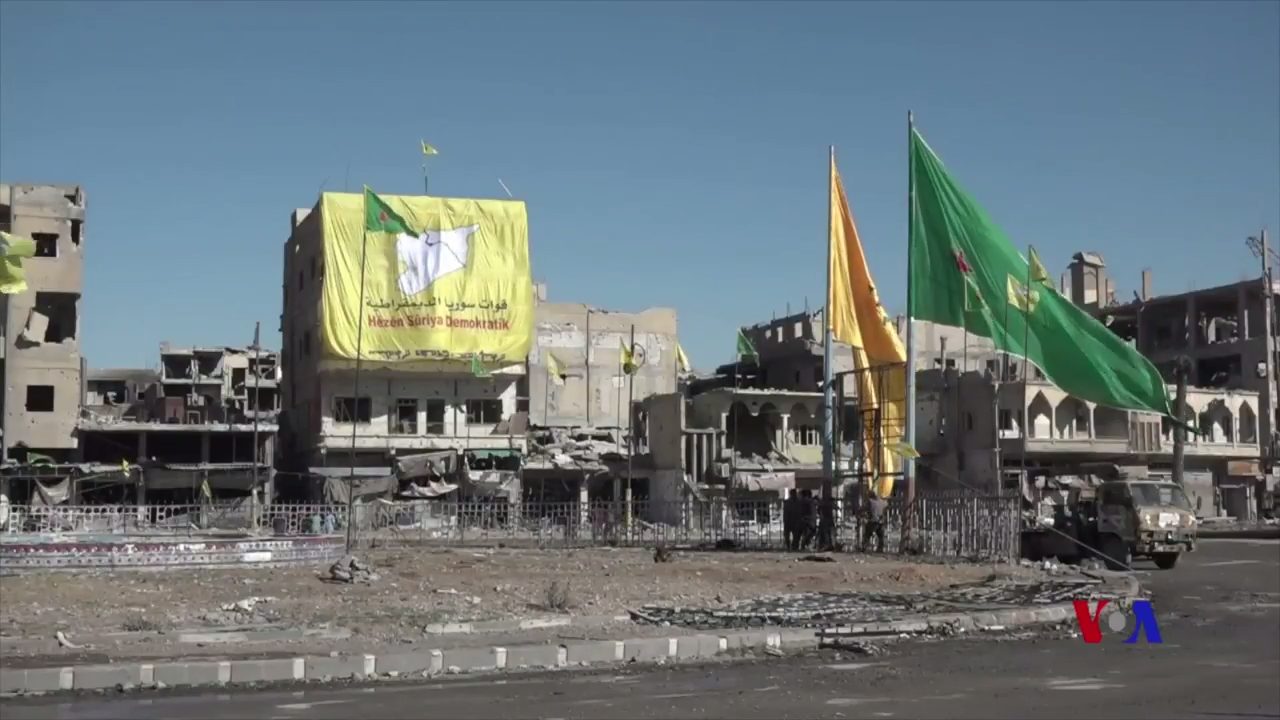
Syrian Democratic Forces fighters raised SDF, YPG and YPJ flags in central Raqqa after declaring the city fully captured, ending ISIS's hold on what had been its capital.
SDF launches the offensive to retake Raqqa
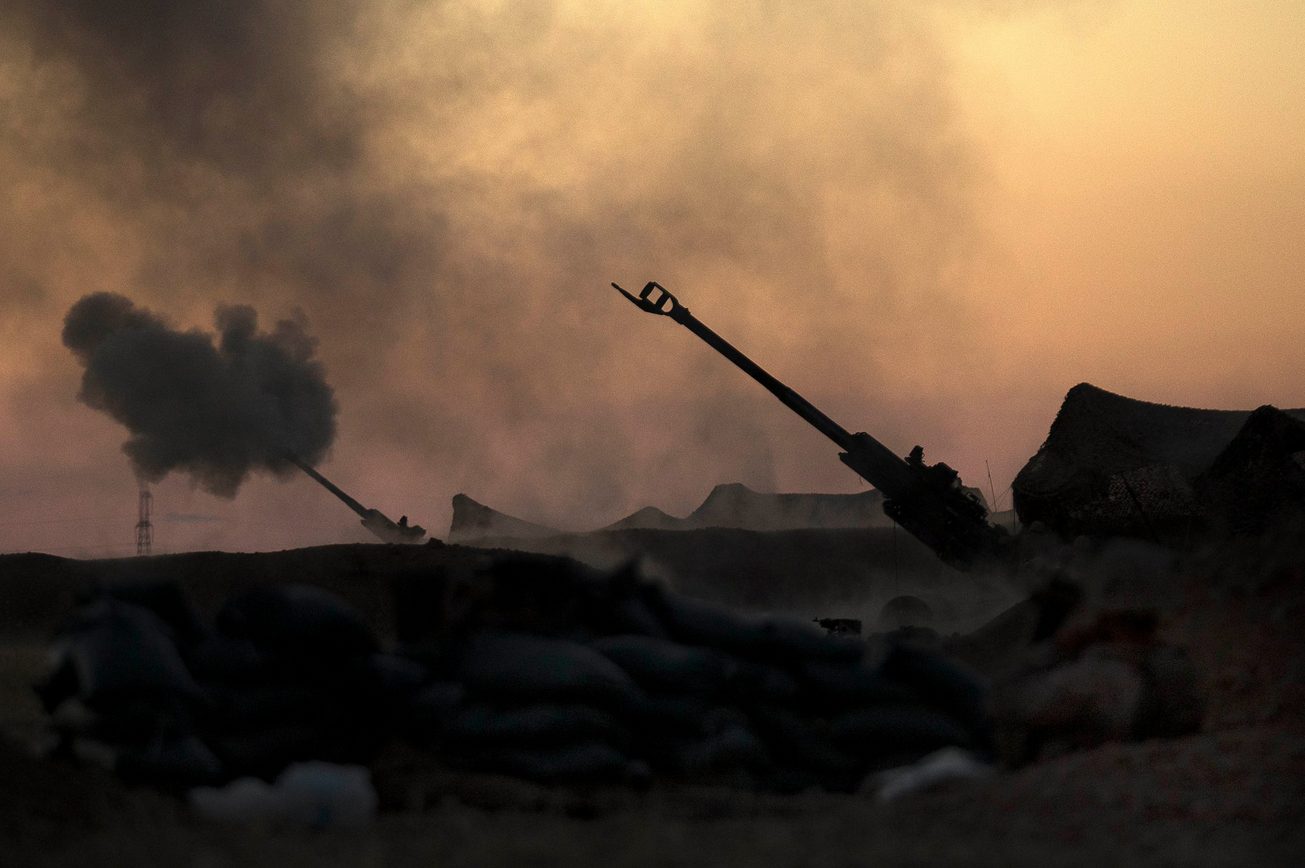
The Syrian Democratic Forces, backed by US-led coalition airpower, opened the battle for Raqqa, ISIS's de facto capital, in a campaign that leveled much of the city before its fall that October.
Al-Nusra-led factions merge into Hayat Tahrir al-Sham
Jabhat Fatah al-Sham, the rebranded former al-Nusra Front, merged with several other Islamist factions in Idlib to form Hayat Tahrir al-Sham, which consolidated control over the province and, under its leader Abu Mohammad al-Jolani (later Ahmed al-Sharaa), would go on to lead the 2024 offensive that toppled Assad.
East Aleppo falls after a Russian-backed siege
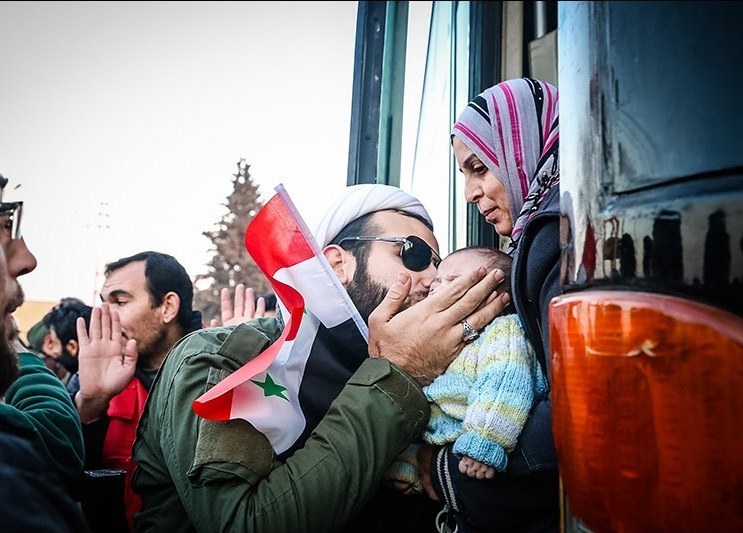
After months of siege and bombardment by Syrian, Russian and Iranian-backed forces, opposition fighters agreed to evacuate east Aleppo, ending more than four years of divided control and marking a major turning point toward the government's favor.
Syrian Democratic Forces formed as the coalition's ground partner
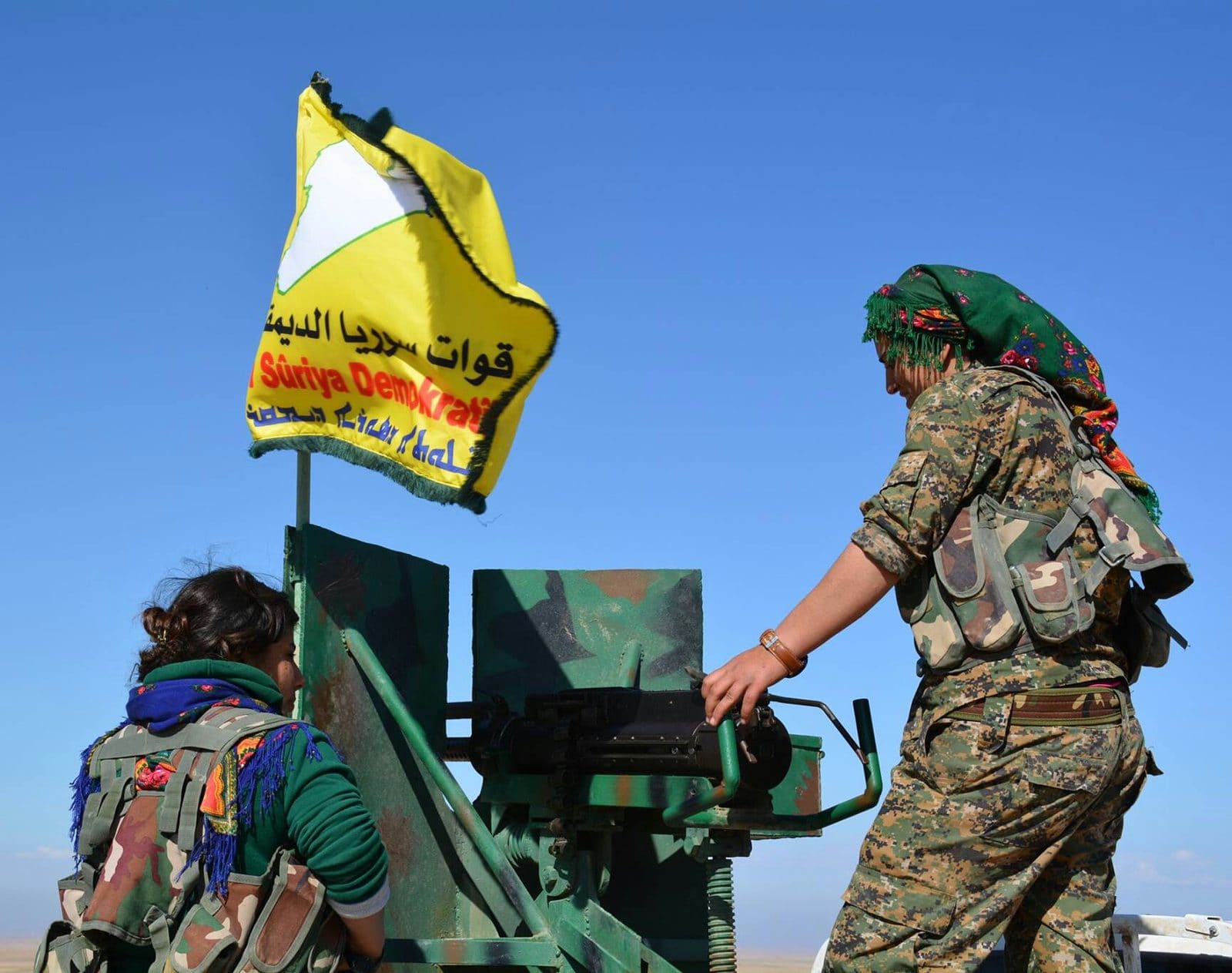
The Kurdish-led YPG and YPJ merged with Arab, Assyrian and other local factions to form the Syrian Democratic Forces, which became the US-led coalition's principal ground partner against ISIS in northern and eastern Syria.
Russia launches airstrikes at Assad's request
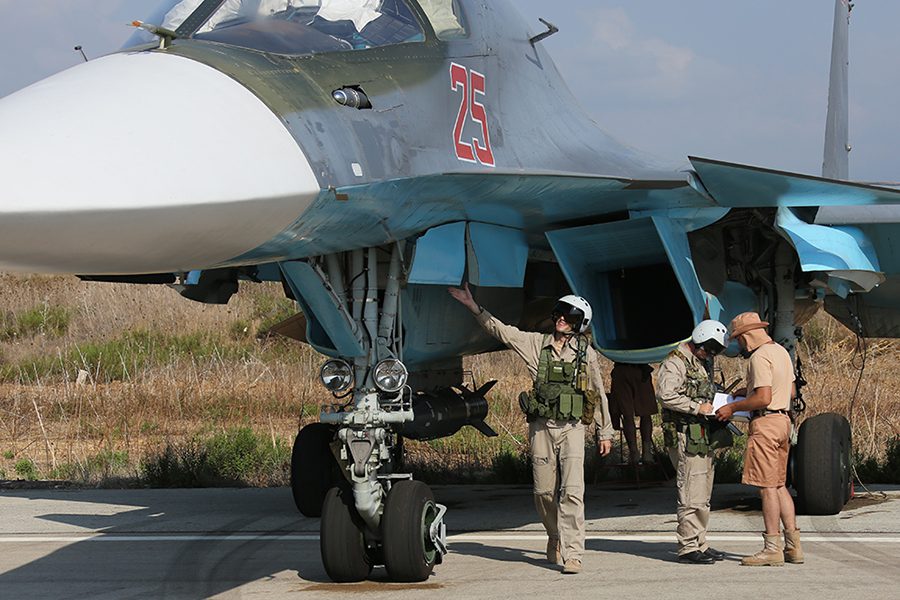
Russia began a military intervention in Syria at the Assad government's request, initially targeting a range of anti-government factions including but not limited to ISIS, a campaign that ran until December 2024 and became decisive in preserving Assad's position through 2020.
US-led coalition begins airstrikes against ISIS in Syria
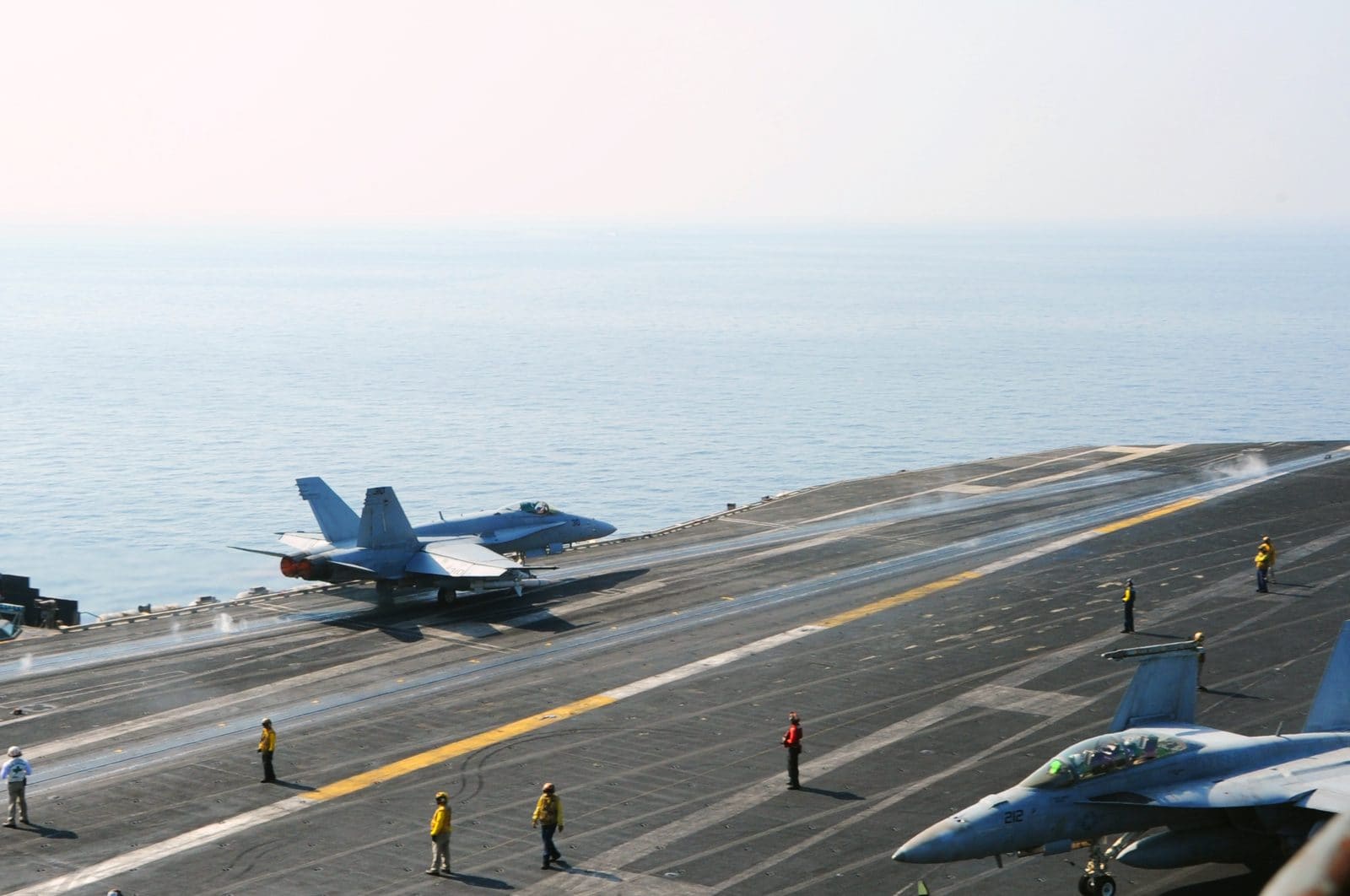
A US-led international coalition launched Operation Inherent Resolve airstrikes against ISIS targets inside Syria, opening a campaign that would run alongside Kurdish-led ground forces for the rest of the caliphate's existence.
Baghdadi declares a caliphate spanning Syria and Iraq
ISIS leader Abu Bakr al-Baghdadi declared a caliphate stretching from Aleppo to Diyala province in Iraq; at its territorial height the group held roughly 60 percent of Syria and 40 percent of Iraq.
UN commission of inquiry attributes Ghouta sarin to government stockpiles
The UN Human Rights Council's Independent International Commission of Inquiry on Syria reported that the sarin used at Ghouta shared unique chemical hallmarks with an earlier attack at Khan al-Asal, and that perpetrators likely had access to the Syrian Army's chemical stockpile, pointing to government responsibility without a mandate to issue a final legal finding.
ISIS seizes Raqqa, its future capital
The Islamic State drove rival rebel factions out of Raqqa and took sole control of the city, which became its de facto capital as the group expanded across eastern Syria and western Iraq.
Sarin attack on Ghouta kills hundreds
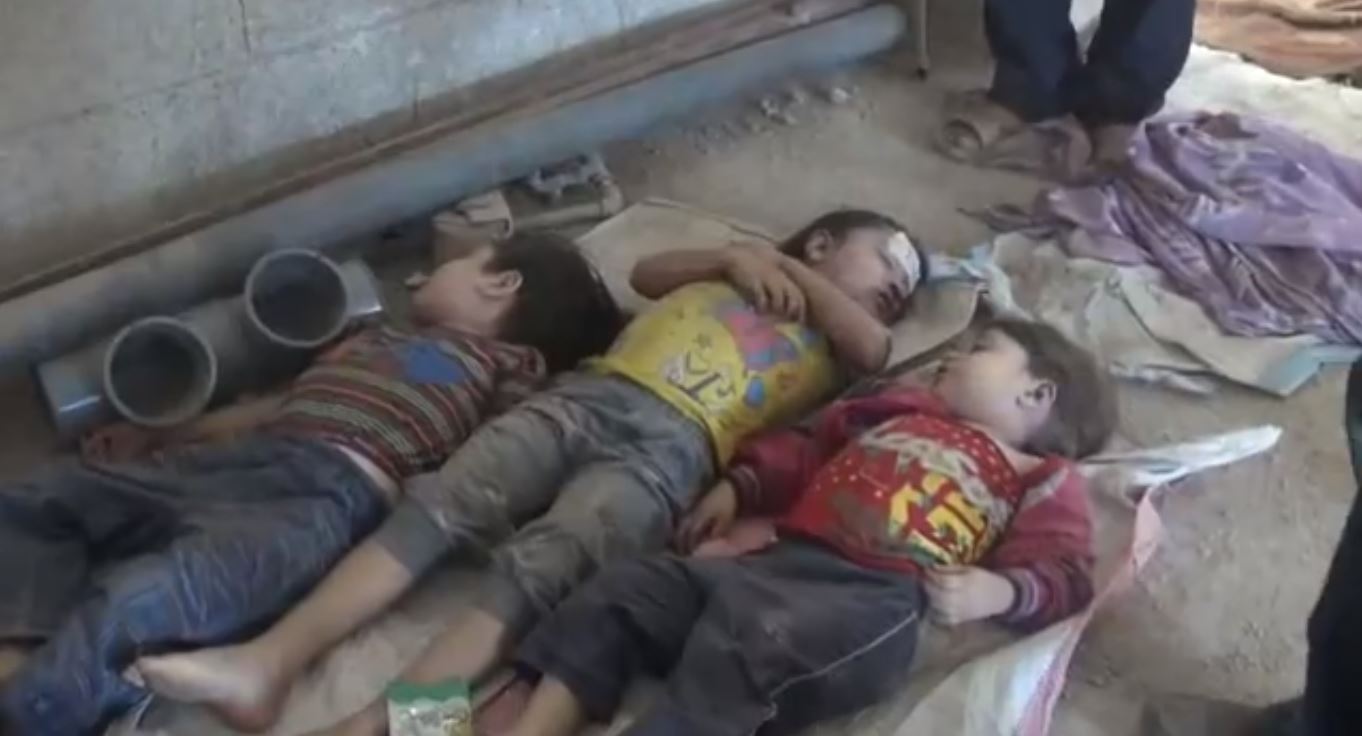
Rockets carrying the nerve agent sarin struck several Damascus suburbs collectively known as Ghouta, killing hundreds of people in what the UN Secretary-General called a war crime and the worst use of chemical weapons in the 21st century to that point.
Iran and Hezbollah intervene, turning the tide at Qusayr
Iranian Revolutionary Guard advisers and Hezbollah fighters, organized in part under Quds Force commander Qasem Soleimani, joined Syrian government forces in an offensive that recaptured the strategic town of Qusayr by June, a turning point that helped stabilize Assad's position after two years of losses.
Battle of Aleppo begins, splitting Syria's largest city
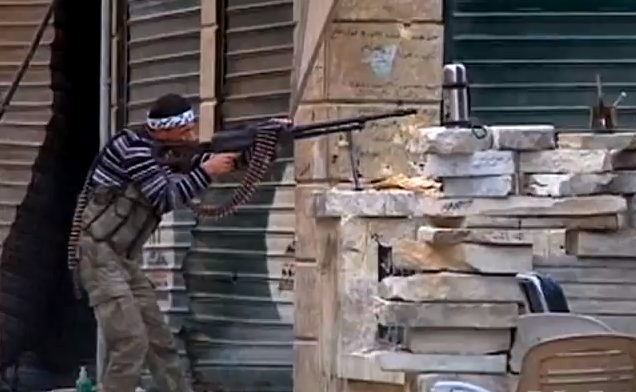
Opposition fighters entered Aleppo in force, opening a battle for Syria's largest city that split it into government- and opposition-held halves for more than four years and became one of the war's defining sieges.
Jabhat al-Nusra forms as al-Qaeda's Syrian affiliate
Jabhat al-Nusra announced its formation as al-Qaeda's official branch in Syria, introducing a transnational jihadist current into the opposition that would later evolve into Hayat Tahrir al-Sham.
Defected officers form the Free Syrian Army
A group of Syrian Army officers who had defected over the crackdown announced the formation of the Free Syrian Army, the loose umbrella that became the main banner for armed opposition to Assad in the war's early years.
Syrian Army lays 10-day siege to Daraa
The Syrian Army besieged Daraa with tanks, helicopters and up to 6,000 troops for ten days, arresting more than 1,000 people and killing more than 244, an operation widely credited with escalating the uprising into an armed rebellion.
Security forces kill at least 37 near Omari Mosque
Syrian security forces attacked thousands of demonstrators near Daraa's Omari Mosque, killing at least 37 people in one of the uprising's first mass-casualty crackdowns.
Protests spread nationwide, marking the start of the uprising
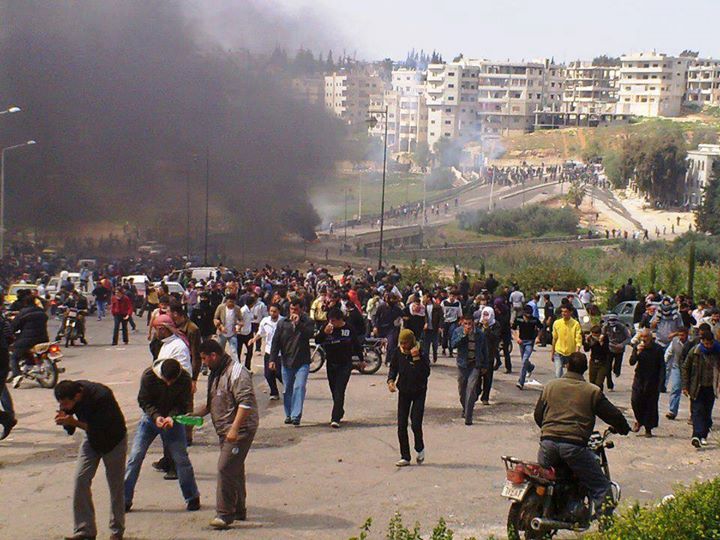
Demonstrations demanding the students' release, an end to corruption and greater political freedom spread from Daraa to other Syrian cities, a date now widely marked as the start of the Syrian revolution.
Daraa teenagers arrested and tortured over anti-government graffiti
Syrian security forces arrested 12 to 15 teenagers in Daraa for painting anti-government graffiti and tortured them in detention, an act that became the immediate spark for nationwide protest.
Frequently Asked Questions
How did the Syrian civil war start?
It began March 15, 2011, when protests spread nationwide after Syrian security forces arrested and tortured teenagers for anti-government graffiti in Daraa and then killed dozens of demonstrators in the crackdown that followed. A ten-day Syrian Army siege of Daraa that April is widely seen as the moment the uprising escalated into an armed rebellion, and defected officers formed the Free Syrian Army that July.
Is the Syrian civil war over?
The war's central axis, opposition versus the Assad government, ended when Bashar al-Assad fled to Moscow as Damascus fell on December 8, 2024. But Syria has not returned to peace: a transitional government under Ahmed al-Sharaa has since faced large-scale sectarian violence against Alawite and Druze communities, an Israeli military occupation of a southern buffer zone, a contested Kurdish-SDF integration process, and an ongoing insurgency by ISIS remnants, so most trackers describe Syria's situation as active instability rather than a concluded conflict.
What is Syria's status now, in mid-2026?
Syria is governed by a transitional administration under President Ahmed al-Sharaa, installed after the Constitutional Declaration of March 2025 for a five-year term running to 2030. The government has secured US sanctions relief and high-profile diplomatic recognition, including a November 2025 White House visit and a January 2026 Kremlin meeting with Putin, and carried out its first cabinet reshuffle in May 2026. But Human Rights Watch's 2026 World Report describes a country still marked by arbitrary detentions, an unresolved Kurdish-integration standoff, continued Israeli strikes and buffer-zone occupation in the south, and no elections yet scheduled, alongside more than 90 percent of the population living below the poverty line.
Who was responsible for Syria's chemical weapons attacks?
Multiple independent investigations attributed the largest attacks to the Syrian government under Assad. The UN's 2013 mission found clear evidence of sarin used at Ghouta, and the UN Human Rights Council's commission of inquiry later linked its chemical signature to army stockpiles. The OPCW's Investigation and Identification Team concluded with reasonable grounds in a 2023 report that Syrian Air Force helicopters dropped chlorine on Douma in April 2018. The Syrian government and Russia disputed these findings throughout.
What happened to the Islamic State's territory in Syria?
ISIS held roughly 60 percent of Syria at its peak in 2014 after declaring a caliphate from Raqqa, its de facto capital. A US-led coalition and the Kurdish-led Syrian Democratic Forces fought a multi-year campaign that retook Raqqa in October 2017 and eliminated the group's last territorial holdout at Baghouz in March 2019. ISIS remains active as an insurgency, and roughly 40,000 ISIS-linked detainees remain held in SDF-run camps in northeastern Syria as of the 2026 reporting period.
How many people has the war killed and displaced?
The Syrian Observatory for Human Rights has documented more than 528,500 deaths since 2011, a figure that continued rising after Assad's fall as investigators gained access to previously hidden mass graves and detention records. At the war's peak, more than 13.5 million Syrians, over 6 million refugees abroad and 7.4 million people internally displaced, had been forced from their homes, the largest displacement crisis of the war's era; UNHCR says roughly 3.1 million have returned since December 2024, still a minority of the total displaced.
Sources
- Siege of Daraa — Wikipedia
- Syrian revolution — Wikipedia
- Free Syrian Army — Wikipedia
- Al-Nusra Front — Wikipedia
- Battle of Aleppo (2012-2016) — Wikipedia
- Battle of al-Qusayr (2013) — Wikipedia
- Ghouta chemical attack — Wikipedia
- UN investigation of chemical weapons use in Ghouta — Wikipedia
- Islamic State — Wikipedia
- Syrian Democratic Forces — Wikipedia
- Russian intervention in the Syrian civil war — Wikipedia
- Siege of Eastern Ghouta — Wikipedia
- OPCW blames Syria government forces for 2018 Douma chlorine gas attack — Al Jazeera
- Operation Olive Branch — Wikipedia
- 2019 Turkish offensive into northeastern Syria — Wikipedia
- Battle of Baghuz Fawqani — Wikipedia
- Siege of Idlib — Wikipedia
- Turkey, Russia agree ceasefire in Syria's Idlib — The Moscow Times
- 2024 Syrian opposition offensives — Wikipedia
- Fall of Damascus (2024) — Wikipedia
- Battle of Hama (2024) — Wikipedia
- Israeli invasion of Syria (2024-present) — Wikipedia
- Sednaya Prison — Wikipedia
- Presidency of Ahmed al-Sharaa — Wikipedia
- More than 1,400 killed in sectarian violence in coastal Syria, report finds — Al Jazeera
- 2025 massacres of Syrian Alawites — Wikipedia
- April 2025 massacres of Syrian Druze — Wikipedia
- War crimes likely committed by both sides in Syria coastal violence: UN — Al Jazeera
- Syria: New investigation reveals evidence government and affiliated forces extrajudicially executed dozens of Druze people in Suwayda — Amnesty International
- World Report 2026: Syria — Human Rights Watch
- Fact Sheet: President Donald J. Trump Provides for the Revocation of Syria Sanctions — The White House
- Trump hosts Syria's al-Sharaa at White House as US extends sanctions relief — Al Jazeera
- How Damascus Reclaimed Syria's Northeast, and What Integration Now Means — Middle East Council on Global Affairs
- Syria: Transition and U.S. Policy — Congressional Research Service
- Putin meets with Syrian president at Kremlin amid uncertainty over Russian bases — The Moscow Times
- Syria sees first government reshuffle since al-Assad's ouster — Al Jazeera
- Final death toll of Syria's civil war exceeds 528,500: Monitor — Daily Sabah
- Casualties of the Syrian civil war — Wikipedia
- One million Syrian refugees returned home since al-Assad's fall, UN says — Al Jazeera
- Displacement doubles while funding shrinks, warns UNHCR — UN News