Nigerian Civil Conflict: Timeline & Latest Developments
Since 2009 Nigeria has fought three overlapping security crises at once: a still-active Boko Haram/ISWAP insurgency in the northeast the UN says has killed 40,000+ people, farmer-herder violence across the Middle Belt that lawmakers put above 60,000 dead since 2001, and a newer northwest banditry-kidnapping wave, together displacing more than 3.5 million people as of early 2026.
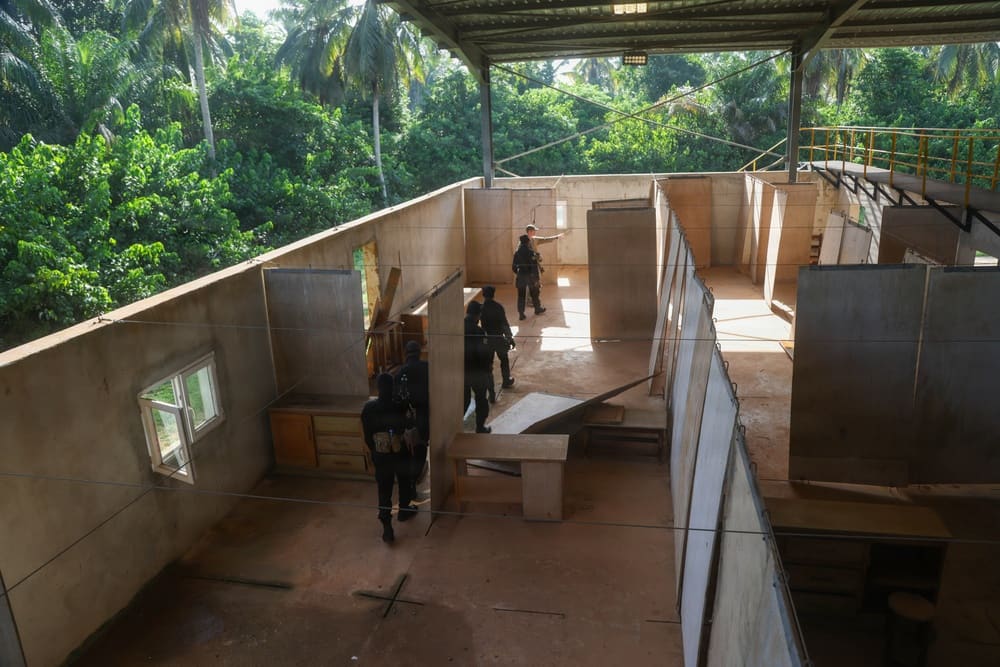
PFC Kristina Randall, U.S. Army, public domain, via DVIDS. Depicts a UK Ranger training with Nigerian Navy Special Boat Service operators during exercise Flintlock 26 in Cote d'Ivoire, April 15, 2026, illustrative of ongoing international counter-terrorism cooperation with Nigeria, not a strike or operation inside Nigeria itself.
Nigeria has spent the seventeen years since 2009 fighting three overlapping security crises rather than one war, and this page tracks all three together because that is how Nigerians experience them: as a combined toll on one country. The largest and longest-running is the jihadist insurgency in the northeast, where Boko Haram, founded by Mohammed Yusuf in Maiduguri in 2002 as a Salafist preaching movement, turned to armed rebellion in July 2009 after security forces killed Yusuf in police custody without trial. Under successor Abubakar Shekau, the group became one of the world’s deadliest militant movements, seizing towns across Borno, Yobe, and Adamawa states, declaring a short-lived “caliphate” after capturing Gwoza in August 2014, and carrying out the April 2014 Chibok kidnapping of 276 schoolgirls that turned the insurgency into a global story via #BringBackOurGirls. A reinforced Multinational Joint Task Force of Nigerian, Chadian, Nigerien, and Cameroonian forces pushed the group out of most held territory by mid-2015, but it split in 2016 when Islamic State leadership recognized rival commander Abu Musab al-Barnawi as head of what became ISWAP, separating from Shekau’s faction, which kept the Boko Haram name. Shekau died by suicide vest in May 2021 rather than surrender to an ISWAP offensive on his stronghold in Sambisa Forest. ISWAP has since become the more capable faction, escalating attacks on military bases across Borno and Yobe since 2025, while Shekau’s old faction fights on separately. The UN estimated in January 2026 that more than 40,000 had died and 3.5 million had been displaced since 2009, a broad aggregate rather than a precise count, given how hard verification is inside active conflict zones.
These are three separate tallies from three different sources over three different time windows, not one dataset, so read the comparison as order of magnitude, not exact ratio: farmer-herder violence has killed more people over a longer 23-year span than the Boko Haram/ISWAP insurgency has in 17, while the northwest's newer banditry crisis has compressed a comparable death rate into less than a decade.
The second crisis runs through Nigeria’s Middle Belt, mainly Plateau, Benue, and southern Kaduna states, where predominantly Muslim Fulani cattle herders and predominantly Christian and traditionalist farming communities clash with escalating lethality over grazing land, water access, and cattle routes squeezed by population growth and climate-driven desertification. It is not a new conflict, but it has deepened since 2018: gunmen attacked eleven Berom farming villages in Barkin Ladi that June, killing somewhere between 86 (the initial police count) and 233 (a church-led tally); Christmas Eve attacks in December 2023 killed close to 200 across Plateau villages; and renewed violence killed 30 more the following January. Survivors and officials have consistently identified the attackers as Fulani herdsmen, while Fulani representatives reject collective blame and point to a cycle of reciprocal attacks stretching back years. In August 2023, House Speaker Tajudeen Abbas told a parliamentary committee that more than 60,000 people had died in farmer-herder violence nationwide since 2001, a legislative estimate but the most-cited figure for a conflict with no single coordinating actor and no dedicated UN tracking mechanism.
The third and most recent crisis is the banditry and mass-kidnapping wave centered on Zamfara, Katsina, Kaduna, Sokoto, and neighboring northwestern states, where armed criminal gangs, some rooted in cattle rustling and some led by former herders, have built a kidnapping-for-ransom economy that targets entire schools. The pattern became internationally visible with the December 2020 abduction of more than 300 boys from a school in Kankara, Katsina State, an attack Boko Haram initially claimed but which officials later attributed to local bandit gangs, an early sign that claims of responsibility here are often contested and unreliable. The 344 Kankara boys were released within a week through negotiations involving so-called “repentant bandits” as intermediaries. A similar attack in March 2024 saw more than 200 students abducted from a school in Kuriga, Kaduna State, almost exactly ten years after Chibok; they were released unharmed after 16 days. Researchers have documented a worrying convergence between some bandit networks and jihadist groups, though most bandit violence stays criminal rather than ideological. Wikipedia’s aggregated tracking put the toll at more than 12,000 killed and 450,000 displaced since roughly 2011, with one widely cited breakdown putting deaths at 8,300 across five northwestern states between January 2013 and March 2022 alone. The line between the northeast insurgency and northwestern criminal violence blurred further in January 2026, when gunmen abducted an estimated 163 to 172 worshippers from two Kaduna churches during Sunday services; no group claimed responsibility, reporting attributed the attack only tentatively to “believed” herdsmen, and Kaduna’s state government initially denied the abductions had happened at all.
That attribution problem sits at the center of the most consequential recent development: in October and November 2025, President Trump designated Nigeria a Country of Particular Concern and threatened to send US troops “guns-a-blazing” or strike Nigeria directly, citing what he described as a mass killing of Christians. Nigeria’s government rejected the genocide framing, noting that Boko Haram and ISWAP kill and displace Muslims and Christians alike, that the deadliest insurgency violence sits in the majority-Muslim northeast, and that Middle Belt and northwest violence, whatever its disproportionate impact on some Christian communities, is entangled with land, ethnic, and criminal dynamics that resist a single religious narrative. Independent researchers generally find the available data supports neither the “genocide” framing nor a blanket denial that religion plays any role. What followed the threats was narrower than the rhetoric: the US deployed roughly 200 personnel to the Lake Chad Basin in February 2026 to support Nigerian counter-ISWAP operations, a joint strike killed a man officials described as ISIS’s global second-in-command, Abu-Bilal al-Minuki, in May 2026, and by July the US had withdrawn most of that deployment while keeping intelligence-sharing in place. All three conflicts remain active, with no ceasefire or peace process capable of resolving even one of them, let alone all three at once.
Full Timeline (most recent first)
US withdraws most forces from Nigeria
AFRICOM commander Gen. Dagvin Anderson said the United States had withdrawn most of the forces deployed for the Lake Chad Basin operation following the al-Minuki strike, while continuing intelligence-sharing and other security cooperation with Nigeria at its government's request.
US-Nigeria strike kills ISIS global second-in-command
A joint US-Nigerian operation at a compound in the Lake Chad Basin killed Abu-Bilal al-Minuki, described by Trump and US officials as ISIS's global second-in-command overseeing the group's provinces worldwide, along with several lieutenants. AFRICOM said the raid caused no US or Nigerian casualties; the scale and seniority of al-Minuki's role rested on US and Nigerian government characterizations that were not independently verified by outside researchers.
US deploys forces to the Lake Chad Basin
The United States deployed roughly 200 military personnel to support intelligence, surveillance, and counter-terrorism operations against ISWAP in the Lake Chad Basin, at the Nigerian government's request, a smaller and more targeted footprint than the unilateral strikes Trump had threatened months earlier.
163 worshippers abducted from Kaduna churches
Armed gunmen raided at least two churches during Sunday services in the Kajuru area of Kaduna State, forcing an estimated 163 to 172 worshippers into the bush; nine escaped immediately. No group claimed responsibility; local and advocacy reporting described the attackers as believed to be militant herdsmen, an attribution that has not been independently confirmed, and Kaduna's state government initially denied the abductions had occurred at all.
Trump threatens US military action against Nigeria
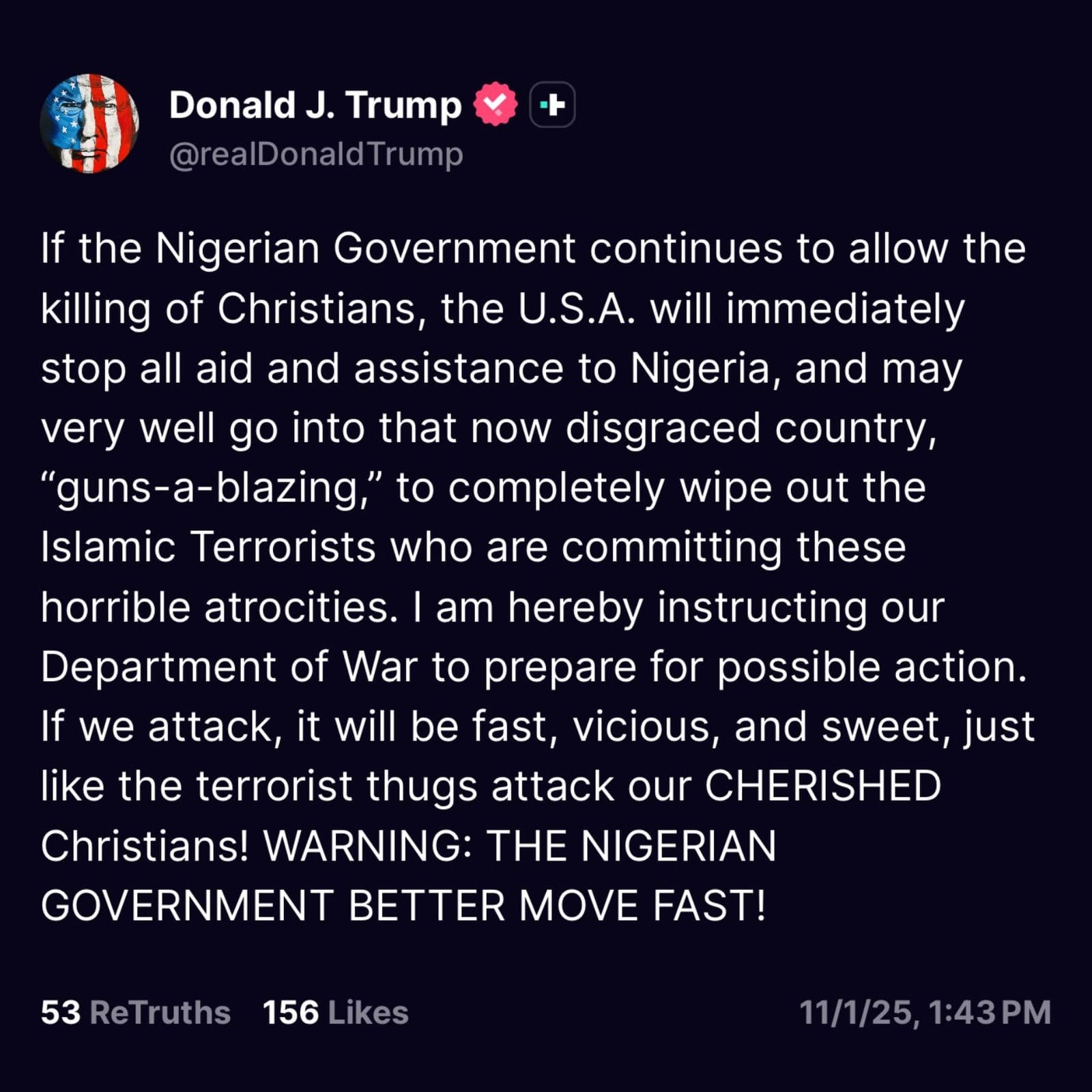
Trump said the US could strike or send troops into Nigeria 'guns-a-blazing' if the government did not stop what he called the killing of Christians, and ordered the Pentagon to prepare options. Nigeria's government again disputed the genocide framing while welcoming continued US counter-terrorism assistance; the threatened unilateral strike option was not carried out.
Trump designates Nigeria a 'Country of Particular Concern'
President Trump redesignated Nigeria a Country of Particular Concern under US religious freedom law, citing what he described as mass killings of Christians. Nigerian officials rejected the characterization, saying Boko Haram and ISWAP have killed Muslims and Christians alike and that the violence is not a targeted religious genocide; independent researchers say the available data does not cleanly support either side's framing.
ISWAP escalates attacks on Nigerian military bases
ISWAP intensified a campaign of coordinated assaults on Nigerian military outposts across Borno and Yobe states, overrunning positions on more than a dozen occasions since the start of 2025, killing soldiers including senior officers and seizing weapons, using increasingly sophisticated tactics including modified commercial drones.
Amnesty documents abuse of escaped Boko Haram captives in military custody
Amnesty International reported that girls and young women who had escaped Boko Haram captivity were subsequently held in prolonged, unlawful detention by the Nigerian military, at times alongside their children, in conditions the organization said amounted to further abuse rather than protection or rehabilitation.
Kuriga students released unharmed after 16 days
The Kuriga students were released and reunited with their families after 16 days in captivity. Nigerian officials described the outcome as a successful rescue; independent reporting on whether a ransom was paid to secure the release was not conclusively confirmed.
Gunmen abduct 200+ students from a Kuriga school in Kaduna
Dozens of gunmen on motorcycles raided the Government Secondary School and a nearby primary school in Kuriga, Kaduna State, abducting roughly 200 to 300 students during morning assembly, ten years almost to the week after the Chibok kidnapping and evidence that mass school abductions had shifted from the northeast to the northwest's bandit economy.
Renewed Plateau violence kills 30
A fresh round of attacks in Plateau State killed at least 30 people in the weeks following the Christmas Eve massacre, underscoring that the December violence had not been an isolated spike.
Christmas Eve attacks kill nearly 200 across Plateau villages
Gunmen attacked a string of villages in Plateau State on Christmas Eve, killing close to 200 people in one of the deadliest single episodes of Middle Belt violence in years. Survivors again identified the attackers as armed herdsmen; no group claimed responsibility, and Fulani community leaders condemned the killings while rejecting blanket characterization of the attacks as ethnically organized.
Lawmakers put farmer-herder death toll above 60,000 since 2001
House of Representatives Speaker Tajudeen Abbas told a parliamentary committee session on farmer-herder violence that more than 60,000 Nigerians had died in the conflict since 2001, calling it a national security challenge that had spread beyond Nigeria's borders into the wider West African region. The figure is a legislative estimate rather than an independently verified count.
Abubakar Shekau dies as ISWAP overruns Sambisa Forest
ISWAP fighters invaded Sambisa Forest, Boko Haram's traditional stronghold, and cornered Shekau, who detonated a suicide vest rather than surrender, killing himself and a senior ISWAP commander negotiating with him. His death was confirmed by ISWAP and, weeks later, by his own surviving loyalists, who continued fighting under new leadership rather than join ISWAP.
344 Kankara boys released after negotiations
Zamfara's governor said 344 boys held in the Rugu Forest were released after negotiations that involved 'repentant bandits' as intermediaries; officials said no ransom was paid, though the details of the deal were not fully disclosed.
Gunmen abduct 300+ boys from a Kankara school in Katsina
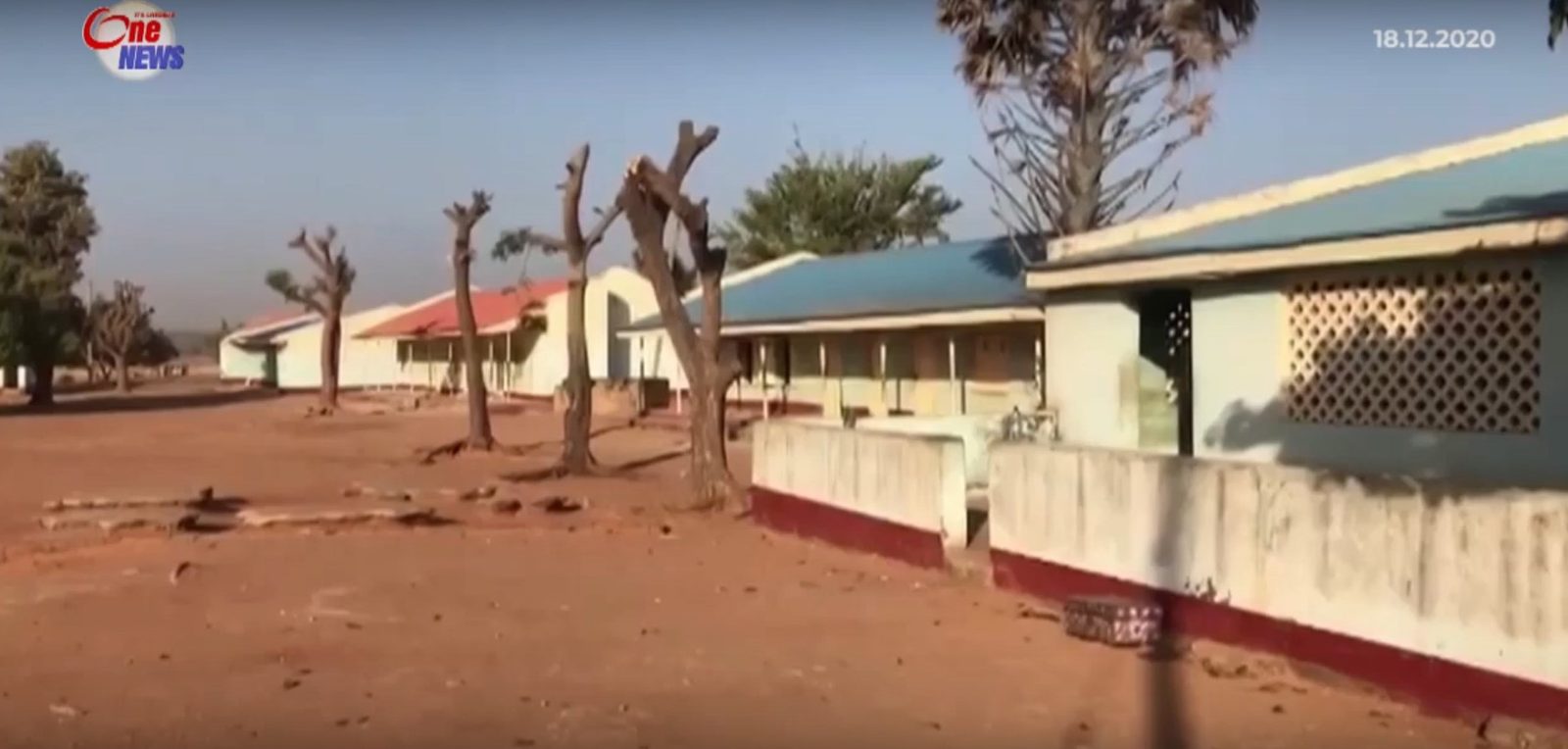
More than 300 students were abducted from the Government Science Secondary School in Kankara, Katsina State. Boko Haram initially claimed responsibility, but Katsina and Zamfara state officials later attributed the attack to local criminal bandit gangs, some led by former Fulani herders, rather than the insurgent group, an attribution that remains disputed.
Boko Haram massacres rice farmers near Zabarmari
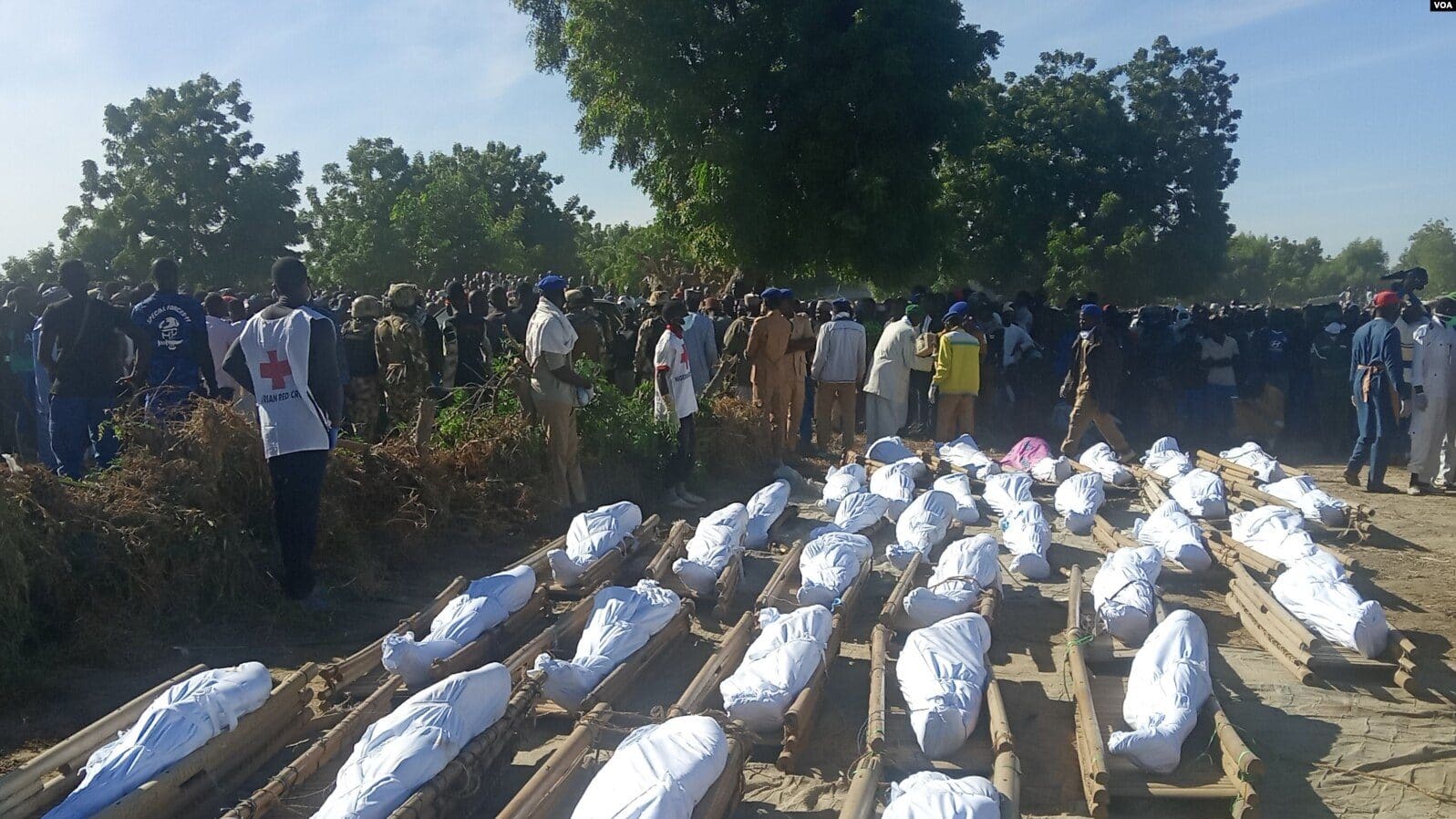
Boko Haram fighters killed more than 100 agricultural laborers, most of them migrant workers from Sokoto State, in fields near the villages of Koshobe and Zabarmari, Borno State. Nigerian officials said the attack was reprisal for farmers capturing and confronting a Boko Haram gunman who had been extorting them the day before; Borno's governor called it the deadliest attack on civilians in the state in years.
Displacement swells Maiduguri's IDP camps past a million
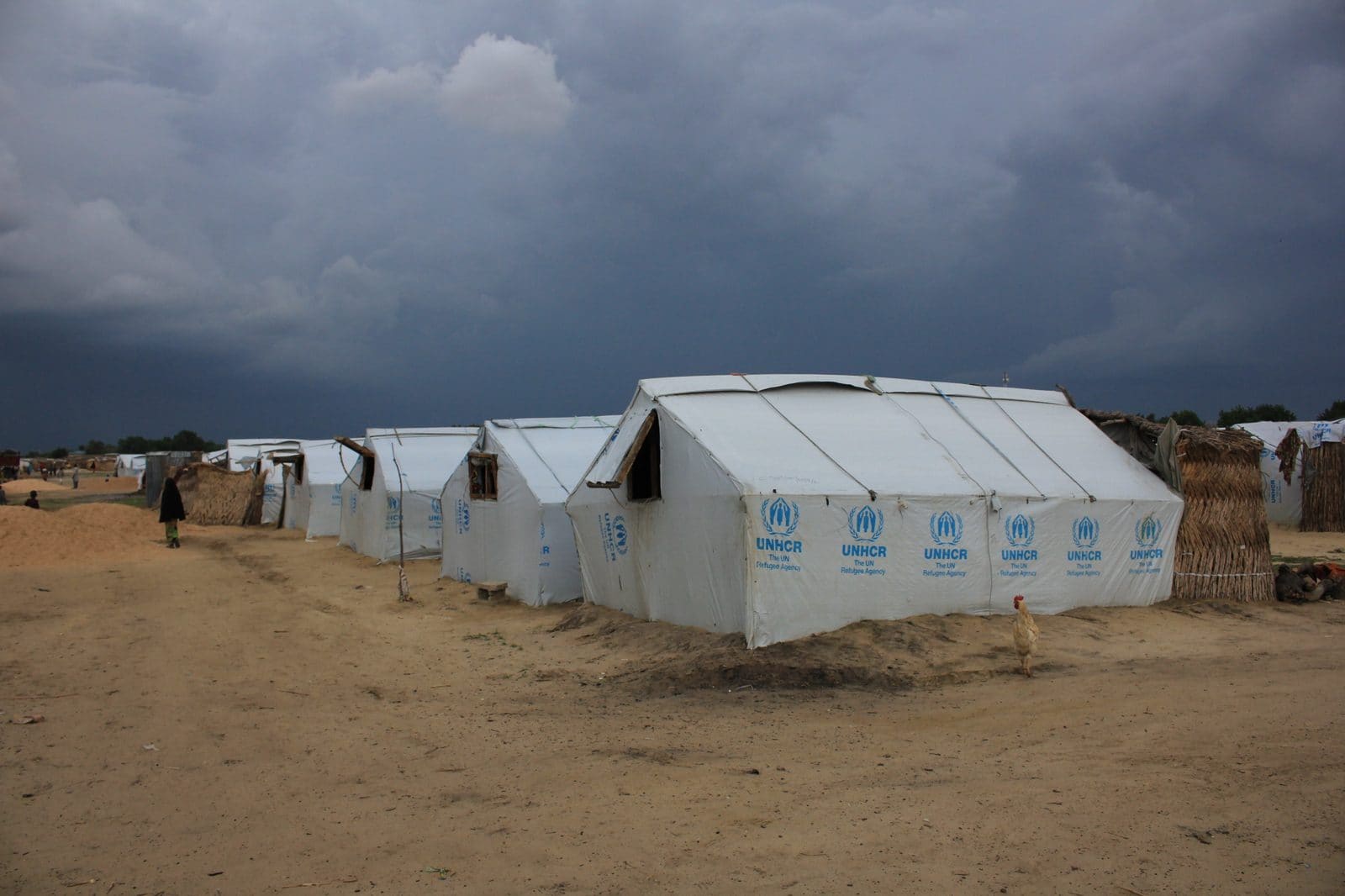
By mid-2018, more than a million people displaced by the insurgency were living in camps and host communities around Maiduguri, Borno State's capital, straining food, water, and shelter provision even as the military declared most of the surrounding territory recaptured. Camp populations and closures have continued to fluctuate through 2026 as fighting flares and subsides in different districts.
Farmer-herder clashes kill upward of 200 in Plateau State
Gunmen attacked eleven Berom farming villages in Barkin Ladi, Plateau State, and reprisal violence followed on nearby highways; police initially confirmed 86 dead, while the state governor and a church-led fact-finding mission put the toll closer to 200 to 233. Survivors and local officials identified the attackers as Fulani herdsmen; Fulani community representatives have disputed collective blame and pointed to years of reciprocal violence over land and grazing routes.
Dapchi girls released; Leah Sharibu alone held back
Boko Haram returned 106 of the Dapchi girls after five had died during the kidnapping itself, but kept Leah Sharibu, the only Christian among them, in captivity after she refused to convert to Islam. Advocacy group Christian Solidarity Worldwide and Sharibu's family have since said she was forced to convert and married to a Boko Haram fighter, claims Boko Haram has not addressed publicly; as of mid-2026 she remains the sole Dapchi girl never returned.
Boko Haram abducts 110 schoolgirls from Dapchi
Gunmen abducted 110 girls aged 11 to 19 from the Government Girls' Science and Technical College in Dapchi, Yobe State, in an attack that closely echoed the Chibok kidnapping four years earlier.
Rescued Chibok girl found alive in Sambisa Forest with infant
Vigilante fighters from the Civilian Joint Task Force found Chibok schoolgirl Amina Ali Nkeki alive in Sambisa Forest along with her infant daughter and a man identified as a Boko Haram militant who claimed to be her husband, one of the rare individual discoveries among the still-missing girls.
Nigerian Army holds first drills inside Sambisa Forest in years
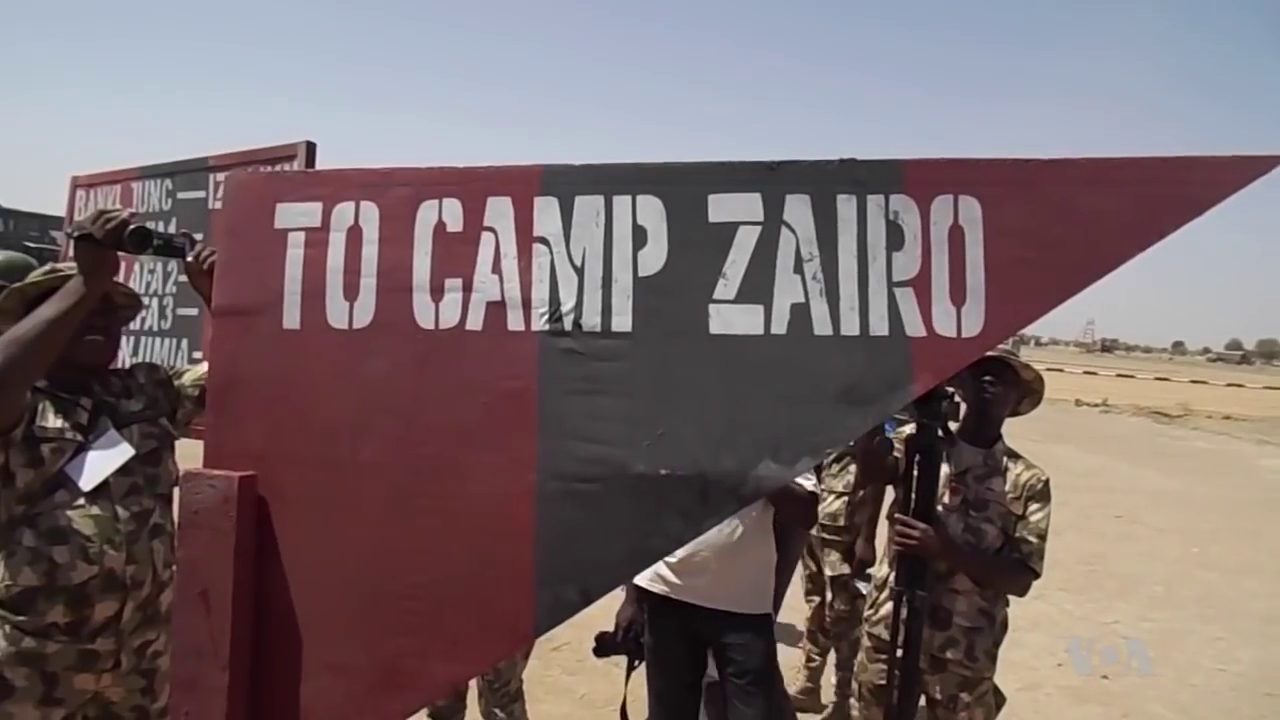
The Nigerian Army conducted military exercises inside Sambisa Forest, long a Boko Haram stronghold, for the first time in years, a symbolic marker of the territory the multinational offensive had reclaimed even as insurgent remnants remained active in the area.
21 Chibok girls freed in ICRC-brokered deal
Boko Haram released 21 of the Chibok schoolgirls following negotiations brokered by the International Committee of the Red Cross and the Swiss government, the first significant release since the 2014 kidnapping.
ISIS splits ISWAP from Shekau's Boko Haram
Islamic State leadership recognized Abu Musab al-Barnawi, believed to be Yusuf's son, as ISWAP's new leader over Shekau's objections, citing Shekau's indiscriminate killing of Muslim civilians and use of child suicide bombers. Shekau rejected the move and retained a rival faction that kept the Boko Haram name.
Buhari declares Boko Haram 'technically defeated'
President Muhammadu Buhari said Nigeria had 'technically won the war' against Boko Haram, citing the military's recapture of territory and the group's reduced ability to hold ground. Boko Haram continued to carry out suicide bombings, raids, and abductions in the following years, and many Nigerians and analysts disputed the characterization.
Boko Haram destroys a captured Nigerian Army vehicle near Marrabara
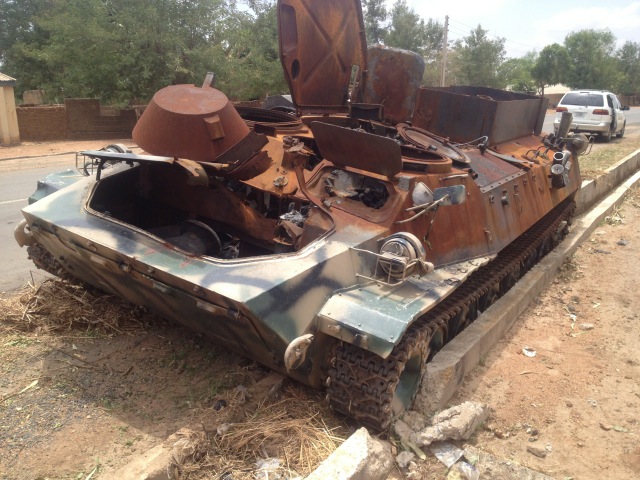
Fighting continued alongside the multinational offensive: Boko Haram fighters captured and later destroyed a Nigerian Army MT-LB armored vehicle near Marrabara, Adamawa State, in March 2015, evidence that the group retained the ability to inflict materiel losses on the army even as it lost territory.
Boko Haram pledges allegiance to Islamic State
Shekau pledged Boko Haram's allegiance to the Islamic State in an audio statement. IS accepted the pledge days later and the group began operating under the name Islamic State West Africa Province (ISWAP), though the two organizations would later split.
Multinational offensive drives Boko Haram out of most held territory
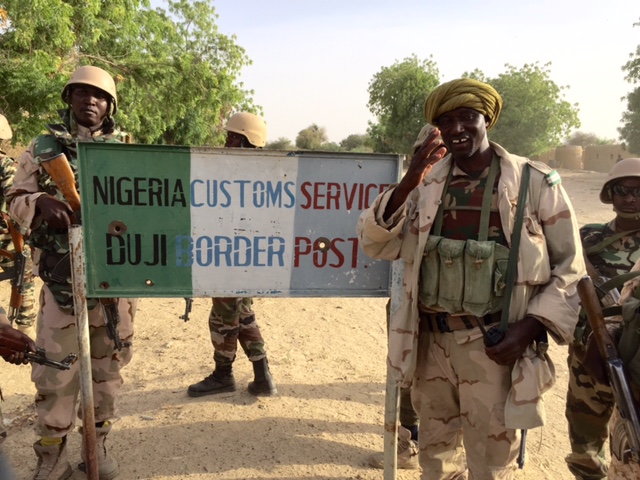
A reinforced Multinational Joint Task Force combining Nigerian, Chadian, Nigerien, and Cameroonian forces launched coordinated offensives from Baga, Diffa, Baga-Sola, and Mora, pushing Boko Haram out of most of the territory it had held since 2014 and forcing it back to guerrilla tactics.
Boko Haram overruns Baga in the insurgency's deadliest attack
Boko Haram fighters overran a military base and the town of Baga over several days, killing residents and burning at least 16 surrounding towns. Amnesty International cited satellite imagery and witness accounts suggesting a toll near 2,000; the Nigerian Ministry of Defence disputed that figure and put total deaths, including militants, at no more than 150, a discrepancy that was never independently resolved.
Boko Haram declares a 'caliphate' after seizing Gwoza
After capturing the town of Gwoza, Shekau declared an Islamic caliphate over Boko Haram-held territory in a video statement, claiming areas of Borno State no longer belonged to Nigeria. The Nigerian military rejected the claim, saying the country's territorial integrity remained intact.
#BringBackOurGirls campaign draws global attention
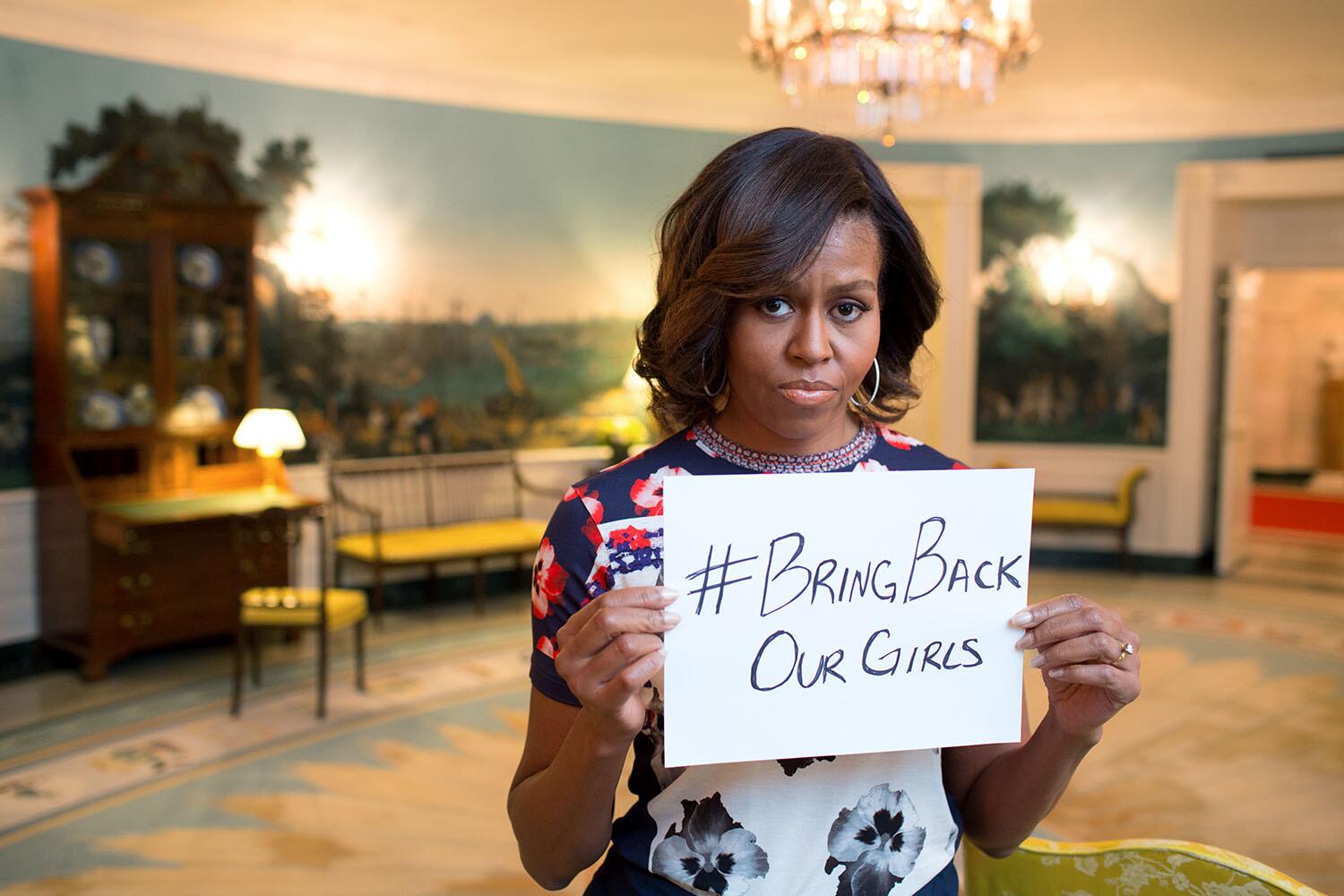
The Chibok kidnapping became a global story as the #BringBackOurGirls hashtag spread, with figures including US First Lady Michelle Obama publicly calling for the girls' release and pressuring the Nigerian government to intensify its response.
Boko Haram abducts 276 schoolgirls from Chibok
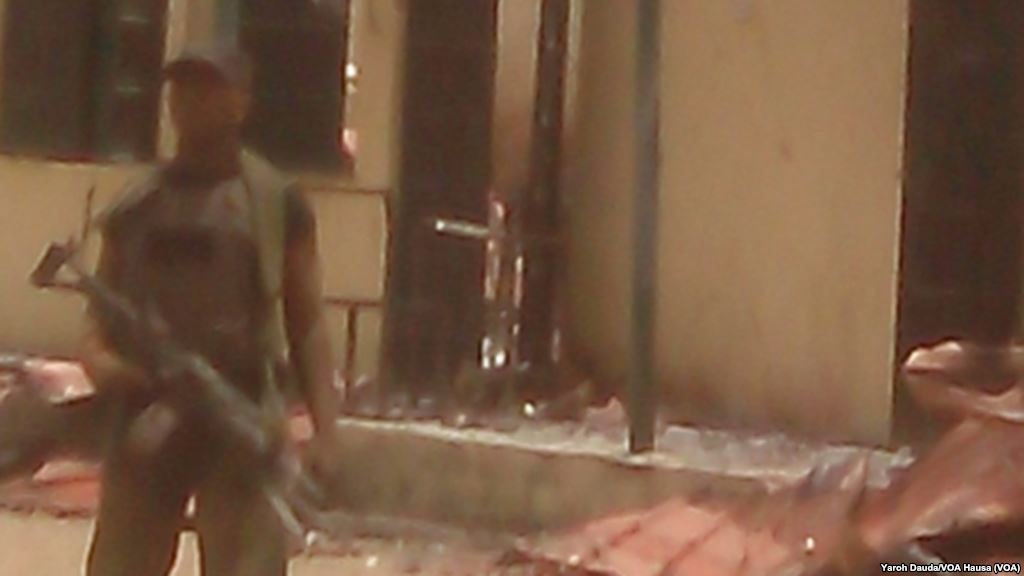
Gunmen dressed as soldiers raided the Government Girls Secondary School in Chibok, Borno State, and abducted 276 students who had returned to sit final exams despite the school being officially closed for security reasons. Fifty-seven girls escaped within hours by jumping from the trucks transporting them.
Twin bombings kill dozens at Nyanya bus station in Abuja
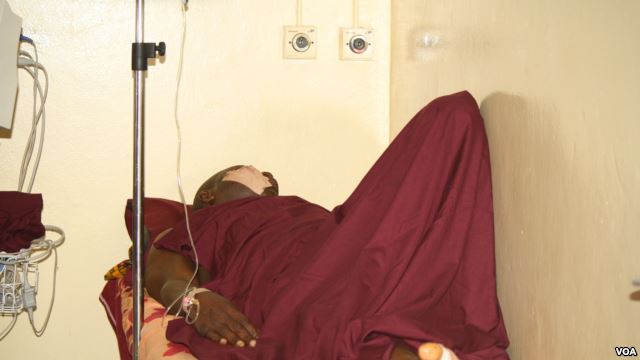
A bomb tore through a crowded bus station in Nyanya, on the outskirts of the capital Abuja, killing at least 71 people and injuring 124 more. Boko Haram was widely blamed for the attack, one of the deadliest to hit the capital region.
Nigeria declares a state of emergency in three states
President Goodluck Jonathan declared a state of emergency across Borno, Yobe, and Adamawa states after Boko Haram fighting killed roughly 200 people in Baga, deploying troops for a major offensive and shutting down mobile phone networks across the region.
Abubakar Shekau resurfaces as Boko Haram's new leader
After a period believed dead or in hiding, Yusuf's deputy Abubakar Shekau resurfaced in a 2010 video claiming leadership of Boko Haram and vowing revenge for Yusuf's killing, launching the far more violent phase of the insurgency that followed.
Founder Mohammed Yusuf killed in police custody
Nigerian police captured Yusuf during the uprising and killed him in Maiduguri days later while he was in custody, without trial. Human rights groups have since described the killing as extrajudicial; the police at the time said he was shot attempting to escape.
Boko Haram launches an armed uprising
Fighting broke out between Boko Haram militants and Nigerian security forces at Yusuf's Ibn Taymiyyah compound in Maiduguri, spreading to Bauchi, Yobe, and Kano states over five days. The clash marked Boko Haram's shift from a preaching movement to an armed insurgency.
Mohammed Yusuf founds Boko Haram in Maiduguri
Mohammed Yusuf established Boko Haram in Maiduguri, Borno State, in 2002 as a Salafist preaching movement aimed at purifying Sunni Islam in northern Nigeria and eventually establishing sharia law. For its first years the group avoided open conflict with the state.
Frequently Asked Questions
What is Boko Haram and when did it start?
Boko Haram is a jihadist militant group founded by Mohammed Yusuf in Maiduguri, Borno State, in 2002 as a Salafist preaching movement. It became an armed insurgency in July 2009 after clashes with Nigerian security forces and the extrajudicial killing of Yusuf in police custody, and under his successor Abubakar Shekau it grew into one of the world's deadliest militant groups, responsible for tens of thousands of deaths across Nigeria's northeast and the wider Lake Chad Basin.
What is the difference between Boko Haram and ISWAP?
Both trace back to Mohammed Yusuf's original movement. Boko Haram pledged allegiance to the Islamic State in 2015, but in 2016 Islamic State leadership recognized a rival commander, Abu Musab al-Barnawi, as leader of what became the Islamic State West Africa Province (ISWAP), splitting from Abubakar Shekau's faction, which kept the Boko Haram name and continued operating separately. ISWAP has generally focused more on attacking military and government targets and building local governance, while Shekau's faction was known for indiscriminate attacks on civilians, including fellow Muslims. Shekau died in 2021 during an ISWAP offensive on his Sambisa Forest stronghold; remnants of his faction have continued fighting under new leadership rather than merge into ISWAP.
What happened to the Chibok schoolgirls?
Boko Haram abducted 276 schoolgirls from Chibok, Borno State, on April 14 to 15, 2014. Fifty-seven escaped within hours. Dozens more were freed or escaped over the following years, including 21 released in an October 2016 ICRC-brokered deal, but as of Amnesty International's April 2024 accounting, at least 82 of the original 276 remained unaccounted for a decade later.
Is Nigeria experiencing a Christian genocide, as Donald Trump has claimed?
This is genuinely contested. In October and November 2025, Trump designated Nigeria a Country of Particular Concern and threatened US military action, citing what he described as mass killings of Christians. Nigeria's government has rejected that framing, pointing out that Boko Haram and ISWAP have killed and displaced Muslims as well as Christians, that the deadliest insurgency violence is concentrated in the predominantly Muslim northeast, and that farmer-herder and banditry violence in the Middle Belt and northwest, while it has disproportionately affected Christian farming communities in some areas, is intertwined with land, ethnic, and criminal dynamics rather than being purely a religious campaign. Both the scale of specifically anti-Christian intent and the overall casualty breakdown by religion remain disputed among researchers, and this page treats the 'genocide' characterization as a contested political claim rather than an established fact.
What is causing the farmer-herder violence in Nigeria's Middle Belt?
The conflict pits predominantly Muslim Fulani cattle herders against predominantly Christian and traditionalist farming communities, mainly in Plateau, Benue, and southern Kaduna states, over shrinking grazing land and water access, a competition worsened by population growth, climate-driven desertification pushing herders further south, and the proliferation of small arms. Nigerian lawmakers estimated in 2023 that more than 60,000 people had been killed in the conflict since 2001, though estimates vary by source and the killings are not centrally coordinated the way the Boko Haram insurgency is.
What is banditry in northwest Nigeria and how is it different from Boko Haram?
Banditry in Zamfara, Katsina, Kaduna, Sokoto, and neighboring states involves armed criminal gangs, many originally formed around cattle rustling and some led by former herders, that carry out mass kidnappings for ransom, village raids, and extortion. Unlike Boko Haram and ISWAP, most bandit groups are not driven by a stated jihadist ideology, though researchers have documented a growing convergence between some bandit networks and jihadist groups in recent years. Wikipedia's aggregated tracking put the toll at more than 12,000 killed and 450,000 displaced since the crisis intensified around 2011.
Sources
- Boko Haram insurgency — Wikipedia
- Mohammed Yusuf (Boko Haram) — Wikipedia
- Abubakar Shekau — Wikipedia
- Chibok schoolgirls kidnapping — Wikipedia
- Nigeria: Decade after Boko Haram attack on Chibok, 82 girls still in captivity — Amnesty International
- Dapchi schoolgirls kidnapping — Wikipedia
- Abu Musab al-Barnawi — Wikipedia
- Islamic State - West Africa Province — Wikipedia
- 2015 Baga massacre — Wikipedia
- Multinational Joint Task Force — Wikipedia
- Nigeria: Borno, Yobe and Adamawa - State of Emergency — ReliefWeb
- Koshebe massacre — Wikipedia
- Kankara kidnapping — Wikipedia
- A huge relief: 344 schoolboys released after abduction in Nigeria — NPR
- Kuriga kidnapping — Wikipedia
- Nigeria: Renewed Spate of School Kidnappings — Human Rights Watch
- Herder-farmer conflicts in Nigeria — Wikipedia
- 60,000 Nigerians killed in farmer-herder clashes since 2001, Reps say — Nigerian Tribune
- Christmas Massacres Challenge Secular Explanations of Nigeria Conflict — Christianity Today
- Thirty people killed in latest herder violence in Nigeria's Plateau — Al Jazeera
- Nigerian bandit conflict — Wikipedia
- Nigeria: Girls failed by authorities after escaping Boko Haram captivity — Amnesty International
- Timeline: Boko Haram, ISWAP attacks on Nigerian military bases since 2025 — The ICIR
- Boko Haram, ISWAP target military bases — Africa Defense Forum
- Trump threatens military action in Nigeria over Christian persecution claims — NPR
- Nigeria welcomes US assistance to fight terrorism after Trump's threats — Al Jazeera
- 163 worshippers abducted from two churches in Nigeria — Christian Solidarity Worldwide
- Violence roiling Nigeria extends beyond religious lines, amid a deepening humanitarian crisis — UN News
- ISIS leader Abu-Bilal al-Minuki killed in joint operation by US and Nigeria — The Jerusalem Post
- US withdrew forces from Nigeria after operation against ISIS, AFRICOM chief says — Military Times