Myanmar Civil War: Timeline & Latest Developments
Myanmar's military ousted its elected government on February 1, 2021, touching off a nationwide armed uprising that has since killed more than 100,000 people, displaced upward of 3.8 million, and split the country between a shrinking junta and a fractured array of resistance forces, from the National Unity Government's People's Defence Force to established ethnic armed organizations, that together hold most of its territory.
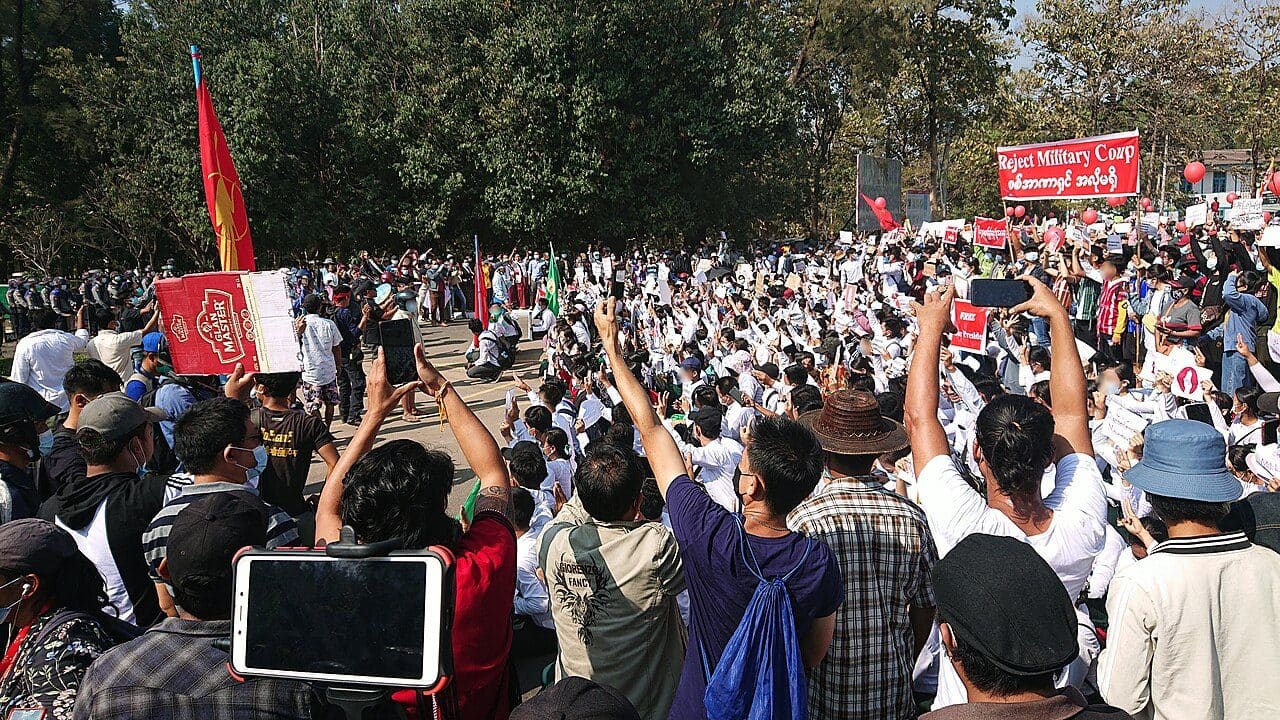
Ninjastrikers, CC BY-SA 4.0, via Wikimedia Commons. Depicts a February 9, 2021 protest against the coup in Hpa-An, Kayin State, in the war's opening days, not later combat.
Myanmar’s civil war began on February 1, 2021, when the Tatmadaw detained President Win Myint and State Counsellor Aung San Suu Kyi, declared a state of emergency, and installed the State Administration Council (SAC) under Senior General Min Aung Hlaing, citing unproven fraud allegations over the November 2020 election Aung San Suu Kyi’s National League for Democracy had won decisively. Within days a nationwide Civil Disobedience Movement, led first by striking healthcare workers, drew hundreds of thousands of participants, and the military’s response was immediate and lethal: the Assistance Association for Political Prisoners (AAPP) documented 884 killings by security forces tied directly to the protests and crackdown by the end of that first year alone. As peaceful resistance met escalating violence, the ousted lawmakers formed the National Unity Government (NUG) on April 16, 2021, and on May 5, 2021, the NUG stood up the People’s Defence Force (PDF), a date most trackers treat as the start of the war’s armed phase.
The resistance that followed was never a single movement. The PDF’s newly formed local militias fought alongside, not under, Myanmar’s older ethnic armed organizations (EAOs) such as the Karen National Liberation Army (KNLA), Kachin Independence Army (KIA), and Arakan Army (AA), which had contested the state’s borderlands for decades before the coup and brought their own leadership, territory, and goals to the fight. The KNLA struck the war’s first military target on March 27, 2021, killing 10 Tatmadaw soldiers, while the KIA and other groups opened their own fronts through 2021 and 2022. By late 2022 the Arakan Army had struck an informal ceasefire with the junta in Rakhine State, using the pause to expand its own administration rather than join the PDF’s fight elsewhere, evidence of how differently each armed group read its own local situation. The UN estimated in March 2023 that 17.6 million people needed humanitarian assistance and 1.6 million had already been displaced, a toll driven as much by scattered, low-intensity fighting nationwide as by any single campaign.
That changed on October 27, 2023, when the Myanmar National Democratic Alliance Army, Ta’ang National Liberation Army, and Arakan Army, together the Three Brotherhood Alliance, launched Operation 1027 across northern Shan State. The offensive captured more than 100 junta positions within two weeks and seized Laukkai, the Kokang region’s capital, by January 2024. A China-brokered Kunming ceasefire collapsed within a day under renewed junta airstrikes, and by June 2024 the alliance had resumed fighting. The momentum spread well beyond Shan State: thousands of Tatmadaw soldiers surrendered without a fight in February 2024, the KIA opened its own Kachin State offensive in March, the KNLA came close to seizing the Myawaddy border crossing with Thailand in April before withdrawing to avoid civilian harm, and the Arakan Army took a second regional command headquarters at Ann in December, having already secured the entire Rakhine-Bangladesh border that same month. By year’s end, independent trackers estimated the junta held fewer than half of Myanmar’s 330 townships for the first time since the coup.
Displacement more than doubled between the UN's first wartime estimate and late 2025, when the war's territorial fighting was at its most fluid and a major earthquake compounded the crisis, but it has grown only modestly since: a sign the front lines, and the humanitarian caseload tied to them, have become comparatively static in 2026.
A magnitude 7.7-7.9 earthquake struck near Mandalay on March 28, 2025, killing at least 3,770 people by the junta’s own count and as many as 4,549 by independent tracking, and briefly paused offensives on both sides. The pause did not hold: monitors and resistance groups reported continued junta airstrikes through the SAC’s own declared ceasefire window, and by mid-2025 the junta was back on the offensive. Backed by fresh China-brokered truces with individual EAOs, Tatmadaw forces retook Kyaukme in October 2025 as the TNLA withdrew from Mogok and Mongmit and the MNDAA fully left Lashio under Chinese pressure, a partial reversal of Operation 1027’s gains even as the Arakan Army kept advancing in the west. On July 31, 2025, the SAC formally dissolved itself, folding its powers into a new council still chaired by Min Aung Hlaing, a restructuring critics called consolidation rather than any real transition.
That consolidation continued into 2026. The junta staged a three-phase general election from December 2025 to January 2026 that the military-aligned Union Solidarity and Development Party won by a wide margin, a result the NUG and international observers said could not be free or fair given active fighting and restricted access across dozens of townships. Min Aung Hlaing was sworn in as president on April 10, 2026, converting direct military rule into a constitutional form without changing who holds power. Resistance forces consolidated too, though not without friction: the NUG and four major EAOs, the Karen National Union, Kachin Independence Organisation, Karenni National Progressive Party, and Chin National Front, formed the Steering Council for the Emergence of a Federal Democratic Union (SCEF) on March 30, 2026, even as clashes between rival factions, such as the MNDAA’s capture of Kutkai from a TNLA-aligned force that same month, underscored that the anti-junta side remains a coalition of separate armies, not a unified command. Separately, the ICJ opened merits hearings in January 2026 on The Gambia’s genocide case over the military’s 2016-2017 campaign against the Rohingya, a case predating this civil war but bearing on the same institution’s broader conduct, with a ruling expected later in 2026. As of mid-2026, ACLED puts total conflict deaths above 100,000 and AAPP counts 9,027 civilians and activists killed by the junta specifically, while UNHCR records roughly 3.8 million internally displaced and 1.62 million Myanmar-origin refugees abroad, a toll the UN’s own 2026 response plan says it can only afford to address for 4.9 million of the 16.2 million people it estimates are in need.
Full Timeline (most recent first)
Analysts: junta's battlefield momentum outpaces a fragmented resistance
Regional analysts described Myanmar's military as approaching a decisive stretch in its campaign against the armed resistance, citing a sustained run of territorial gains since mid-2025 that has reversed some of the ground resistance forces took during 2023's Operation 1027, aided by conscription-driven troop increases and further China-brokered local ceasefires with individual ethnic armed organizations. Resistance forces remained strained by manpower and morale problems, and analysts said the new SCEF alliance had yet to produce a unified command capable of reversing the trend.
AAPP: junta has killed 9,027 civilians and activists
The Assistance Association for Political Prisoners' running count put civilians and pro-democracy activists killed directly by the junta and allied militias at 9,027 since the coup, with 22,391 people still detained of 31,418 arrested overall, a narrower measure than ACLED's all-sides conflict-death total but the clearest record of the junta's own targeting of dissidents.
ACLED: conflict deaths surpass 100,000 since the coup
ACLED said direct conflict-related fatalities, combining weapons deaths, fighting, torture, and executions across all sides, passed 100,000 since the February 2021 coup. The figure does not break down combatants from civilians and excludes indirect deaths from displacement, disease, or lost medical access.
UNHCR counts 1.62 million Myanmar refugees abroad
UNHCR's regional count put Myanmar-origin refugees and asylum seekers at roughly 1.62 million, with Bangladesh alone hosting about 1.2 million. That total is dominated by Rohingya who fled the military's 2017 campaign, which predates this civil war, layered on top of newer arrivals fleeing the post-coup fighting in Thailand, India, and elsewhere.
Min Aung Hlaing sworn in as a nominally civilian president
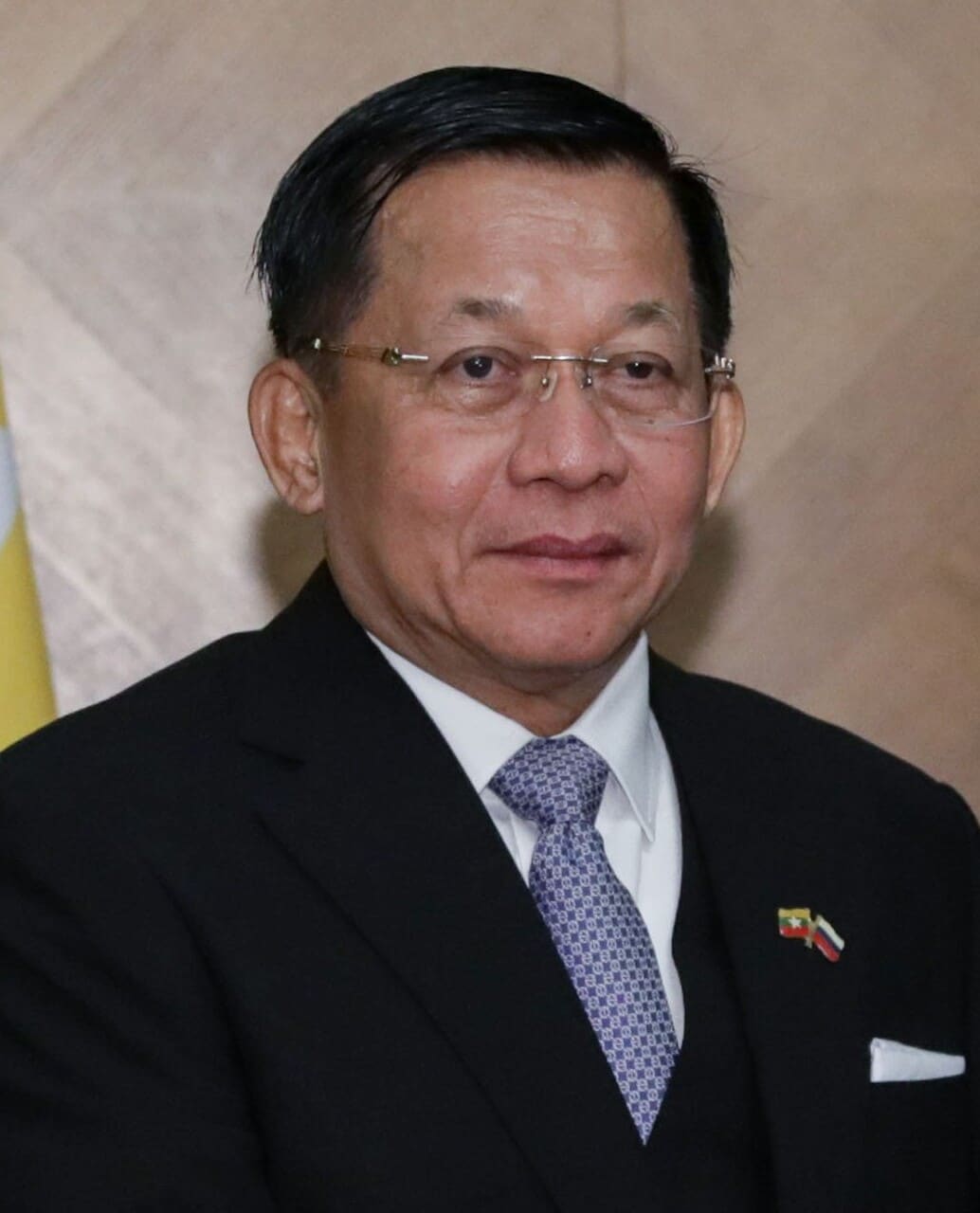
Min Aung Hlaing took the presidential oath in Naypyidaw after the newly seated, military-aligned parliament elected him, formally converting five years of direct junta rule into a constitutional presidency while leaving the same commander in charge. The UN and independent analysts said the move entrenched military control rather than ended it.
Arakan Army vows 'final victory' over Rakhine by 2027
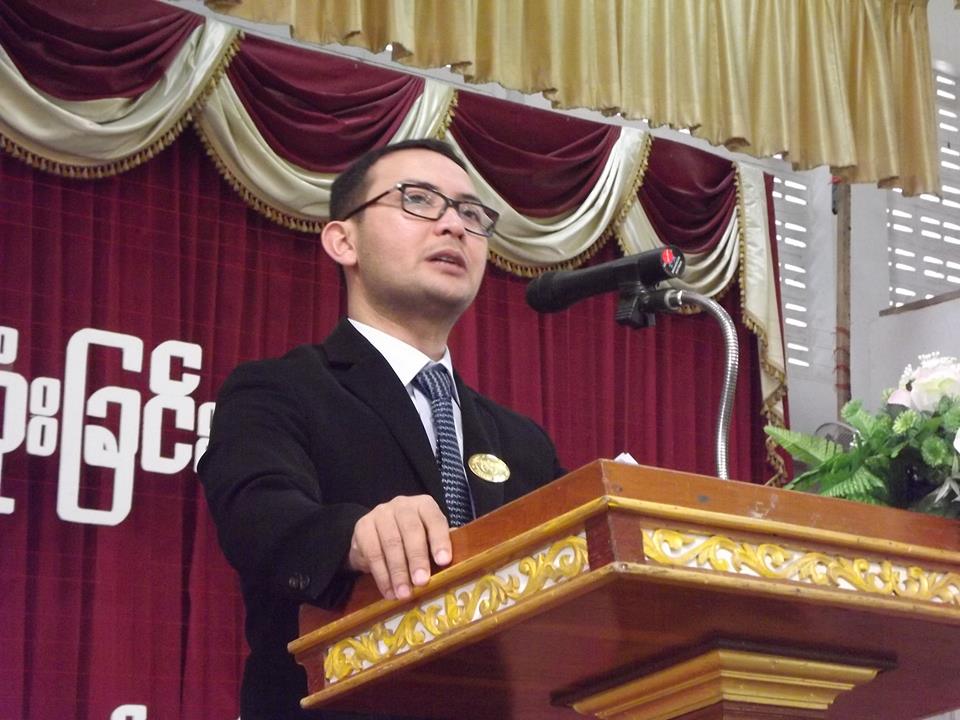
On the Arakan Army's 17th anniversary, commander Twan Mrat Naing said the group would achieve full control of Rakhine State by the end of 2027, a pledge made as the AA already held all but three of the state's 17 townships; Sittwe, Kyaukphyu, and Manaung remained under junta control.
NUG and four ethnic armies form the SCEF alliance
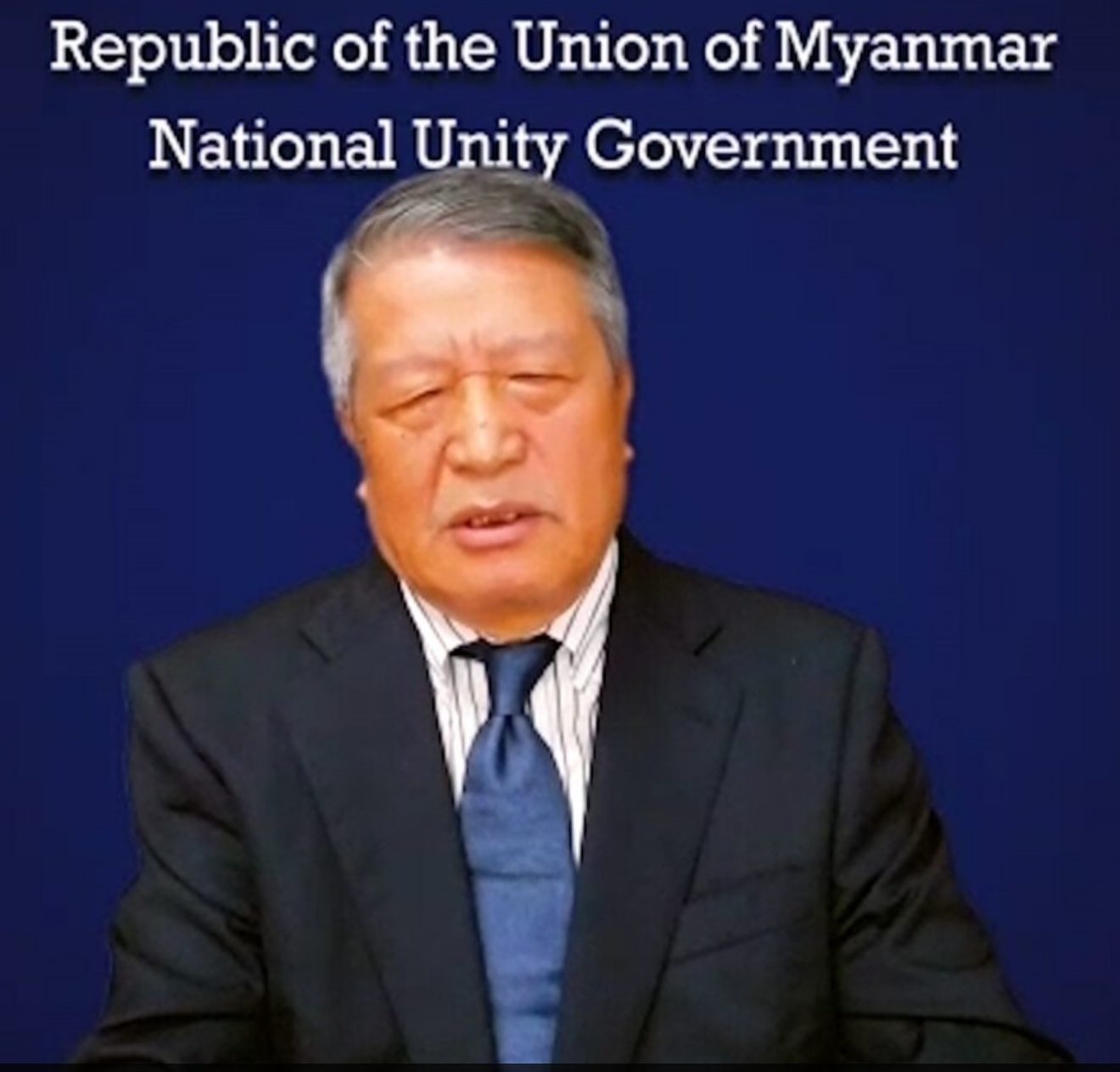
The National Unity Government joined the Karen National Union, Kachin Independence Organisation, Karenni National Progressive Party, and Chin National Front to launch the Steering Council for the Emergence of a Federal Democratic Union, the most formal alliance yet between the parliamentary opposition and long-established ethnic armed organizations, built around a shared goal of federal democracy rather than any one group's individual territory.
MNDAA captures Kutkai from a fellow resistance faction
The Myanmar National Democratic Alliance Army seized the town of Kutkai from a rival, Ta'ang National Liberation Army-aligned force rather than from the junta, a reminder that Myanmar's anti-junta side is not one bloc: rivalries and turf disputes among ethnic armed organizations and allied militias have flared even as they jointly fight the Tatmadaw.
Military-backed USDP declares a sweeping election win
The final round of voting concluded with the military-aligned Union Solidarity and Development Party declared winner of 339 of 586 parliamentary seats, a result state media called a return to democracy and that the National Unity Government and international observers dismissed as neither free nor fair given restricted access and active combat across dozens of townships.
ICJ opens hearings on the Rohingya genocide case
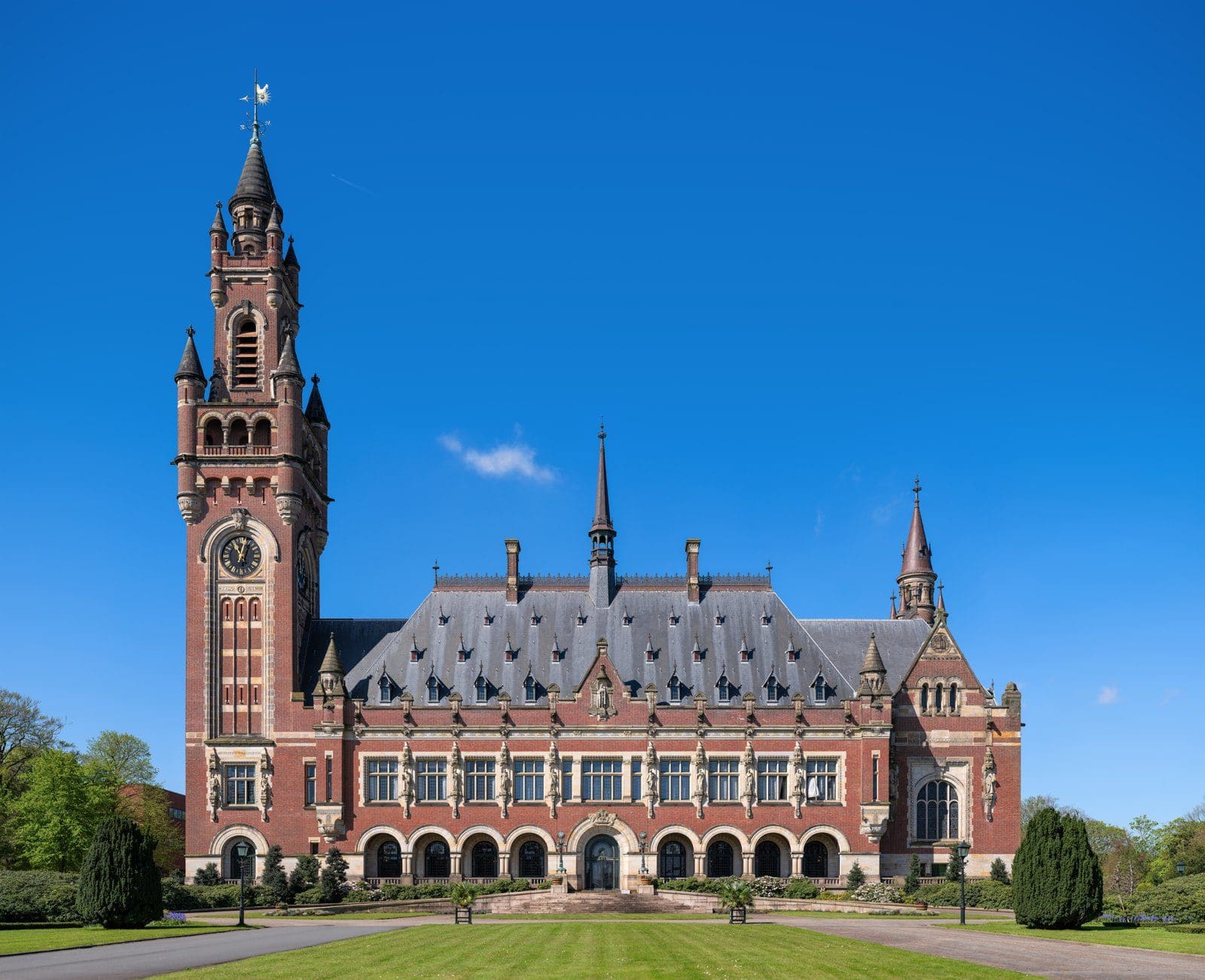
The International Court of Justice opened merits hearings, running through January 29, on The Gambia's case alleging Myanmar's military violated the Genocide Convention through its 2016-2017 campaign against the Rohingya in Rakhine State. The case predates this civil war but concerns the same military institution's conduct; a ruling is expected later in 2026.
Junta opens a three-phase general election
The junta opened voting in the first phase of a three-round general election, held under martial law in dozens of townships and boycotted or contested by the National Unity Government and most ethnic armed organizations, who said the vote could not be free or fair while active fighting and mass displacement continued.
UNHCR: displacement hits a record 3.6 million
UNHCR recorded roughly 3.6 million people internally displaced by conflict and the 2025 earthquake combined, the highest figure on record since the coup, concentrated in the Northwest, Rakhine State, and the Southeast.
Tatmadaw retakes Kyaukme as new China-brokered truces hold
Junta forces recaptured the northern Shan town of Kyaukme, part of a broader counteroffensive through August and September 2025 backed by fresh China-brokered ceasefires that also saw the Ta'ang National Liberation Army withdraw from Mogok and Mongmit and the MNDAA fully leave Lashio under Chinese pressure.
SAC dissolves itself, Min Aung Hlaing keeps control
The State Administration Council announced its own dissolution, transferring its powers to a new National Defence and Security Council chaired by Min Aung Hlaing, a restructuring critics said preserved military control in a new form rather than beginning any genuine transition.
Karen forces overrun four junta border camps near Myawaddy
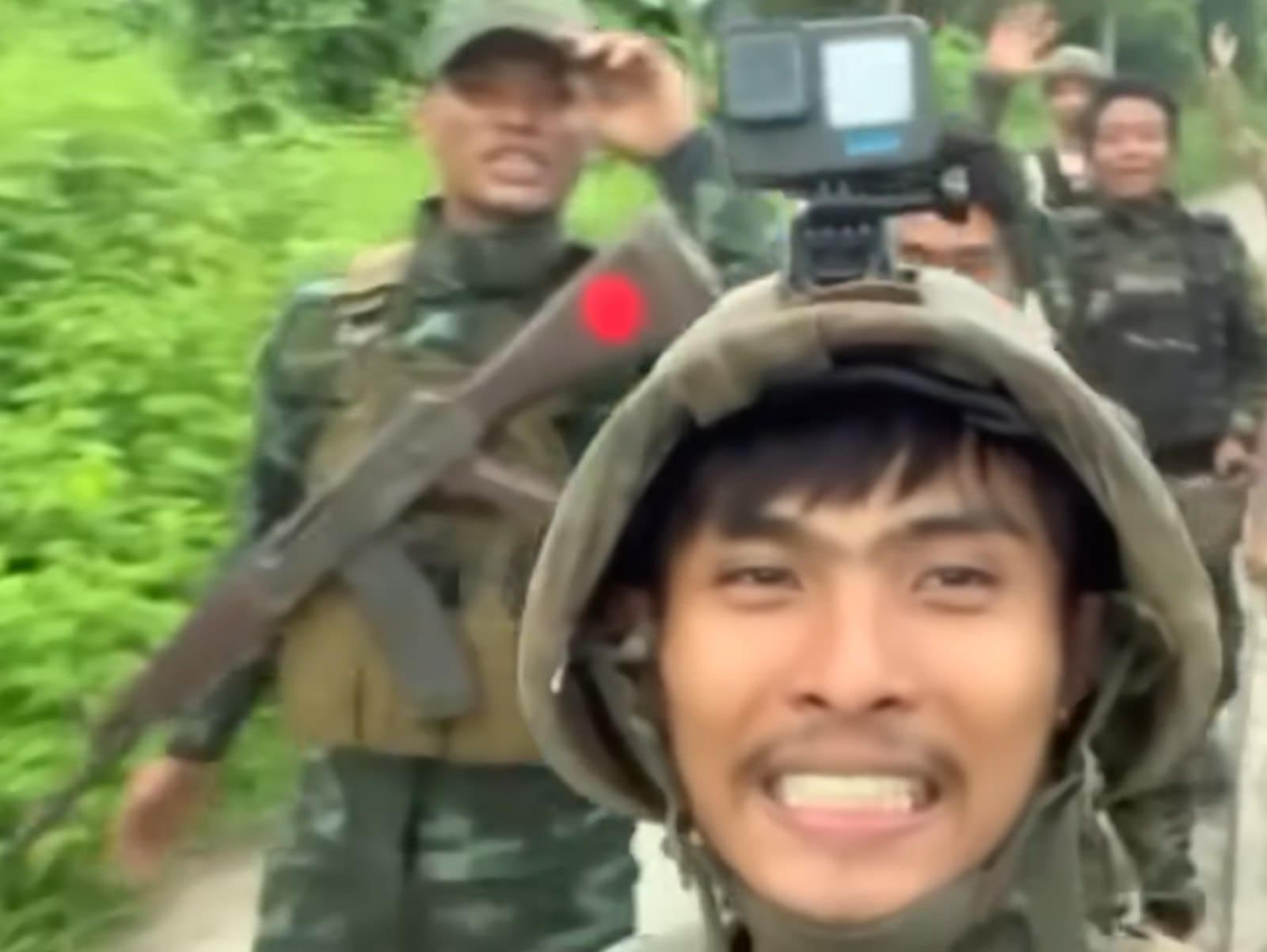
The Karen National Liberation Army's Brigade 6 seized four junta camps south of Myawaddy in a single week, including a large weapons cache at Bler Doh, extending Karen control along a stretch of the Thai border a year after its forces had first come close to taking Myawaddy itself.
SAC declares a post-earthquake ceasefire, then keeps striking
The State Administration Council announced a three-week ceasefire to aid earthquake relief, and the National Unity Government separately paused its own offensives, but independent monitors and resistance groups reported continued junta airstrikes on rebel-held areas through the declared truce period.
Magnitude 7.7-7.9 earthquake devastates central Myanmar
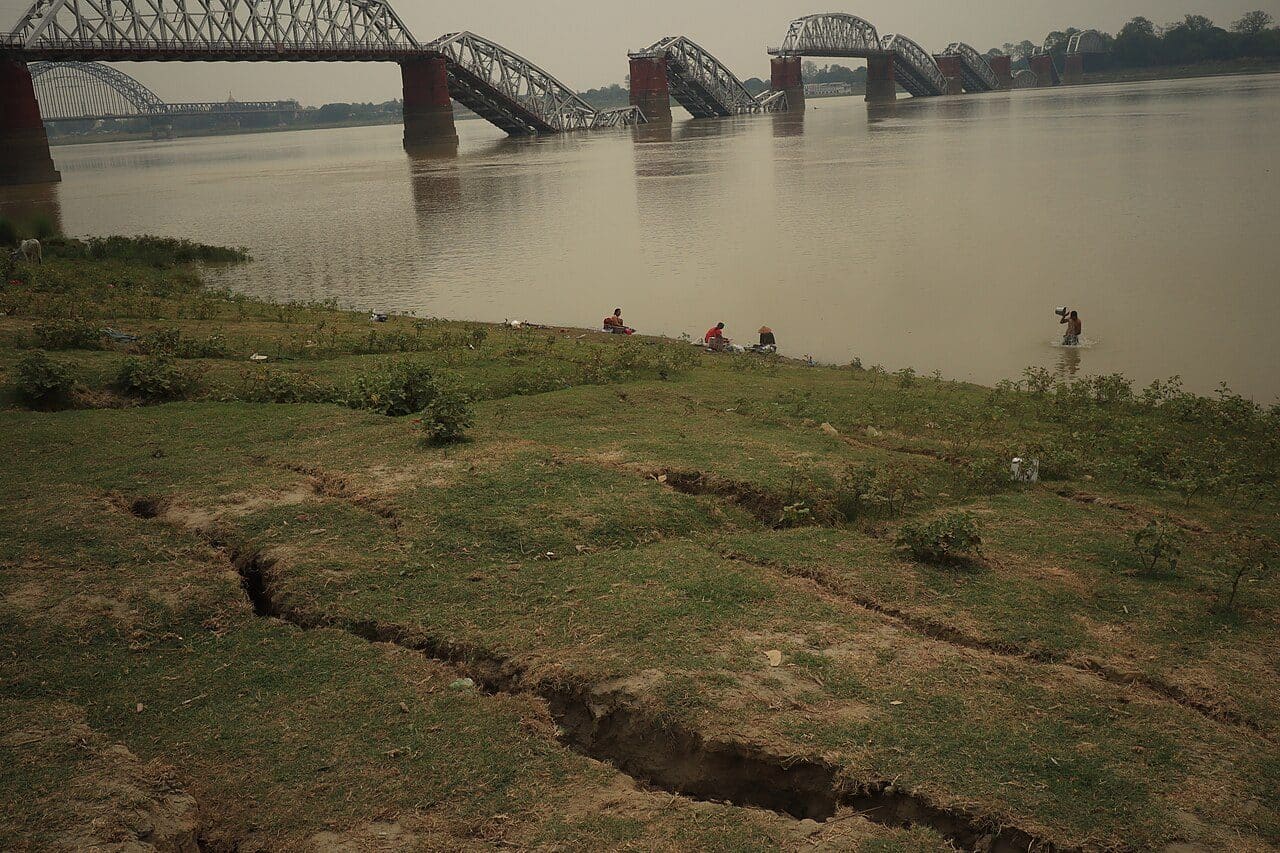
A major earthquake centered near Mandalay killed at least 3,770 people by the junta's own count and as many as 4,549 by independent tracking from the Democratic Voice of Burma, collapsing bridges, monasteries, and government buildings and compounding a humanitarian crisis already driven by the war.
Junta control falls below half of Myanmar's townships
A year-end assessment found the State Administration Council's forces controlled fewer than half of Myanmar's 330 townships for the first time since the coup, with resistance and ethnic armed organizations holding roughly 44 percent and the remainder classified as actively contested.
Arakan Army captures a second regional command HQ at Ann
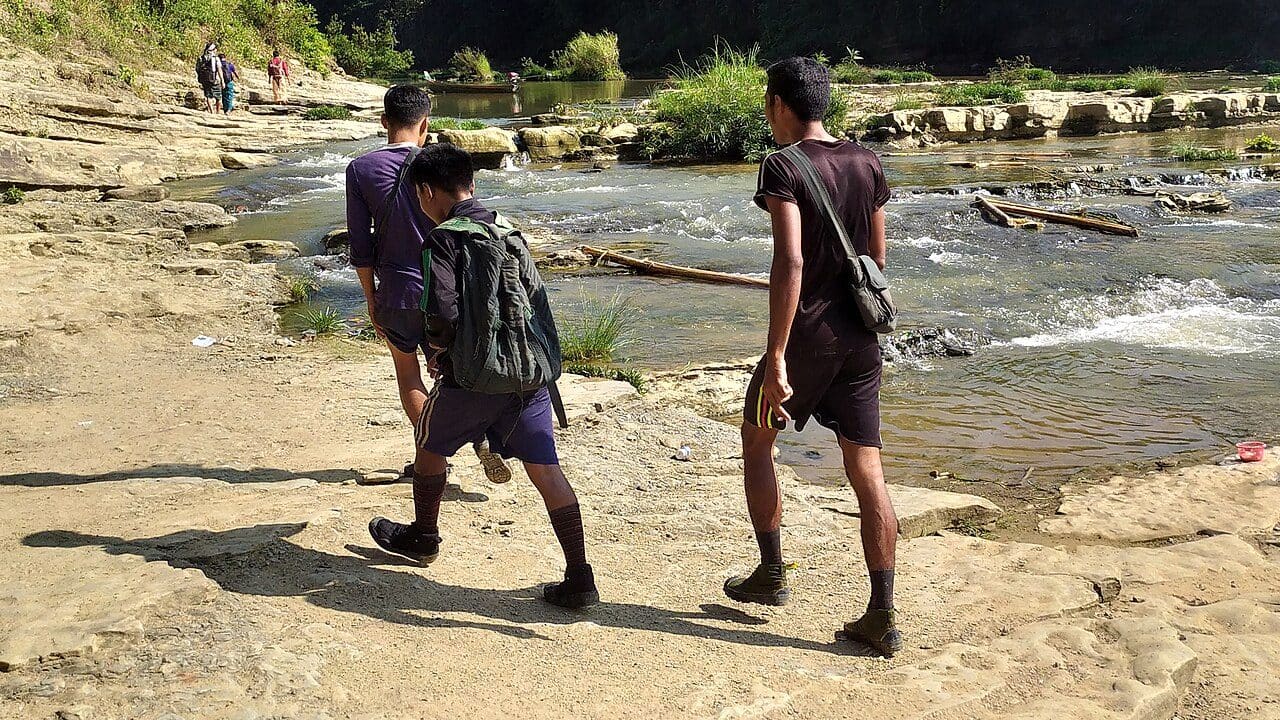
The Arakan Army captured Ann, seat of the Tatmadaw's Western Regional Military Command, the second full regional command headquarters an ethnic armed organization had taken from the junta within five months, after the MNDAA's capture of Lashio in August.
Arakan Army completes control of the Bangladesh border
The Arakan Army captured Maungdaw Township, giving it full control of Rakhine State's entire border with Bangladesh and adding to a run of 2024 captures that had already taken Minbya, Kyauktaw, Mrauk U, Myebon, and Thandwe.
MNDAA captures Lashio, a regional command headquarters
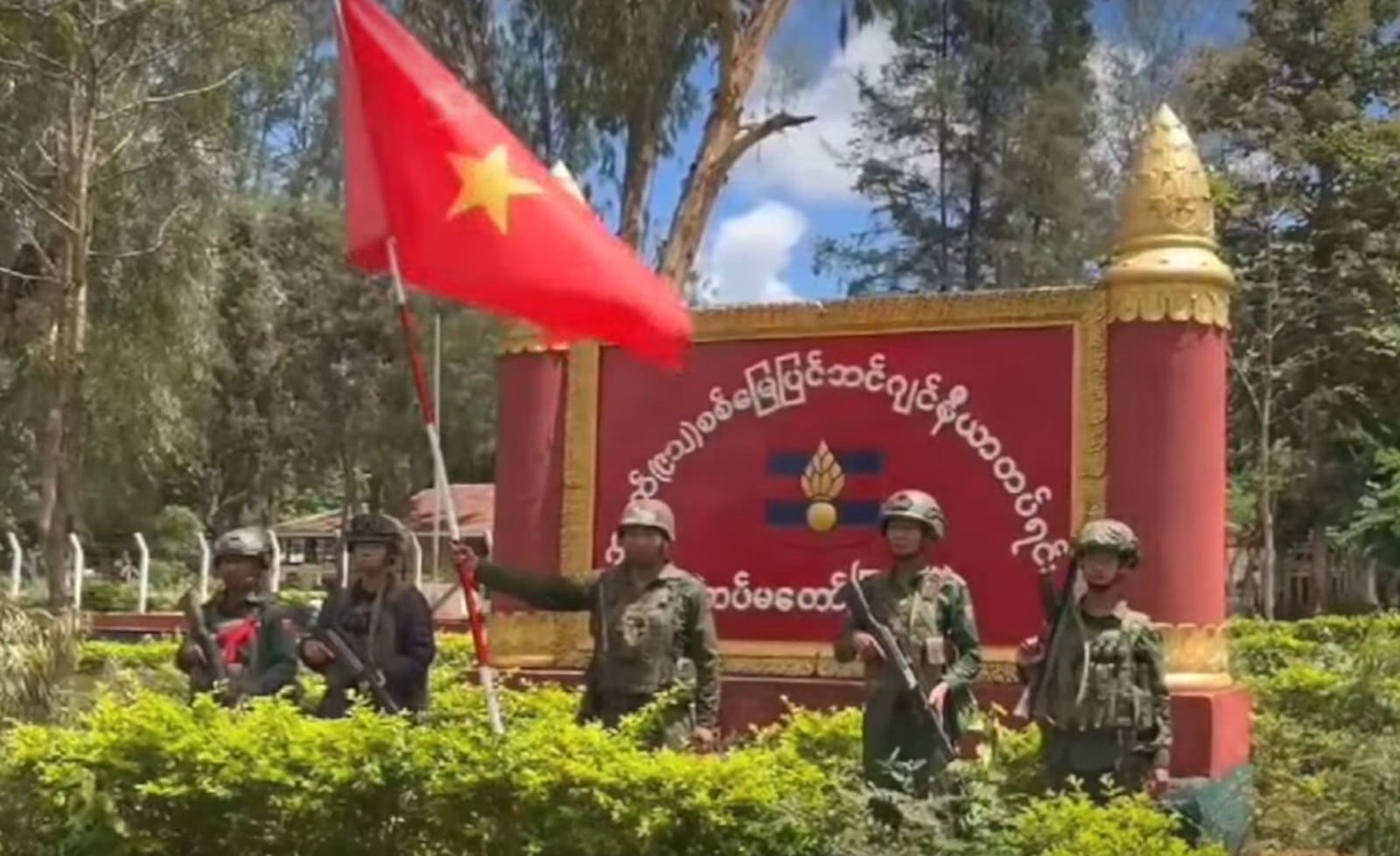
The Myanmar National Democratic Alliance Army captured Lashio, the largest town in northern Shan State and seat of the Tatmadaw's Northeastern Regional Military Command, the first time an ethnic armed organization had taken a full regional command headquarters since the coup.
Alliance resumes Operation 1027, captures Kyaukme
The Three Brotherhood Alliance restarted Operation 1027 after the Kunming ceasefire's collapse, capturing the northern Shan State town of Kyaukme in June 2024 and reopening the offensive's second phase.
Karen forces near-encircle the Myawaddy border crossing
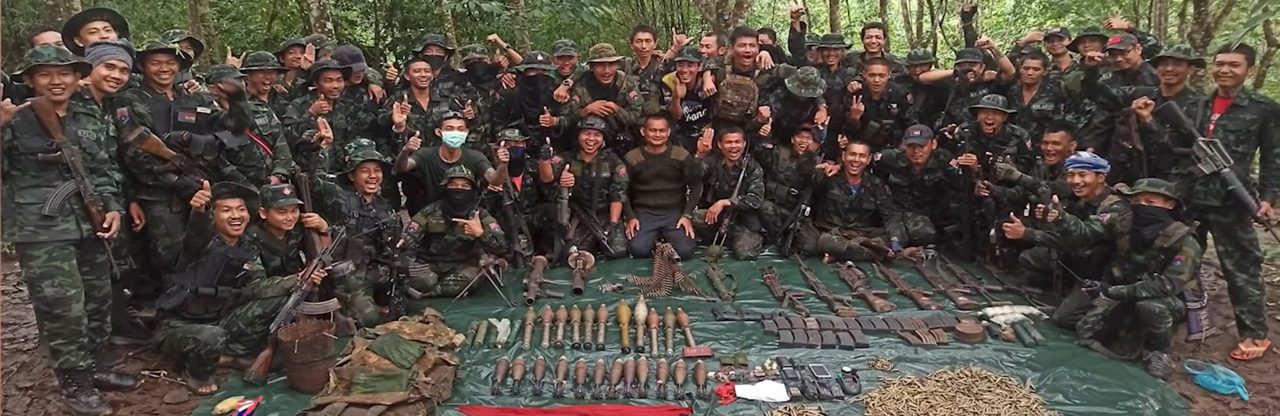
The Karen National Liberation Army captured a Tatmadaw infantry battalion base near Myawaddy, Myanmar's busiest official border crossing with Thailand, and came close to taking the town itself before withdrawing days later, citing the risk of harm to civilians and property from further fighting inside it.
Kachin Independence Army opens its own offensive
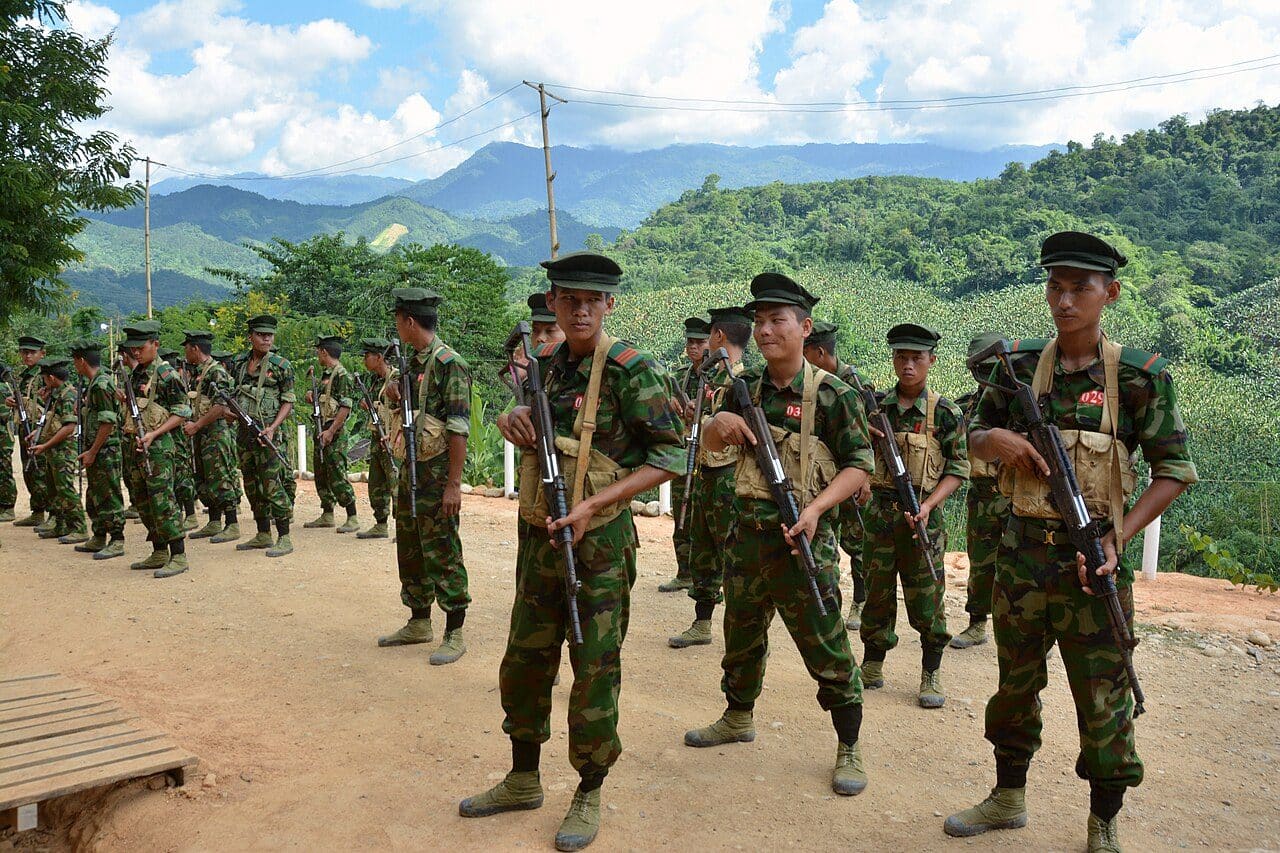
The Kachin Independence Army launched what became known as Operation 0307 in Kachin State, targeting junta bases along the Myitkyina-Bhamo road, part of a wider pattern in which established ethnic armed organizations outside the original Three Brotherhood Alliance opened their own fronts once Operation 1027 had exposed the Tatmadaw's overstretch.
Thousands of junta troops surrender without a fight
Thousands of Tatmadaw soldiers surrendered without fighting in February 2024 as Operation 1027's momentum spread, including six generals, evidence of a manpower and morale crisis that later pushed the junta toward nationwide military conscription.
Junta airstrikes break the Kunming ceasefire within a day
Junta airstrikes on alliance-held areas broke the newly brokered ceasefire within roughly 24 hours, and the truce formally collapsed by June 2024 when the Three Brotherhood Alliance resumed offensive operations.
China brokers a ceasefire in Kunming
China brokered a ceasefire between the junta and the Three Brotherhood Alliance after three days of talks in Kunming, reflecting Beijing's direct interest in stabilizing its border region and shutting down the scam compounds Operation 1027 had targeted.
Alliance seizes Laukkai, capital of the Kokang zone
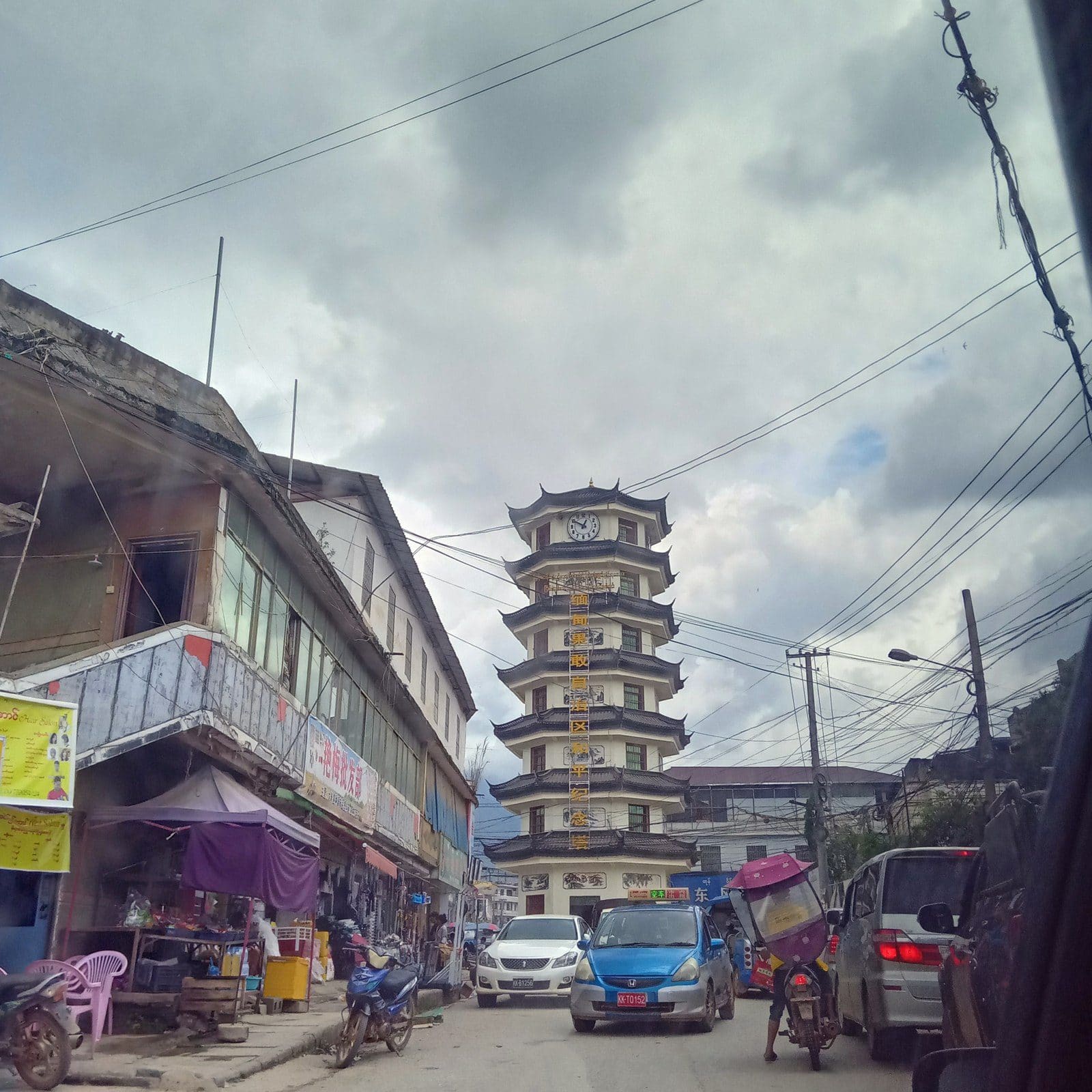
The Three Brotherhood Alliance captured Laukkai, capital of the Kokang Self-Administered Zone and a hub of the region's online-scam industry, giving anti-junta forces full control of the zone and a key China border crossing.
Three Brotherhood Alliance launches Operation 1027
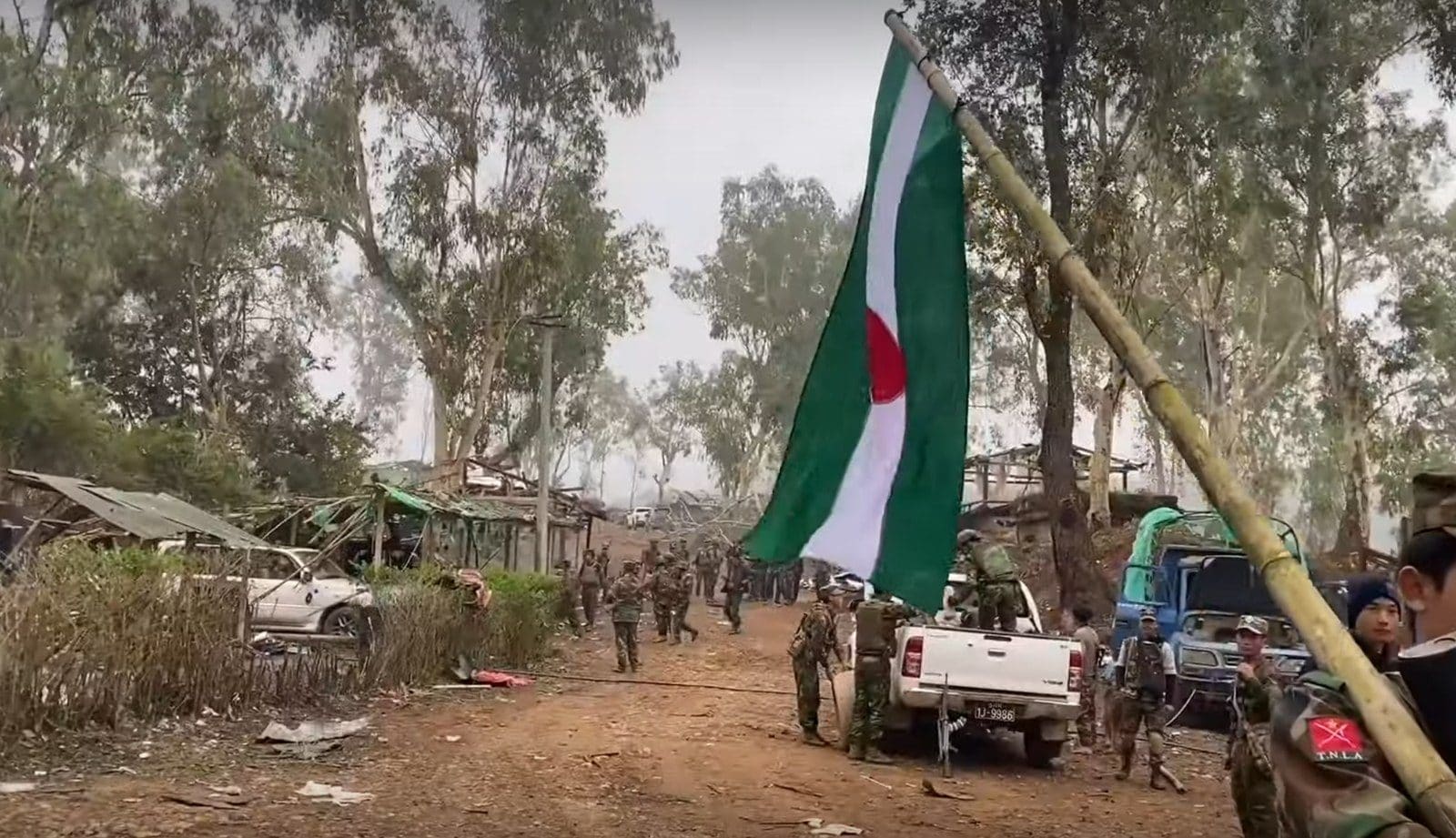
The Myanmar National Democratic Alliance Army, Ta'ang National Liberation Army, and Arakan Army, together the Three Brotherhood Alliance, launched a coordinated offensive across northern Shan State, capturing more than 100 junta positions within two weeks in what analysts called the regime's most difficult stretch since the coup.
UN: 17.6 million need aid, 1.6 million displaced
The United Nations estimated that 17.6 million people in Myanmar required humanitarian assistance and that 1.6 million had been internally displaced by the fighting, with more than 55,000 civilian buildings destroyed since the coup, a toll that kept climbing as the war entered its third year.
Arakan Army and junta reach a Rakhine ceasefire
The Arakan Army and the State Administration Council agreed to an informal ceasefire in Rakhine State, pausing fighting there for roughly a year while the Arakan Army used the lull to expand its administrative and taxation control over areas it already held.
AAPP documents 884 protest-related killings in 2021
The Assistance Association for Political Prisoners had documented 884 killings by security forces directly tied to anti-coup protests and crackdowns by the end of 2021, with monthly killings peaking at 492 in December, concentrated in Sagaing, Magway, Mandalay, and Yangon.
Mo So massacre kills 35, including aid workers
Tatmadaw troops killed more than 35 people in Kayah State's Mo So village, including two staff members of Save the Children, one of the war's first documented mass-casualty events against civilians. The UN Security Council condemned the attack.
NUG declares a nationwide 'people's defensive war'
The National Unity Government declared a state of emergency and called for a coordinated 'people's defensive war' against the junta nationwide, formally uniting the PDF's scattered local cells and allied ethnic armed organizations under a single political banner for the first time.
People's Defence Force formed as the NUG's armed wing
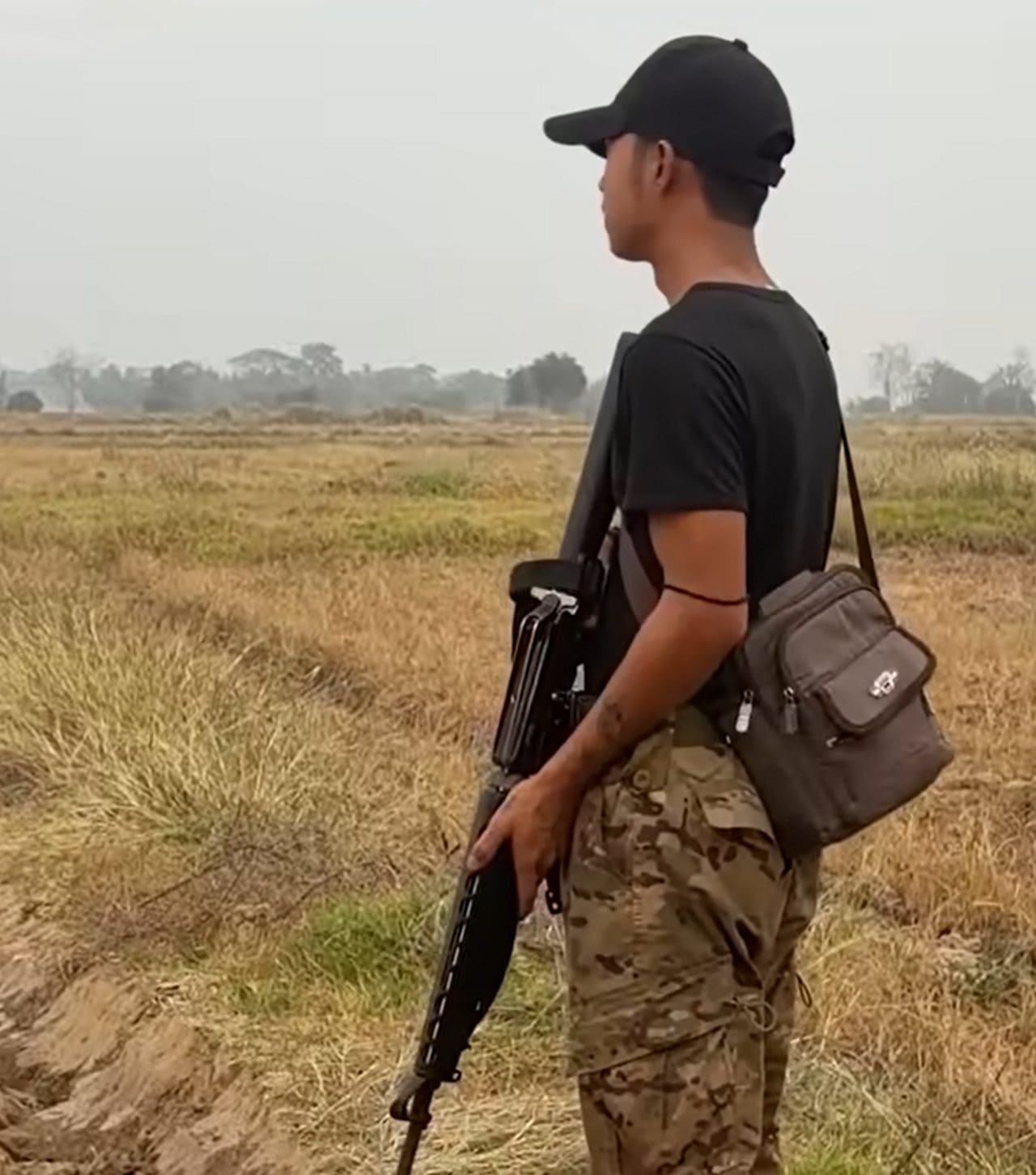
The National Unity Government formally established the People's Defence Force, giving the loose networks of local anti-coup militias already forming a shared name and a claimed chain of command, a date widely cited as the start of the armed phase of the civil war.
Ousted lawmakers form the National Unity Government
Politicians and activists who had won the November 2020 election, including Min Ko Naing, formally established the National Unity Government as a parallel administration, keeping Aung San Suu Kyi and Win Myint in nominal leadership roles while organizing what became the political center of the anti-coup movement.
Karen forces stage the first armed attack on the Tatmadaw
The Karen National Liberation Army attacked a Tatmadaw base and killed 10 soldiers, the first armed strike on the military since the coup and a sign that some of Myanmar's long-established ethnic armed organizations were moving from an uneasy prior truce toward open resistance alongside the street protests.
Nationwide Civil Disobedience Movement begins
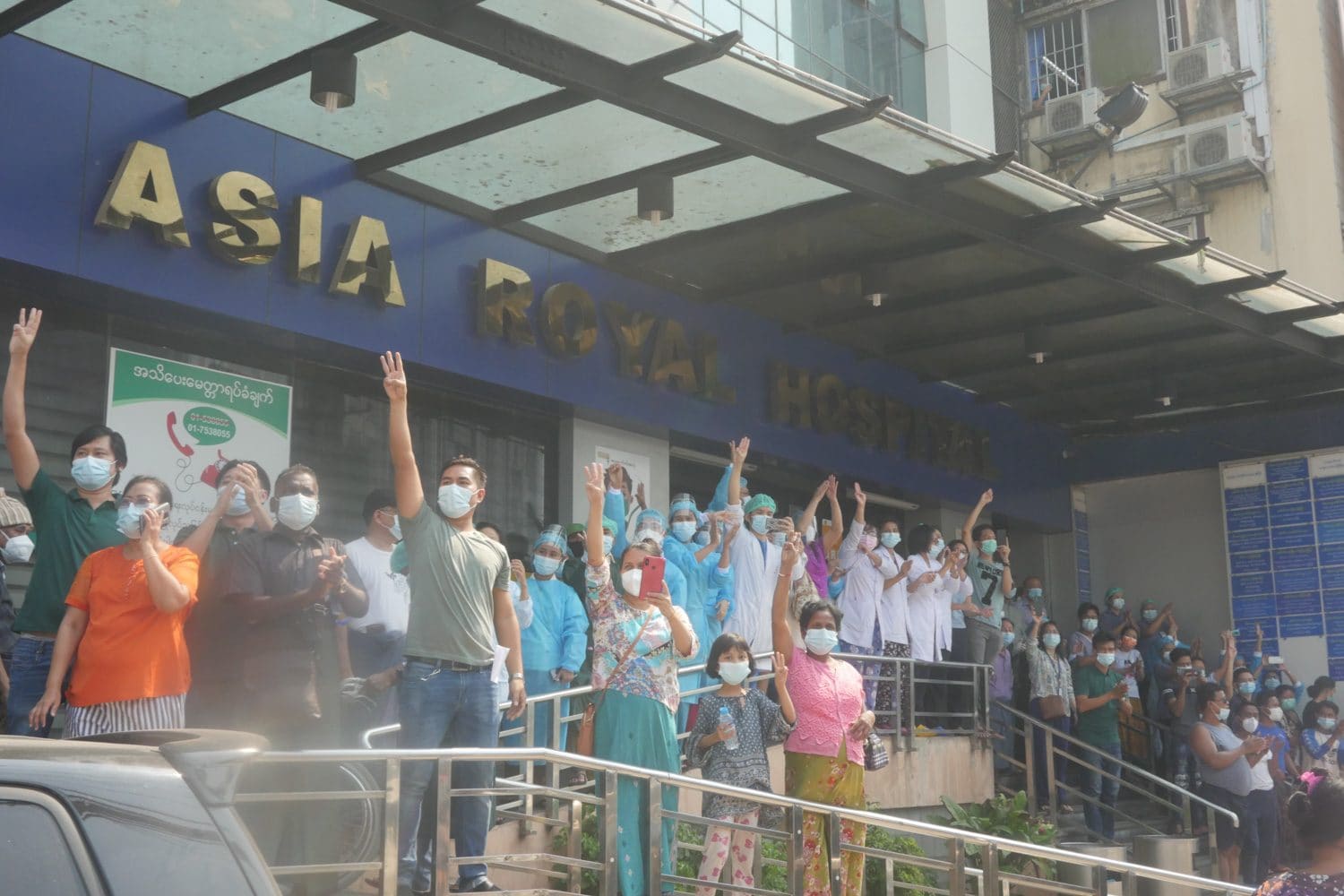
Healthcare workers launched strikes against the coup on February 2, and a Facebook-organized Civil Disobedience Movement drew 150,000 followers within a day. Within a week, staff at more than 110 government hospitals and health agencies had joined, the opening wave of the mass protests that followed.
Military seizes power, detains Aung San Suu Kyi
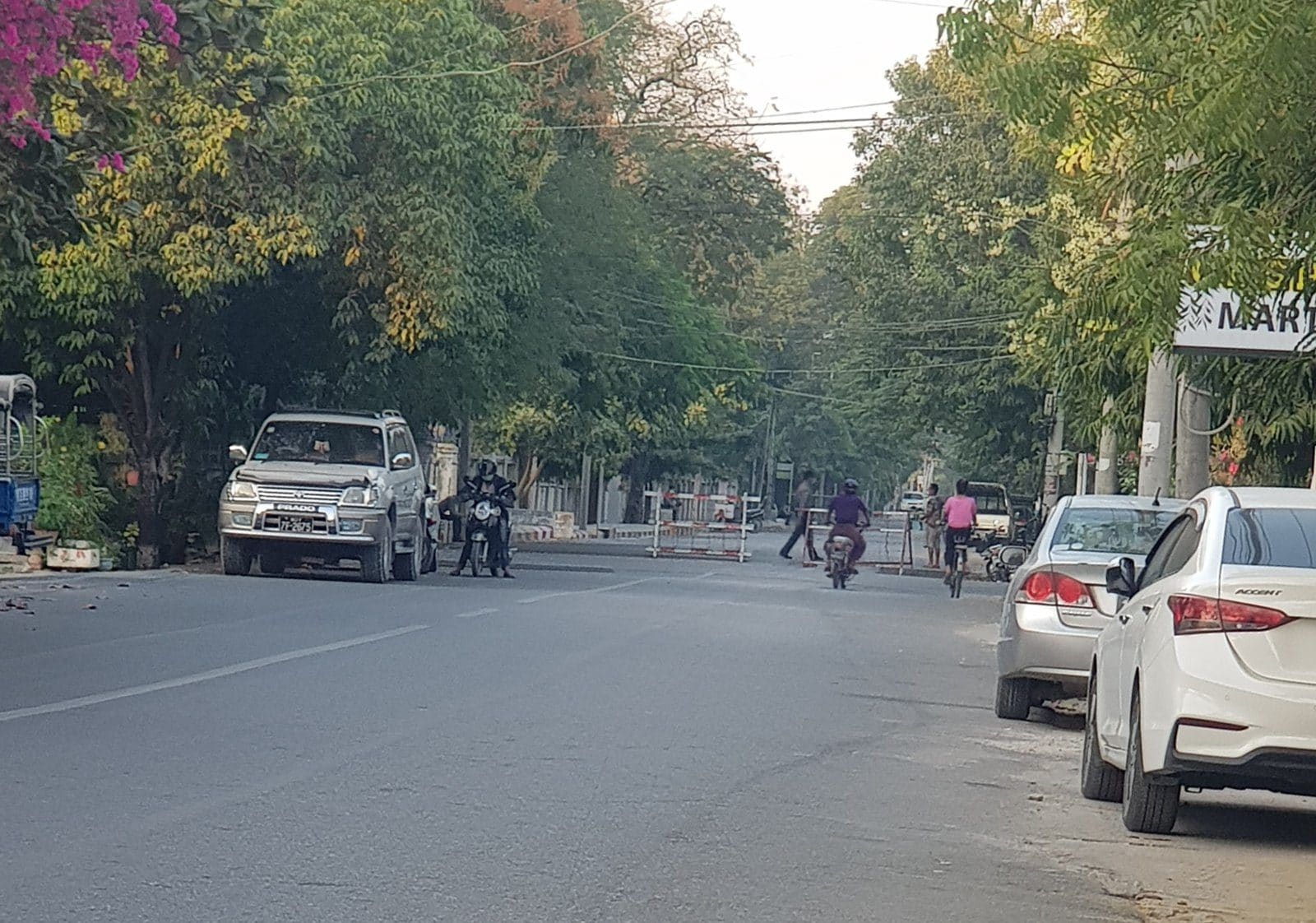
Myanmar's military, the Tatmadaw, detained President Win Myint and State Counsellor Aung San Suu Kyi and declared a one-year state of emergency, transferring power to a new State Administration Council under Senior General Min Aung Hlaing. The junta cited unproven fraud allegations over the November 2020 election the National League for Democracy had won.
Frequently Asked Questions
How did Myanmar's civil war start?
The war traces to the February 1, 2021 coup, when the military detained President Win Myint and State Counsellor Aung San Suu Kyi and installed the State Administration Council under Senior General Min Aung Hlaing. Nationwide protests and a Civil Disobedience Movement followed within days, and after the junta's crackdown killed hundreds of protesters through 2021, the National Unity Government formed the People's Defence Force on May 5, 2021, a date widely treated as the start of the armed phase of the conflict.
What was Operation 1027 and why did it matter?
Operation 1027 was a coordinated offensive the Myanmar National Democratic Alliance Army, Ta'ang National Liberation Army, and Arakan Army, together the Three Brotherhood Alliance, launched across northern Shan State on October 27, 2023. It captured more than 100 junta positions within two weeks, triggered mass surrenders, and set off parallel offensives by other ethnic armed organizations nationwide, marking what analysts describe as the regime's most difficult stretch since the coup.
Who are the main parties fighting in Myanmar?
The State Administration Council and the Tatmadaw make up the junta side, backed by allied militias such as the Pa-O National Army. Opposing them is not one bloc: the National Unity Government and its People's Defence Force operate alongside dozens of separately commanded ethnic armed organizations, including the Arakan Army, Kachin Independence Army, Karen National Liberation Army, and the Three Brotherhood Alliance's members, each with its own territory, leadership, and objectives, formally linked since March 2026 through the Steering Council for the Emergence of a Federal Democratic Union (SCEF).
How many people have died in Myanmar's civil war?
The two most-cited figures measure different things. ACLED, which tracks direct conflict fatalities across all sides, put the cumulative total above 100,000 as of July 2026. The Assistance Association for Political Prisoners tracks a narrower category, civilians and pro-democracy activists killed specifically by the junta and allied militias, and counted 9,027 as of July 2026. Neither figure includes indirect deaths from disease, lost medical access, or displacement.
Is the Rohingya genocide case at the ICJ part of this civil war?
No. The Gambia's case against Myanmar at the International Court of Justice concerns the military's 2016-2017 campaign against the Rohingya in Rakhine State, which predates the 2021 coup by several years. It remains relevant background because it concerns the same military institution's conduct, and merits hearings ran from January 12 to 29, 2026, with a ruling expected later in the year.
Is the war over? What is Myanmar's status as of mid-2026?
No. Fighting continues on multiple fronts even after the junta staged a three-phase election from December 2025 to January 2026 and installed Min Aung Hlaing as president on April 10, 2026. Independent assessments put junta control at roughly a fifth to a third of the country by area, the Arakan Army alone holds all but three of Rakhine State's 17 townships, more than 3.8 million people remain internally displaced, and the newly formed SCEF alliance signals the resistance side is consolidating rather than winding down.
Sources
- 2021 Myanmar coup d'etat — Wikipedia
- Myanmar civil war (2021-present) — Wikipedia
- Counting Myanmar's Dead: Reported Civilian Casualties since the 2021 Military Coup — ReliefWeb
- Operation 1027 — Wikipedia
- 2024 Kachin offensive — Wikipedia
- Ethnic Karen Rebels Complete Capture of Strategic Myanmar Border Crossing — The Diplomat
- Arakan Army — Wikipedia
- After 2024 setbacks, junta forces now control less than half of Myanmar — Radio Free Asia
- 2025 Myanmar earthquake — Wikipedia
- Sudden Advances of the Karen National Liberation Army (KNLA) in early 2025 — Insight Myanmar
- Myanmar Situation - Operational Data Portal — UNHCR
- 2025-26 Myanmar general election — Wikipedia
- Myanmar election delivers walkover win for military-backed political party — Al Jazeera
- UN World Court begins landmark hearings on Rohingya genocide case against Myanmar — UN News
- New resistance alliance built to win Myanmar's civil war — Asia Times
- Myanmar's coup leader Min Aung Hlaing sworn in as president — Al Jazeera
- Mapped: Myanmar's Conflict Zones in 2026, Who Controls What Five Years After the Coup — Mappr
- Death Toll in Myanmar's Civil War Surpasses 100,000 After More Than Five Years — Moemaka
- AAPP: Political Prisoners and Deaths in Burma — Assistance Association for Political Prisoners
- Myanmar Humanitarian Needs and Response Plan 2026 — OCHA
- Application of the Convention on the Prevention and Punishment of the Crime of Genocide (The Gambia v. Myanmar) — International Court of Justice