Haitian Conflict: Timeline & Latest Developments
Since gunmen assassinated President Jovenel Moïse in July 2021, the Viv Ansanm gang coalition has seized an estimated 90 percent of Port-au-Prince, driving internal displacement past 1.4 million people even as a Kenya-led international mission gives way to a larger, UN-backed Gang Suppression Force.
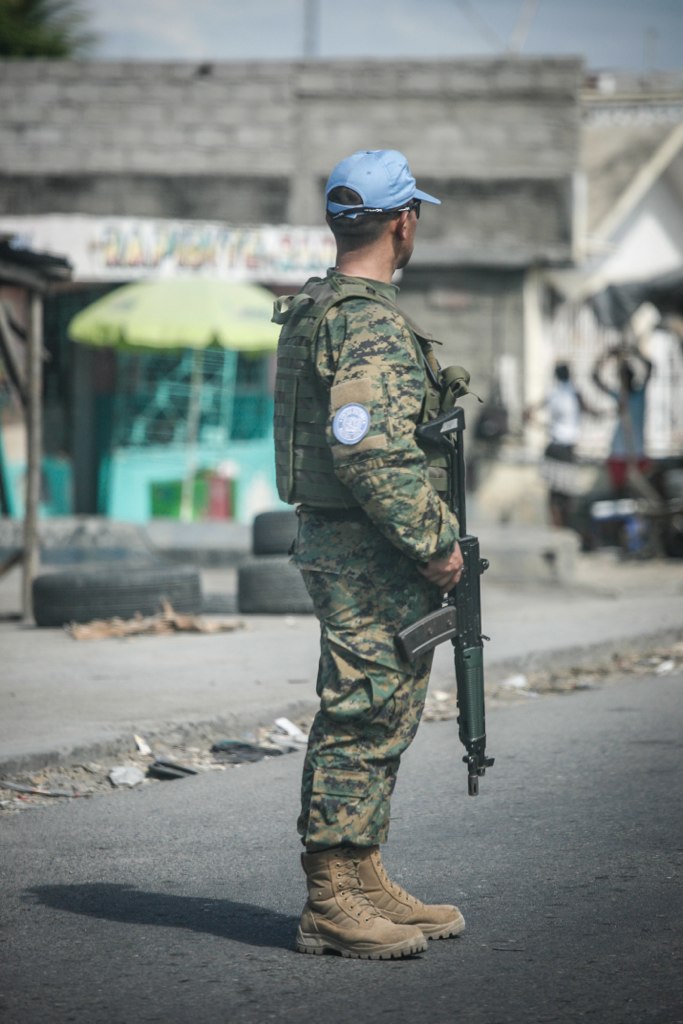
Alex Proimos, CC BY 2.0, via Wikimedia Commons. Shown for identification; depicts a United Nations peacekeeper street patrol in Cap-Haïtien in 2012, predating the current Viv Ansanm-era crisis and the Multinational Security Support and Gang Suppression Force missions.
Haiti’s current crisis is not a war between armies or states. It is a collapse of governing authority in which armed criminal gangs, not a rival government or foreign power, have displaced the country’s formal security institutions across most of the capital. The acute phase traces to July 7, 2021, when gunmen, including Colombian mercenaries, assassinated President Jovenel Moïse at his residence in Port-au-Prince. The killing left three men simultaneously claiming to be prime minister, and after US and UN officials backed Ariel Henry, the resulting political vacuum gave armed groups room to expand. Within months, the G9 federation was blockading the country’s largest fuel terminal, a pattern of gangs seizing critical infrastructure that would recur and intensify over the following years.
That pattern reached a breaking point on February 29, 2024. Two rival gang federations, G9 and G-Pèp, which had spent years fighting each other for territory, merged into a coalition called Viv Ansanm, Haitian Creole for “Living Together,” under the leadership of Jimmy Chérizier, a former Haitian National Police officer known as “Barbecue.” While Henry was abroad finalizing an international security agreement, Viv Ansanm coordinated attacks on Haiti’s two largest prisons, freeing roughly 4,700 inmates, and shut down Port-au-Prince’s international airport by firing on aircraft. Henry announced his resignation on March 11 and stepped down formally on April 25, replaced by a nine-member Transitional Presidential Council (TPC) drawn from Haitian political parties and civil-society groups, with a mandate to restore security and organize the country’s first elections since 2016.
The UN Security Council had already authorized a response the previous October: a Multinational Security Support (MSS) mission led by Kenya, granted temporary policing powers to help Haitian police confront the gangs. Its first 400 officers did not arrive until June 25, 2024, eight months after authorization. The mission never approached its planned 2,500-person strength; Kenya itself deployed fewer than 800 of the roughly 1,000 officers it pledged, and the broader force’s roughly $600 million annual budget ran roughly $200 million short. Two Kenyan officers were killed in gang ambushes in Artibonite department in 2025. Meanwhile Viv Ansanm and the Artibonite-based Gran Grif gang, both designated Foreign Terrorist Organizations by the US State Department in May 2025, expanded their reach: a Gran Grif attack on Pont-Sondé in October 2024 killed at least 115 people, a Viv Ansanm assault toward Delmas and Pétionville the following month killed roughly 220 more, and a January 2025 attack on Kenscoff, which Haitian officials later admitted they had advance intelligence on but failed to stop, killed as many as 150 people by some counts. By the time the last Kenyan contingent departed on April 28, 2026, closing out the mission, independent observers widely described it as having failed its core mandate, even as Haitian authorities credited its personnel’s commitment.
Security-force conduct in this crisis has drawn scrutiny of its own. In September 2025, explosive drones struck a gathering in Cité Soleil where a suspected gang leader was celebrating a birthday, killing at least 13 people including 8 children; a Haitian human rights group alleged the drones were launched by a national police task force targeting the gang leader, an allegation police did not publicly confirm. Human Rights Watch later documented this as part of a wider pattern of drone strikes raising risks to residents. In January 2026, security forces used attack drones in a more overtly military operation, destroying properties linked to Chérizier himself; he survived.
The Security Council responded to the MSS mission’s shortfalls by authorizing a larger successor on October 3, 2025: a UN-supported Gang Suppression Force (GSF) targeting roughly 5,500 personnel, with Chad, Bangladesh, and other contributors pledging troops. Its first contingent, a Chadian advance team, arrived April 1, 2026. By mid-2026, the GSF was still building toward full operational capacity from its Camp Vertières base, while gangs continued to hold an estimated 90 percent of Port-au-Prince and inter-gang clashes, not just gang-versus-security-force fighting, killed dozens in a single week in May 2026 in Cité Soleil and Croix-des-Bouquets.
The humanitarian toll has scaled with the violence. IOM’s Displacement Tracking Matrix recorded 702,973 internally displaced people in September 2024, a figure that had roughly doubled to 1,412,199 by September 2025 and reached 1,450,254 by December 2025, with 80 percent of the displaced now living outside the capital as violence spread into Artibonite and Centre departments. OCHA’s 2026 response plan estimated 6.4 million people, more than half of Haiti’s population, would need emergency humanitarian assistance, while IPC analysis found 5.7 million facing acute food insecurity. Hurricane Melissa compounded the crisis in October 2025, killing at least 46 people and damaging or destroying nearly 842,400 homes. Meanwhile Haiti’s political transition remains unresolved: the TPC’s mandate expired February 7, 2026 without elections having been organized, leaving Prime Minister Alix Didier Fils-Aimé as sole executive under a civil-society pact, and by May 2026 he was publicly doubting whether the August 30 vote his own government had scheduled could still be held on time.
Displacement roughly doubled in the year to September 2025, then rose only 3 percent more by December as the crisis pushed further into rural departments beyond Port-au-Prince.
Full Timeline (most recent first)
UN chief visits as Gang Suppression Force ramps up patrols
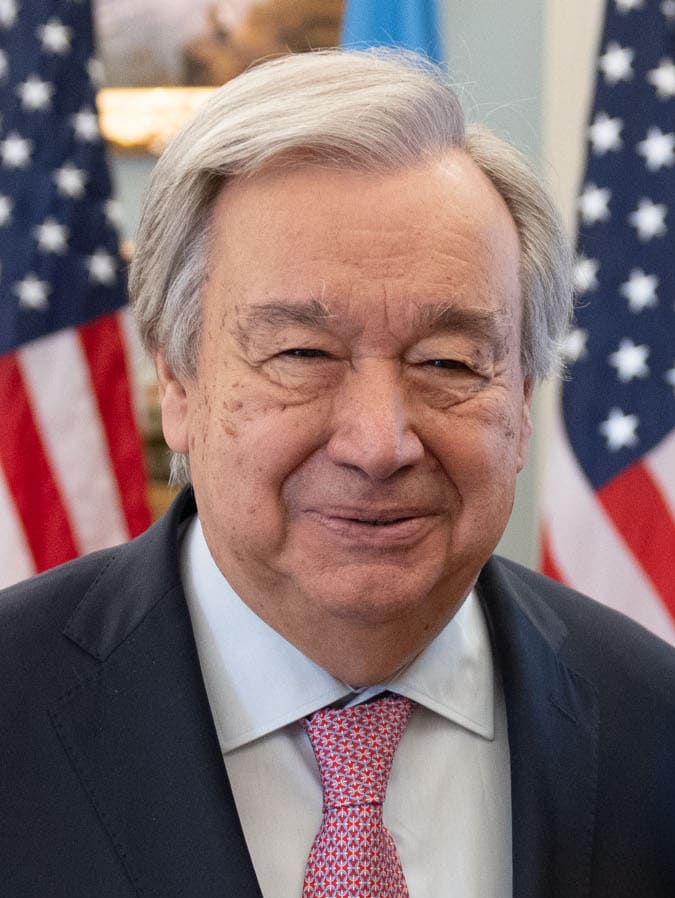
UN Secretary-General António Guterres visited Haiti as the Gang Suppression Force began mounting patrols and establishing forward operating bases from its Camp Vertières headquarters, though the force had not yet reached full operational capacity. Gangs still held an estimated 90 percent of Port-au-Prince, and more than 2,300 people had been killed by gang violence since the start of 2026.
Gunmen kidnap Haiti's top police-reform official
Armed men abducted James Boyard, the Defense Ministry's cabinet director and inspector general of the Haitian National Police, along with his wife and young daughter, in Bourdon, a Port-au-Prince neighborhood considered relatively safe. It was among the highest-ranking abductions of the crisis, and no group had claimed responsibility as of the most recent reporting.
Inter-gang clashes kill at least 78 in Port-au-Prince suburbs
Clashes between rival gangs, not between gangs and security forces, killed at least 78 people and wounded 66 over roughly a week in Cité Soleil and Croix-des-Bouquets, displacing about 5,300 people. The UN said at least 305 people had been killed in the same two communes since early March, including 63 residents among the dead.
Prime minister says August elections are unlikely
Fils-Aimé said security conditions were not met for an August vote and that he hoped elections could still be held by year's end, as gang clashes displaced hundreds more people and forced medical facilities to suspend services.
Kenya's mission ends as final contingent departs
The last 150 Kenyan police officers left Haiti, formally ending the 18-month Multinational Security Support mission. Kenya had pledged roughly 1,000 officers but deployed fewer than 800, and the wider MSS force never reached its 2,500-person target, hampered by a roughly $400 million shortfall against an estimated $600 million annual budget.
Prime minister rejects $250 million election budget
Fils-Aimé rejected a $250 million election budget proposed by the Provisional Electoral Council as inflation climbed above 22 percent, pausing candidate registration and raising doubts about whether the August vote could proceed on schedule.
First Gang Suppression Force troops arrive: a Chadian advance team
An advance team of Chadian officers landed in Port-au-Prince, the first contingent of the new UN-backed Gang Suppression Force. Chad's government said it would deploy two battalions of 750 officers each on a one-year rotation.
Gran Grif attacks kill at least 70 in Artibonite towns
Gran Grif fighters attacked Petite-Rivière-de-l'Artibonite, Jean-Denis, Pont-Sondé, and Marchand-Dessalines over several days, killing at least 70 people and injuring 30, burning homes and forcing roughly 6,000 residents to flee.
Transitional council's mandate expires; Fils-Aimé becomes sole executive
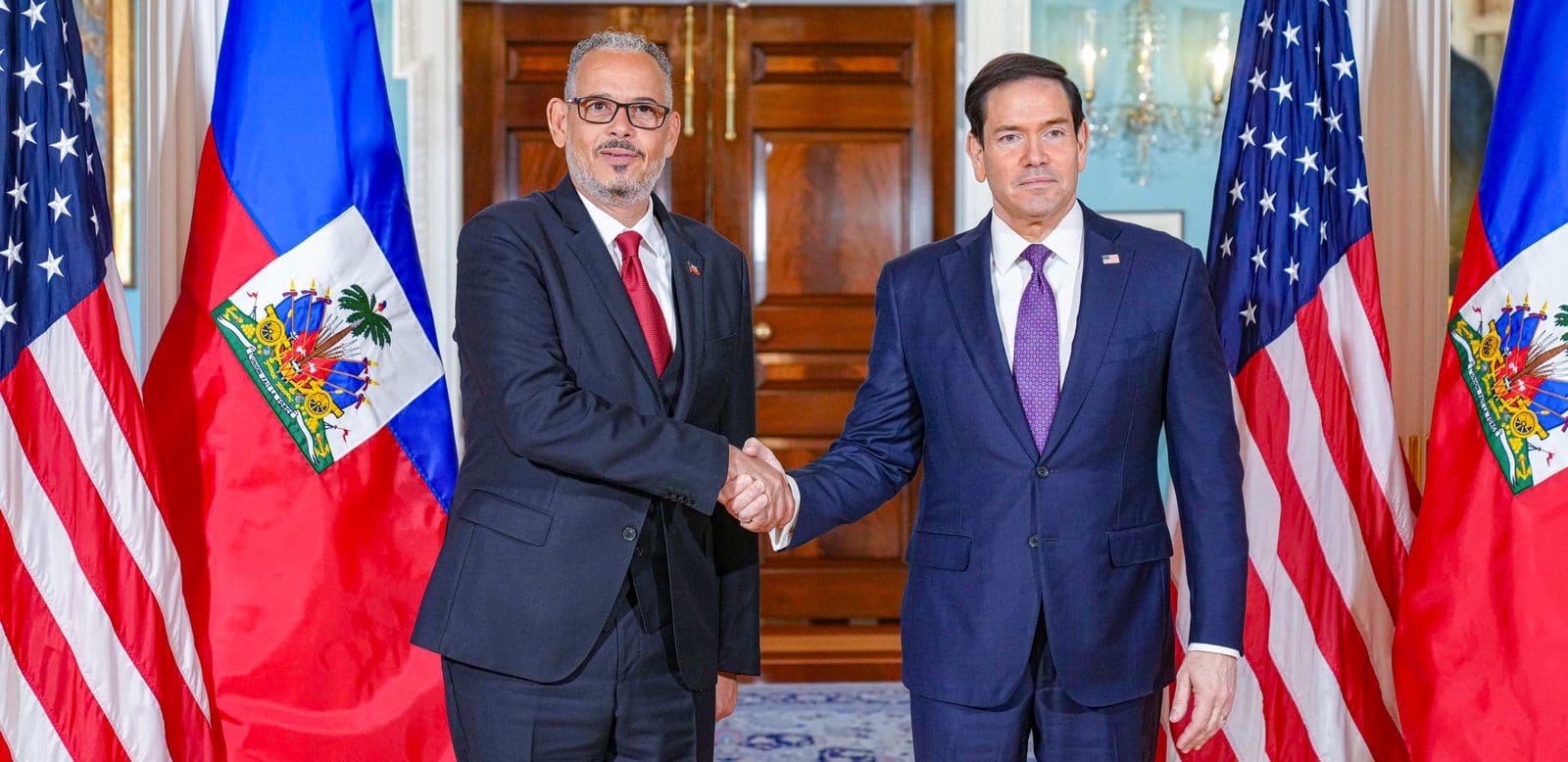
The Transitional Presidential Council's mandate lapsed without having organized elections or restored security. A National Pact for Stability and the Organization of Elections, signed by several parties and civil-society groups, backed acting Prime Minister Alix Didier Fils-Aimé as sole executive authority pending elections.
Drone strikes target gang leader Chérizier's properties; he survives
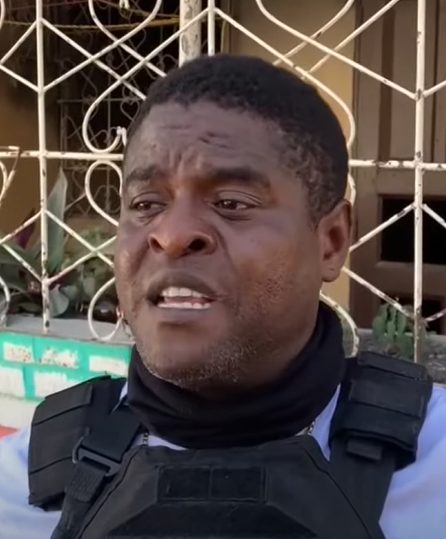
Haitian security forces used first-person-view attack drones to destroy three properties linked to Viv Ansanm leader Jimmy Chérizier in a targeted operation. Chérizier survived and remained at large.
Displacement climbs to 1.45 million as crisis spreads to provinces
IOM's Displacement Tracking Matrix Round 12 recorded 1,450,254 internally displaced people nationwide, up 3 percent from September. Eighty percent of displaced people were now living outside the capital, in departments including Artibonite and Centre, where displacement had risen 77 and 140 percent respectively since late 2024.
Gang clashes kill at least 49 in Port-au-Prince
Fighting between rival gangs left at least 49 people dead in the capital, part of a wave of intra-gang and gang-versus-security-force violence that closed out a year in which conflict deaths were tracked in the thousands.
UN plans for 6.4 million Haitians needing aid in 2026
OCHA's 2026 Humanitarian Needs and Response Plan said an estimated 6.4 million people, more than half the population, would need emergency assistance in 2026, up 6.7 percent from 2025, and that violence-related displacement had doubled over the prior year.
UN Security Council authorizes the Gang Suppression Force
The Security Council adopted Resolution 2793, transforming the Kenya-led MSS mission into a larger, UN-supported Gang Suppression Force with a target strength of roughly 5,500 personnel and a mandate to degrade the gangs' operational capacity.
Drone strike on gathering in Cité Soleil kills 8 children
Explosive drones struck a gathering in Cité Soleil's Simon Pelé neighborhood where a suspected gang leader was celebrating a birthday, killing at least 13 people including 8 children and wounding 6 more. A Haitian human rights group alleged the drones were launched by a national police task force targeting the gang leader, an allegation police did not publicly confirm or deny.
US designates Viv Ansanm and Gran Grif as terrorist organizations
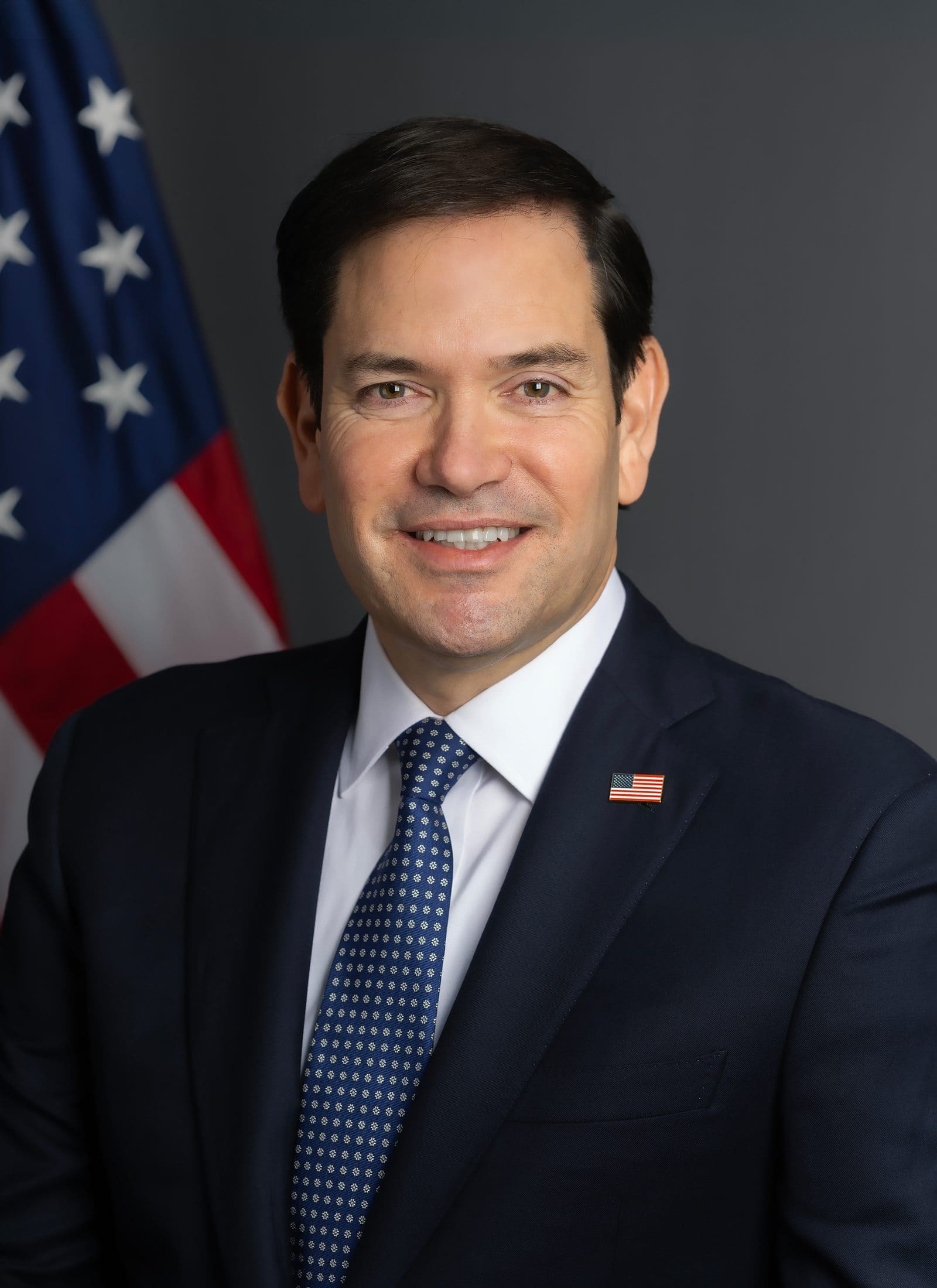
The State Department designated Viv Ansanm and Gran Grif as Foreign Terrorist Organizations and Specially Designated Global Terrorists, citing their role in attacking Haitian security forces and MSS mission personnel and their stated goal of overthrowing the government.
Second Kenyan MSS officer killed in Artibonite ambush
Gang fighters ambushed a Kenyan-led vehicle-recovery operation near Pont-Sondé, killing officer Bénédict Kabiru and destroying two armored vehicles, the second Kenyan fatality since the mission's June 2024 deployment.
Viv Ansanm attack on Kenscoff kills up to 150
Viv Ansanm gunmen invaded Kenscoff, a commune south of the capital, in an attack Haitian officials later acknowledged they had advance intelligence on but failed to stop. Death-toll estimates range from 90 to more than 150 depending on the source and reporting period, with thousands more displaced or left homeless.
Viv Ansanm push toward Delmas and Pétionville kills 220
Viv Ansanm fighters attacked Pernier, Nazon, and Vivy Mitchel in an attempt to break into the wealthier Delmas and Pétionville districts. The assault killed at least 220 people, injured 92, and displaced nearly 41,000, per tracking cited by Wikipedia's conflict summary.
Gran Grif gang kills at least 115 in Pont-Sondé
The Gran Grif gang killed at least 115 people and injured dozens more in Pont-Sondé, Artibonite, an attack the UN linked to retaliation against self-defense groups resisting a gang toll on a local road. Roughly 6,270 people fled the town, according to the International Organization for Migration.
First Kenyan police contingent deploys to Port-au-Prince
The first 400 Kenyan police officers landed in Port-au-Prince, beginning the Multinational Security Support mission's deployment more than eight months after the Security Council authorized it.
Transitional council names Garry Conille prime minister
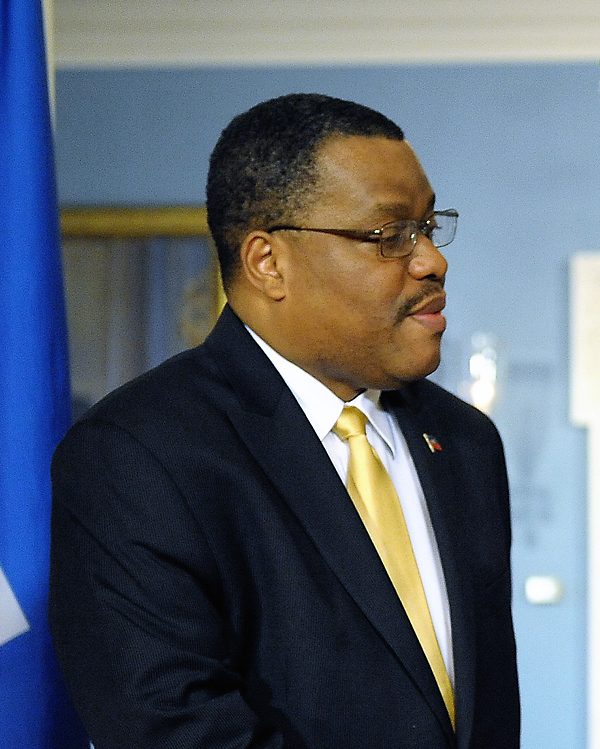
The Transitional Presidential Council selected Garry Conille, a former UN official, as interim prime minister to lead the government through the transition period.
Henry formally resigns; Transitional Presidential Council installed

Henry's resignation took formal effect and a nine-member Transitional Presidential Council, with seats allocated across Haitian political and civil-society blocs, took over executive authority with a mandate to restore security and organize elections.
Ariel Henry announces he will resign
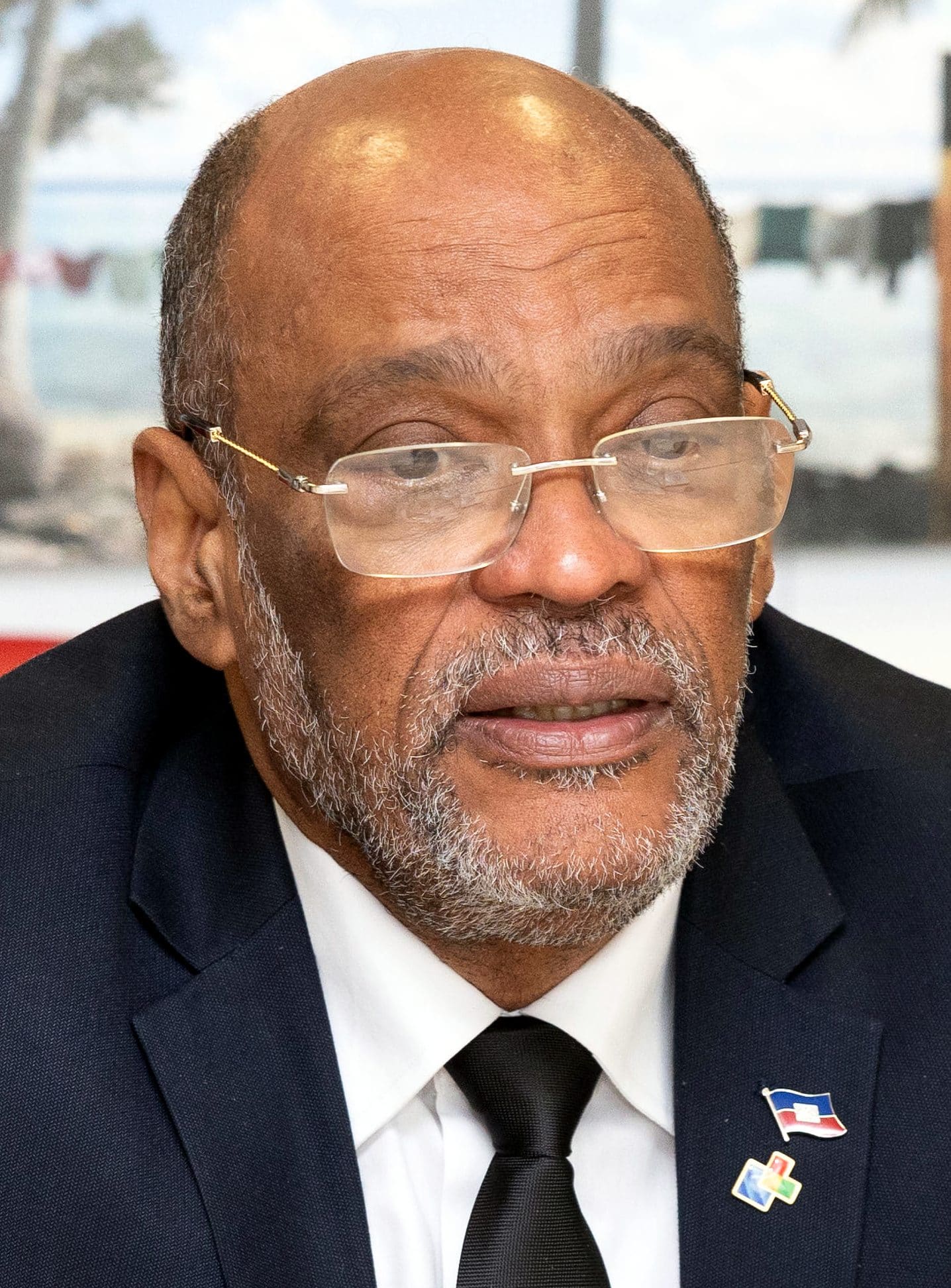
Henry said in a video address that his government would step down once a transitional council was installed, after CARICOM convened an emergency meeting in Jamaica to broker a political transition amid the gang offensive.
Gangs shut down Port-au-Prince's international airport
Armed groups attacked Toussaint Louverture International Airport, damaging aircraft and grounding all flights, cutting one of the capital's few remaining links to the outside world as the crisis deepened.
Coordinated prison breaks free roughly 4,700 inmates
Gangs stormed Haiti's two largest prisons, the National Penitentiary in Port-au-Prince and the facility in Croix-des-Bouquets, freeing roughly 4,700 inmates and killing at least 12 people. Gang leaders said the breaks were meant to force Henry's resignation.
G9 and G-Pèp form the Viv Ansanm gang coalition
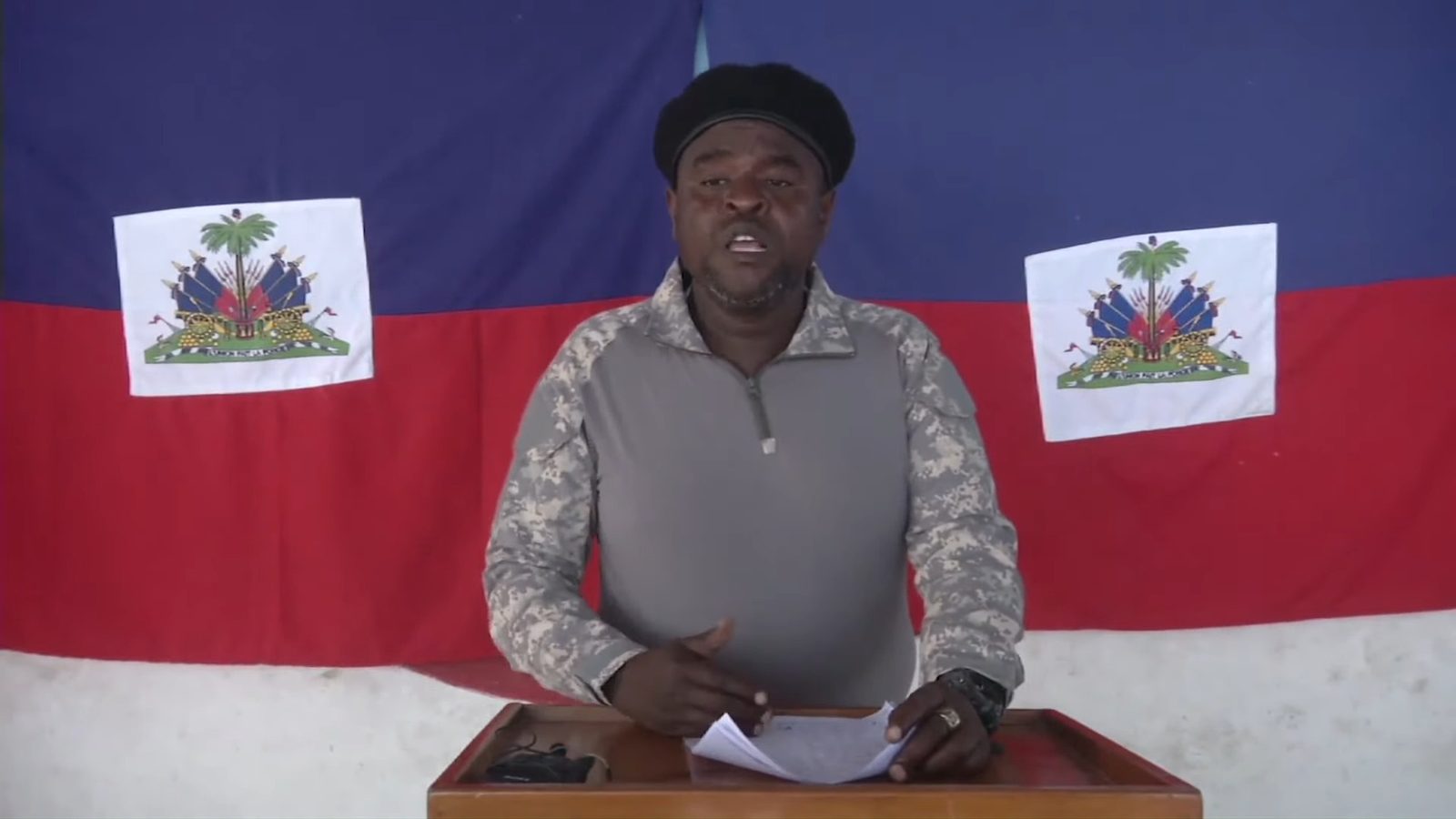
Rival gang federations G9 and G-Pèp put aside years of fighting to form Viv Ansanm, a coalition led by former police officer Jimmy Chérizier, and began coordinated attacks on government buildings, police stations, and the international airport while Prime Minister Henry was abroad in Kenya finalizing the security-mission agreement.
US Treasury sanctions four gang leaders
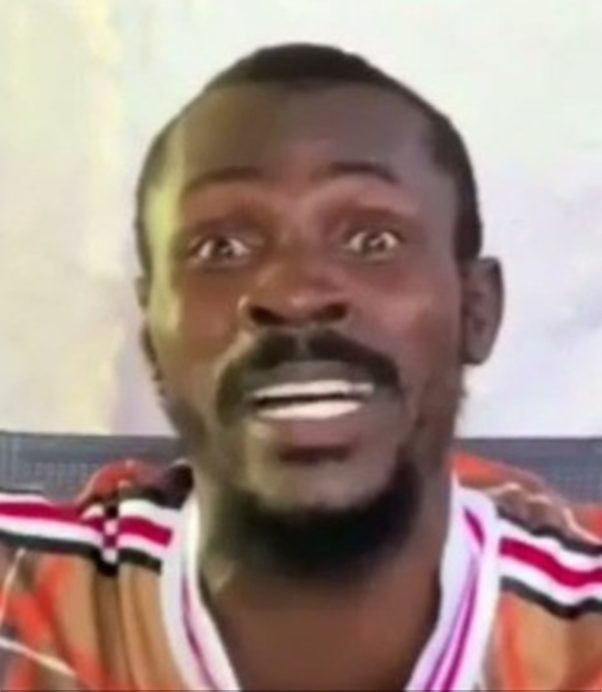
The Treasury Department sanctioned four Haitian gang leaders, Johnson André, Renel Destina, Vitel'Homme Innocent, and Wilson Joseph, over human rights abuses including mass kidnappings and sexual violence, part of a widening international pressure campaign that predated the gangs' coordinated 2024 offensive.
UN Security Council authorizes Kenya-led security mission
The Security Council voted 13 in favor with two abstentions, China and Russia, to authorize a Multinational Security Support Mission led by Kenya, granting it temporary policing powers to help Haitian police confront the gangs. Deployment would not begin for another eight months.
Gang ambush on police station triggers nationwide protests
The Gran Grif gang killed police officers in an ambush on a station in Liancourt, Artibonite, part of a run that killed 18 officers between January 10 and 26. The deaths triggered riots by off-duty police and the Fantom 509 collective demanding Henry's resignation and tougher action against the gangs.
Police retake Varreux terminal after weeks of negotiation
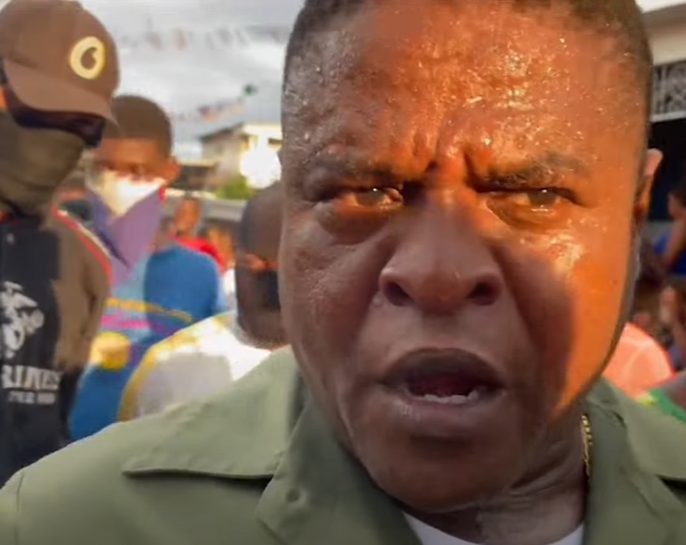
Haitian National Police regained control of the Varreux fuel terminal after roughly two weeks of negotiations backed by an armed offensive, ending G9's month-long blockade, though gangs continued to hold large sections of the capital.
Armed group blockades Haiti's largest fuel terminal
The G9 gang federation blockaded the Varreux fuel terminal, the country's largest, for about a month, part of a broader pattern of armed groups filling the security vacuum left by the assassination and extending control over critical infrastructure.
US and UN back Ariel Henry as prime minister
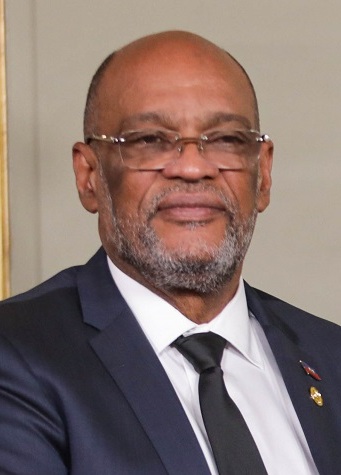
After competing claims to the premiership, US and UN officials backed Ariel Henry, whom Moïse had designated prime minister a day before his death, and rival claimant Claude Joseph agreed to step aside. A spike in kidnappings and killings followed as gangs expanded into the vacuum.
Gunmen assassinate President Jovenel Moïse
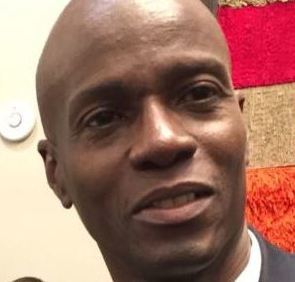
Armed assailants, including Colombian mercenaries, killed President Jovenel Moïse at his private residence in Port-au-Prince and wounded his wife, Martine Moïse. The killing left rival officials simultaneously claiming the premiership and opened a political vacuum that armed groups moved to exploit.
Frequently Asked Questions
What triggered the current crisis in Haiti?
The current acute phase traces to the July 7, 2021 assassination of President Jovenel Moïse, which left a political vacuum that armed groups exploited. It escalated sharply on February 29, 2024, when the rival G9 and G-Pèp gang federations merged into the Viv Ansanm coalition and launched coordinated attacks on prisons, the international airport, and government buildings, forcing Prime Minister Ariel Henry's resignation within weeks.
Who is Viv Ansanm and who leads it?
Viv Ansanm (Haitian Creole for 'Living Together') is a coalition of two previously rival gang federations, G9 and G-Pèp, formed in February 2024. It is led by Jimmy 'Barbecue' Chérizier, a former Haitian National Police officer, and was designated a Foreign Terrorist Organization by the US State Department in May 2025 alongside the separate Gran Grif gang, which operates mainly in Artibonite department.
Has the international security mission helped stop the violence?
Results have been mixed at best. The Kenya-led Multinational Security Support mission deployed starting June 2024 but never reached its planned 2,500-person strength, deploying fewer than 800 of Kenya's own 1,000 pledged officers amid roughly $400 million in funding against an estimated $600 million annual budget, and it ended in April 2026 widely described by observers as having failed its mandate. Its UN-backed successor, the Gang Suppression Force, aims for 5,500 personnel and was still building toward full operational capacity as of June 2026, with gangs continuing to hold an estimated 90 percent of Port-au-Prince.
How many people have been displaced by the crisis?
IOM's Displacement Tracking Matrix recorded 702,973 internally displaced people in September 2024, rising to 1,412,199 by September 2025 and 1,450,254 by December 2025, a roughly doubling over one year. By the December 2025 count, 80 percent of displaced people were living outside Port-au-Prince, reflecting the violence's spread into departments including Artibonite and Centre.
What is the humanitarian situation in Haiti?
OCHA's 2026 Humanitarian Needs and Response Plan estimated 6.4 million people, more than half the population, would need emergency assistance in 2026. IPC analysis found 5.7 million people facing acute food insecurity, including 1.9 million at emergency levels, and Hurricane Melissa in October 2025 compounded the crisis, killing at least 46 people and damaging or destroying nearly 842,400 homes.
Is Haiti still planning to hold elections?
Haiti's Transitional Presidential Council approved an electoral calendar in December 2025 setting an August 30, 2026 first round, but by April and May 2026 acting Prime Minister Alix Didier Fils-Aimé had rejected the electoral council's proposed budget and said security conditions made an August vote unlikely, raising the prospect of a further delay to elections that have not been held since 2016.
Sources
- Moïse's Assassination Created A Political Vacuum In Haiti — NPR
- Power vacuum created by president's killing rattles Haiti — PBS NewsHour
- Haitian conflict — Wikipedia
- Viv Ansanm — Wikipedia
- Transitional Presidential Council — Wikipedia
- Gang Suppression Force — Wikipedia
- 2026 Haitian general election — Wikipedia
- Tensions soar in Haiti's capital after police officers killed — Al Jazeera
- Security Council Authorizes Multinational Security Support Mission for Haiti for Initial Period of One Year — UN Meetings Coverage
- Treasury Sanctions Haitian Gang Leaders — US Department of the Treasury
- Haiti's leader to resign as gangs run rampant through country engulfed in crisis — CNN
- 'They tried to murder everyone': Haiti reels after deadly gang attack — Al Jazeera
- Gang attack in Haiti's Pont Sondé leaves 70 dead — UN News
- Haiti's government knew about deadly Kenscoff gang attack but did nothing to stop it — The Haitian Times
- Kenyan police death toll rises as gangs torch three armored vehicles in Artibonite ambush — The Haitian Times
- Terrorist Designations of Viv Ansanm and Gran Grif — US Department of State
- Deadly Haiti drone attack kills eight children in capital Port-au-Prince — Al Jazeera
- Haiti Drone Strikes Put Residents at Risk — Human Rights Watch
- Security Council Authorizes Transition of Multinational Security Support Mission in Haiti to 'Gang Suppression Force' — UN Meetings Coverage
- Haiti: 2026 Humanitarian Needs and Response Plan - Executive Summary — UN OCHA
- Haiti: Report on the internal displacement situation in Haiti - Round 8 (September 2024) — IOM Displacement Tracking Matrix
- Haiti: Report on the displacement situation in Haiti - Round 11 (September 2025) — IOM Displacement Tracking Matrix
- Haiti: Report on the internal displacement situation - Round 12 (December 2025) — IOM Displacement Tracking Matrix
- Haiti's transitional council hands power to US-backed prime minister — Al Jazeera
- First troops from UN-backed Gang Suppression Force arrive in Haiti — Al Jazeera
- Chadian advance team arrives in Haiti as new Gang Suppression Force begins deployment — The Haitian Times
- Haiti prime minister rejects $250 million election budget amid deepening crisis — The Haitian Times
- Final group of Kenyan officers leaves Haiti as security mission ends in failure — The Haitian Times
- Haiti's PM casts doubt on presidential vote by August as gang clashes grow — Al Jazeera
- At least 78 dead in gang clashes in Haiti since Saturday, says UN — Jamaica Observer
- Armed men in Haiti's capital seize a top security official in rare high-level abduction — CNN
- A turning point for Haiti? New security force takes fight to powerful gangs — UN News