Documents
 Russia
 UEC-Saturn
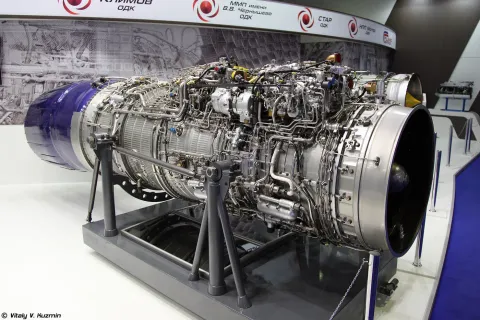
Saturn AL-31F
Twin-shaft afterburning turbofan developed by the Lyulka bureau (now part of UEC-Saturn) for the Sukhoi Su-27 and its derivatives, and license-built in China as a stopgap for early J-10 and J-11 production before indigenous WS-10 engines matured. Manufacturer and state-sourced figures below carry limited independent verification.
In service since 1985
Compiled from public sources ·primary reference ↗ ·last verified 2026-08-10
123
kN thrust
1,520
kg
8.23
T/W
Procurement snapshot
Availability & export
Russian state channel
Rosoboronexport monopoly; Western sanctions exposure and payment/logistics risk for many buyers.
Channel: Rosoboronexport (state)
Fielded & proven
Operator data not public
In service since 1985. Status: active · ~4,500 built.
Lifecycle cost (est.)
No public unit price to model from. Why so few systems publish one →
Interoperability
No standardised NATO calibre / datalink detected in public specs.
Derived guidance from public data, export regime by country of origin, lifecycle from the GAO ~30% acquisition rule. Verify eligibility, pricing and offsets with the manufacturer and your acquisition authority.
Overview
More than 4,500 AL-31F-family engines have reportedly been produced since 1981, powering the Su-27, Su-30, Su-33, Su-34 and, via the AL-31FN export variant, China's J-10. Thrust-vectoring derivatives (AL-31FP) power the Su-30MKI/SM family, and the AL-31FM1 upgrade equips the Su-34. Treat all figures as Russian manufacturer/state claims given the Russia origin caveat applied sitewide.
Powers these platforms
Systems in the WeaponSpecs database that list the Saturn AL-31F as their engine.


Full specifications
Performance
Speed, range, altitude and engagement capability.
| Thrust-to-weight Engine thrust divided by loaded weight. Above 1.0 the aircraft can accelerate going straight up. On a standalone engine record, this is the engine's own thrust divided by its dry weight, the standard figure of merit for jet engines. | 8.23 |
|---|
Physical
Dimensions, weight and crew.
| Empty weight Weight without fuel, ammunition or crew. | 1,520 kg |
|---|
Propulsion
Engine, power and fuel.
| Thrust Total engine thrust (with afterburner where applicable). | 123 kN |
|---|---|
| Propulsion type Turbofan, turboshaft, diesel, gas turbine, solid-fuel rocket, ramjet… | Afterburning turbofan |
Program
Cost, production scale and operators.
| Units built Total production run. Higher means proven manufacturing, mature logistics and spares availability. | 4,500 |
|---|
Specifications compiled from public UEC-Saturn and reference sources ↗. Published defense figures are approximations, treat comparisons as directional. Last verified 2026-08-10.
Compare with rivals
 Eurojet Turbo GmbH Eurojet EJ200
  Pratt & Whitney Pratt & Whitney F135