Documents
 United States
 Pratt & Whitney
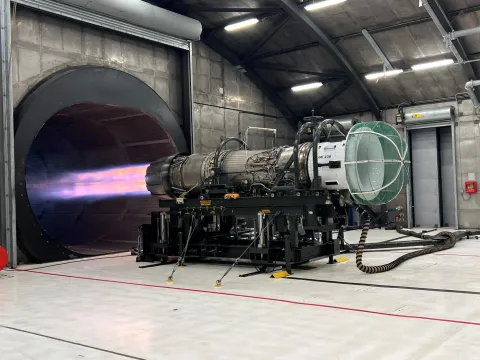
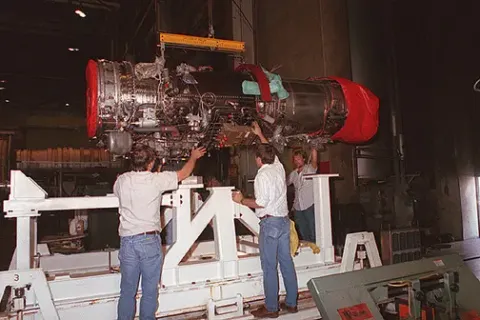
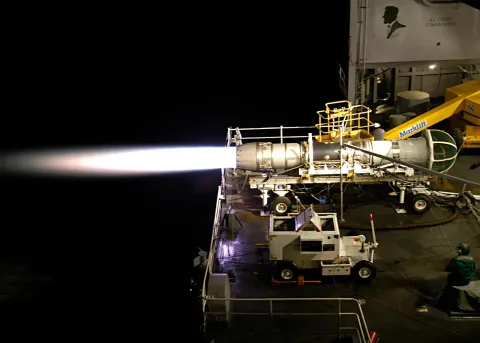
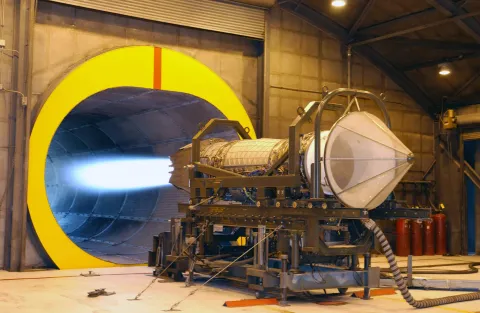
Pratt & Whitney F100
One of the two interchangeable engine options for the F-15 and F-16 (the other being GE's F110), competing since the 1980s 'Great Engine War'. The -229 is the current-production high-thrust variant fitted to late-model F-15E/EX and F-16C/D Block 50/52/70/72 airframes.
In service since 1991
Compiled from public sources ·primary reference ↗ ·last verified 2026-08-10
129
kN thrust
1,696
kg
7.78
T/W
Procurement snapshot
Availability & export
US ITAR-controlled
Export needs U.S. State Dept (DDTC) approval; end-use & re-transfer restrictions apply.
Channel: Foreign Military Sales (FMS) or Direct Commercial Sale
Fielded & proven
Operator data not public
In service since 1991. Status: active.
Lifecycle cost (est.)
No public unit price to model from. Why so few systems publish one →
Interoperability
No standardised NATO calibre / datalink detected in public specs.
Derived guidance from public data, export regime by country of origin, lifecycle from the GAO ~30% acquisition rule. Verify eligibility, pricing and offsets with the manufacturer and your acquisition authority.
Overview
The F100-PW-229 traces back to the U.S. Air Force's 1984 'Great Engine War', a competitive fly-off between Pratt & Whitney's F100 and General Electric's F110 that both airframes have carried as interchangeable engine options ever since. F-15C/D and early F-16 blocks generally used the earlier F100-PW-220, while the -229 became the standard high-thrust variant for the F-15E Strike Eagle, F-15EX and later F-16 blocks.
Powers these platforms
Systems in the WeaponSpecs database that list the Pratt & Whitney F100 as their engine.


Full specifications
Performance
Speed, range, altitude and engagement capability.
| Thrust-to-weight Engine thrust divided by loaded weight. Above 1.0 the aircraft can accelerate going straight up. On a standalone engine record, this is the engine's own thrust divided by its dry weight, the standard figure of merit for jet engines. | 7.78 |
|---|
Physical
Dimensions, weight and crew.
| Length Overall length including gun/probe where applicable. | 4.85 m |
|---|---|
| Width Overall width, matters for rail/road transport of vehicles. | 1.18 m |
| Empty weight Weight without fuel, ammunition or crew. | 1,696 kg |
Propulsion
Engine, power and fuel.
| Thrust Total engine thrust (with afterburner where applicable). | 129 kN |
|---|---|
| Propulsion type Turbofan, turboshaft, diesel, gas turbine, solid-fuel rocket, ramjet… | Afterburning turbofan |
| Bypass ratio Ratio of air bypassing the engine core to air passing through it. Low ratios suit combat engines built for thrust and speed; high ratios suit transport engines built for fuel efficiency, so neither direction is simply better. | 0.36 |
Specifications compiled from public Pratt & Whitney and reference sources ↗. Published defense figures are approximations, treat comparisons as directional. Last verified 2026-08-10.
Compare with rivals
 Eurojet Turbo GmbH Eurojet EJ200