Documents
 South Korea
 Hanwha Aerospace
K30 Biho
South Korea's tracked self-propelled anti-aircraft gun, pairing twin 30 mm autocannons with an X-band surveillance and fire-control radar for short-range air defense of maneuvering ground forces. The later Biho-II/Cheongung variant integrates KP-SAM Chiron surface-to-air missiles alongside the guns for extended engagement range.
In service since 1996
Compiled from public sources ·primary reference ↗ ·last verified 2026-07-02
💲 ≈ $12,100,000, Documented at approximately KRW 13.3 billion, which converts to roughly this figure, based on program cost data for the 176-unit Republic of Korea Army production run. Should not be confused with a cancelled 2019-2020 Indian FMS deal that implied a much higher per-unit price because it bundled technology transfer and munitions.
Procurement snapshot
Availability & export
ROK export-licensed
DAPA-administered; aggressive export posture with financing/offset packages.
Channel: Government-to-government
Fielded & proven
Operator data not public
In service since 1996. Status: active · ~176 built.
Lifecycle cost (est.)
$30M – $42M
Acquisition is only ~30% of lifecycle cost, operating & support dominate over ~25 yrs. Rough 2.5–3.5× the unit price. How we estimate this →
Interoperability
No standardised NATO calibre / datalink detected in public specs.
Derived guidance from public data, export regime by country of origin, lifecycle from the GAO ~30% acquisition rule. Verify eligibility, pricing and offsets with the manufacturer and your acquisition authority.
Full specifications
Performance
Speed, range, altitude and engagement capability.
| Engagement range Maximum distance at which an air-defense system can intercept targets. Higher covers more airspace. | 3 km |
|---|
Firepower
Armament, payload and guidance.
| Main armament Primary weapon: main gun, cannon or missile type. | Twin 30 mm KCB-type autocannons |
|---|---|
| Caliber Bore diameter of the main gun or rifle. Larger throws heavier projectiles; not simply better, ammunition commonality matters. | 30 mm |
| Guidance How the weapon finds its target: inertial, GPS/GLONASS, active/semi-active radar, infrared, laser, TV, wire. | KP-SAM Chiron infrared-guided surface-to-air missile (Biho-II) |
Physical
Dimensions, weight and crew.
| Combat weight Fully loaded weight. Lighter eases transport and bridging limits; heavier often means more armor. | 26,500 kg |
|---|---|
| Crew Personnel required to operate. Fewer reduces exposure; autoloaders trade a loader for mechanical complexity. | 4 |
Sensors & avionics
Radar, sensor suite and datalinks.
| Radar Primary radar. AESA (active electronically scanned array) is the current state of the art. | TPS-830K X-band surveillance and fire-control radar |
|---|
Program
Cost, production scale and operators.
| Unit cost Approximate flyaway/unit cost where public. Defense pricing varies hugely by contract, offsets and configuration. Lower is cheaper. | $12,100,000 |
|---|---|
| Units built Total production run. Higher means proven manufacturing, mature logistics and spares availability. | 176 |
Specifications compiled from public Hanwha Aerospace and reference sources ↗. Published defense figures are approximations, treat comparisons as directional. Last verified 2026-07-02.
Compare with rivals
See how it stacks up
 Rheinmetall Skyranger 30
  KBP Instrument Design Bureau Pantsir-S1
 Frequently asked questions
What is the engagement range of the Hanwha Aerospace K30 Biho? +
The Hanwha Aerospace K30 Biho has a maximum engagement range of 3 km.
How much does the Hanwha Aerospace K30 Biho weigh? +
The Hanwha Aerospace K30 Biho has a combat weight of 26,500 kg.
How many crew does the Hanwha Aerospace K30 Biho require? +
The Hanwha Aerospace K30 Biho requires a crew of 4.
What is the main armament of the Hanwha Aerospace K30 Biho? +
The Hanwha Aerospace K30 Biho's primary weapon is the Twin 30 mm KCB-type autocannons.
What is the Hanwha Aerospace K30 Biho used for? +
The Hanwha Aerospace K30 Biho is a air defense system typically used for air defense.
How much does the Hanwha Aerospace K30 Biho cost? +
The Hanwha Aerospace K30 Biho has an approximate unit cost of 12,100,000 USD. Defense pricing varies by contract, offsets and configuration, treat this as directional.
Similar systems
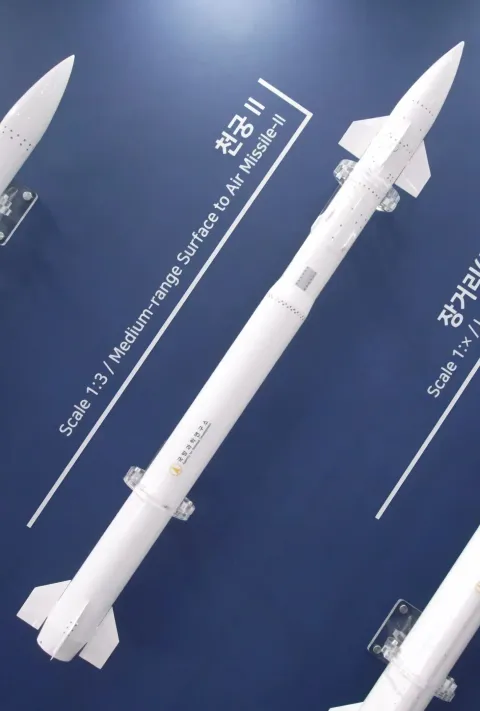
LIG Nex1
Cheongung II (KM-SAM Block II)
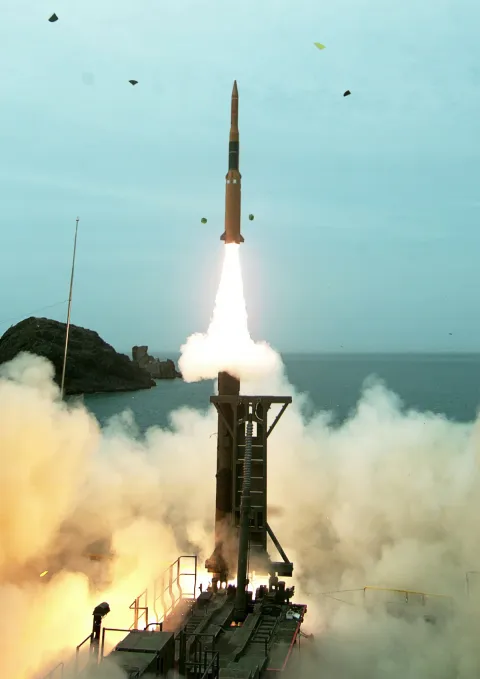
LIG Nex1
L-SAM
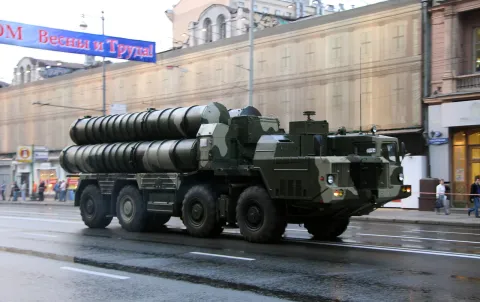
Almaz-Antey
S-300PMU2 Favorit
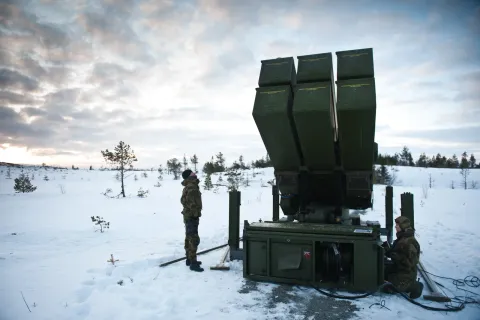
Kongsberg Defence & Aerospace