Documents
 Ukraine
 Skyeton
Raybird-3
A Ukrainian long-endurance fixed-wing reconnaissance drone built by Skyeton, in Ukrainian Armed Forces service since 2018. A hydrogen fuel-cell hybrid variant entered combat duty in 2026, described as the first hydrogen-powered drone deployed in an active combat zone, offering a near-negligible heat signature and quieter operation than the standard combustion-engine version.
In service since 2018
Compiled from public sources ·primary reference ↗ ·last verified 2026-07-30
Pricing: Unit cost not publicly disclosed
Procurement snapshot
Availability & export
National export licensing
Subject to Ukraine export-control approval; verify eligibility with the manufacturer.
Channel: Direct commercial / G2G
Fielded & proven
Operator data not public
In service since 2018. Status: active.
Lifecycle cost (est.)
No public unit price to model from. Why so few systems publish one →
Interoperability
No standardised NATO calibre / datalink detected in public specs.
Derived guidance from public data, export regime by country of origin, lifecycle from the GAO ~30% acquisition rule. Verify eligibility, pricing and offsets with the manufacturer and your acquisition authority.
Overview
The Raybird-3 is a long-endurance fixed-wing reconnaissance UAV developed by the Ukrainian company Skyeton, which pivoted from light sport aircraft manufacturing to unmanned systems after Russia's 2014 seizure of Crimea. The standard variant has been in Ukrainian Armed Forces service since 2018, used for long-range surveillance and artillery-spotting missions, with a wingspan of about 4.7 meters and a maximum takeoff weight around 23 kg carrying up to roughly 10 kg of payload. In 2026, Skyeton fielded a hydrogen fuel-cell hybrid variant of the Raybird, which the company and defense press described as the first hydrogen-powered drone deployed into an active combat zone. The hybrid system pairs an electric motor with a hydrogen fuel cell, reportedly giving the aircraft a near-negligible heat signature and quieter operation than the standard four-stroke combustion engine version, at the cost of a lower operating ceiling of about 5,500 meters and a narrower operating temperature range of -35 to +55 degrees Celsius. Reported cruise speed is about 110 km/h, with the hybrid variant currently offering roughly 12 hours of endurance, which Skyeton has stated it is working to extend toward 20 hours. Skyeton has not published a full technical datasheet with confirmed current-production performance figures for the hybrid variant, and this entry treats the standard variant's longer-standing published range and endurance figures as separate from the newer hybrid's still-evolving numbers.
Full specifications
Performance
Speed, range, altitude and engagement capability.
| Cruise speed Sustained economical speed. Determines transit time to station. | 110 km/h |
|---|---|
| Service ceiling Maximum operating altitude. Higher gives energy advantage and sensor horizon. | 5,500 m |
| Endurance Time on station. Critical for UAVs and patrol platforms, higher means longer persistent coverage. | 12 h |
Physical
Dimensions, weight and crew.
| Wingspan Wingtip-to-wingtip span. | 4.7 m |
|---|---|
| Combat weight Fully loaded weight. Lighter eases transport and bridging limits; heavier often means more armor. | 23 kg |
Propulsion
Engine, power and fuel.
| Propulsion type Turbofan, turboshaft, diesel, gas turbine, solid-fuel rocket, ramjet… | Hydrogen fuel-cell hybrid electric motor (combustion-engine variant also fielded) |
|---|
Sensors & avionics
Radar, sensor suite and datalinks.
| Sensors IRST, EO/IR turrets, laser designators, sniper pods, thermal sights. | Electro-optical/infrared reconnaissance payload |
|---|
Specifications compiled from public Skyeton and reference sources ↗. Published defense figures are approximations, treat comparisons as directional. Last verified 2026-07-30.
Compare with rivals
See how it stacks up
 Turkish Aerospace Industries ANKA-S
  General Atomics Aeronautical Systems MQ-9A Reaper
 Frequently asked questions
How much does the Skyeton Raybird-3 weigh? +
The Skyeton Raybird-3 has a combat weight of 23 kg.
What is the Skyeton Raybird-3 used for? +
The Skyeton Raybird-3 is a uav / drone typically used for isr.
How much does the Skyeton Raybird-3 cost? +
Skyeton Raybird-3: Unit cost not publicly disclosed. Defense program costs are rarely fully public and vary by contract and configuration.
Similar systems
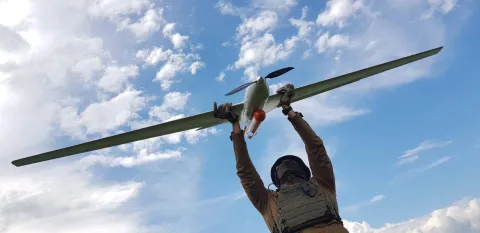
UA Dynamics
Punisher
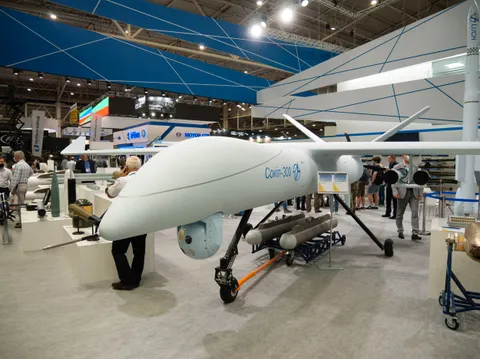
Luch Design Bureau
Sokil-300
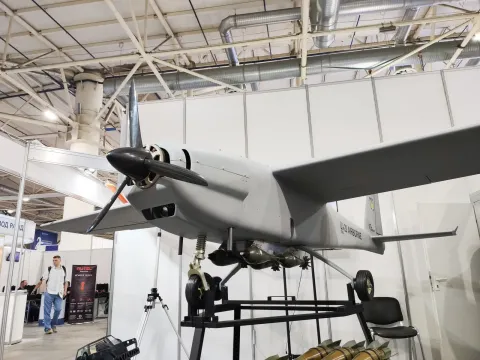
UkrJet
UJ-22 Airborne
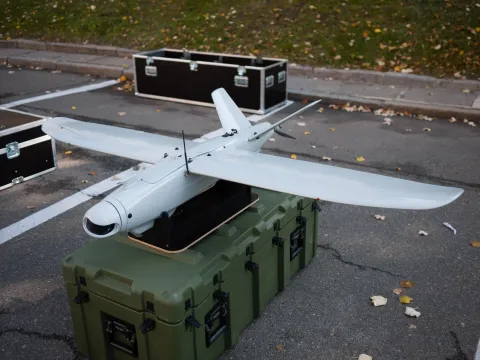
DeViRo