Documents
 Italy
Italy Leonardo
AW249 Fenice
Leonardo's next-generation attack helicopter developed for the Italian Army to replace the A129 Mangusta, sharing dynamic components with the AW189 civil helicopter for reduced sustainment cost. It entered flight testing in the early 2020s with a design emphasizing networked sensors and reduced radar signature.
In service since 2022 · 1 operator countries
Compiled from public sources ·primary reference ↗ ·last verified 2026-07-02
290
km/h
450
km range
4,700
m ceiling
Pricing: Unit cost not yet publicly disclosed; program in early production
Procurement snapshot
Availability & export
Italian export-licensed
UAMA authorisation; standard EU/Wassenaar controls.
Channel: Direct commercial / G2G
Fielded & proven
Limited · 1 operator
In service since 2022. Status: active.
Lifecycle cost (est.)
No public unit price to model from. Why so few systems publish one →
Interoperability
No standardised NATO calibre / datalink detected in public specs.
Derived guidance from public data, export regime by country of origin, lifecycle from the GAO ~30% acquisition rule. Verify eligibility, pricing and offsets with the manufacturer and your acquisition authority.
Compatible munitions & weapons
Publicly reported weapons the AW249 Fenice can carry. Linked items have a full spec page.


Full specifications
Performance
Speed, range, altitude and engagement capability.
| Max speed Maximum level speed. For aircraft this is at optimal altitude; for ground vehicles, top road speed. Higher means faster response and better kinematic performance. | 290 km/h |
|---|---|
| Cruise speed Sustained economical speed. Determines transit time to station. | 260 km/h |
| Range Maximum distance: ferry range for aircraft, operational range for vehicles, maximum engagement distance for missiles. Higher means more standoff or persistence. | 450 km |
| Service ceiling Maximum operating altitude. Higher gives energy advantage and sensor horizon. | 4,700 m |
Firepower
Armament, payload and guidance.
| Main armament Primary weapon: main gun, cannon or missile type. | 20 mm three-barrel cannon |
|---|---|
| Hardpoints External stations for weapons and pods. More means bigger and more flexible loadouts. | 4 |
Protection
Armor, countermeasures and survivability.
| Armor Armor technology: composite, modular, ERA-fitted, uranium-ceramic. Exact compositions are classified. | Armored crew compartment with reduced radar and infrared signature shaping |
|---|---|
| Countermeasures Self-protection: chaff, flares, DIRCM, towed decoys, smoke dischargers, jammers. | radar/laser/missile warning receivers, chaff, flares |
Physical
Dimensions, weight and crew.
| Length Overall length including gun/probe where applicable. | 16.5 m |
|---|---|
| Combat weight Fully loaded weight. Lighter eases transport and bridging limits; heavier often means more armor. | 7,500 kg |
| Crew Personnel required to operate. Fewer reduces exposure; autoloaders trade a loader for mechanical complexity. | 2 |
Propulsion
Engine, power and fuel.
| Engine Powerplant model and type. | 2x GE Aviation CT7-8E6 turboshaft |
|---|---|
| Engines Number of engines. Twin-engine gives redundancy at higher cost. | 2 |
| Propulsion type Turbofan, turboshaft, diesel, gas turbine, solid-fuel rocket, ramjet… | Turboshaft |
Sensors & avionics
Radar, sensor suite and datalinks.
| Sensors IRST, EO/IR turrets, laser designators, sniper pods, thermal sights. | Integrated electro-optical/infrared sighting system, helmet-mounted display, manned-unmanned teaming datalink |
|---|---|
| Thermal imaging Thermal sights for night and obscured-visibility operations. | Yes |
Program
Cost, production scale and operators.
| Operator countries Number of countries operating the system. More operators means broader support ecosystem. | 1 |
|---|
Specifications compiled from public Leonardo and reference sources ↗. Published defense figures are approximations, treat comparisons as directional. Last verified 2026-07-02.
Compare with rivals
See how it stacks up
 Boeing AH-64D Apache Longbow
 Frequently asked questions
What is the top speed of the Leonardo AW249 Fenice? +
The Leonardo AW249 Fenice has a maximum speed of 290 km/h.
What is the range of the Leonardo AW249 Fenice? +
The Leonardo AW249 Fenice has a maximum range of 450 km.
How much does the Leonardo AW249 Fenice weigh? +
The Leonardo AW249 Fenice has a combat weight of 7,500 kg.
How many crew does the Leonardo AW249 Fenice require? +
The Leonardo AW249 Fenice requires a crew of 2.
What is the main armament of the Leonardo AW249 Fenice? +
The Leonardo AW249 Fenice's primary weapon is the 20 mm three-barrel cannon.
What engine does the Leonardo AW249 Fenice use? +
The Leonardo AW249 Fenice is powered by the 2x GE Aviation CT7-8E6 turboshaft.
What is the Leonardo AW249 Fenice used for? +
The Leonardo AW249 Fenice is a helicopter typically used for close air support, anti armor, isr.
How many countries operate the Leonardo AW249 Fenice? +
The Leonardo AW249 Fenice is operated by 1 countries.
How much does the Leonardo AW249 Fenice cost? +
Leonardo AW249 Fenice: Unit cost not yet publicly disclosed; program in early production. Defense program costs are rarely fully public and vary by contract and configuration.
Similar systems
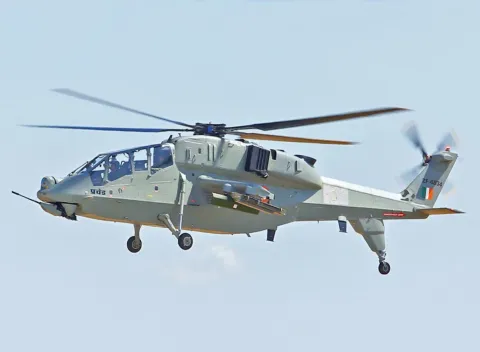
Hindustan Aeronautics Limited
HAL Prachand (LCH)
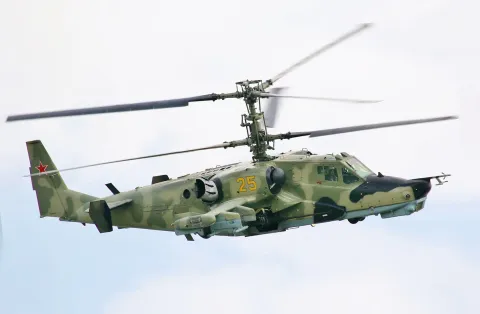
Russian Helicopters
Ka-52 Alligator
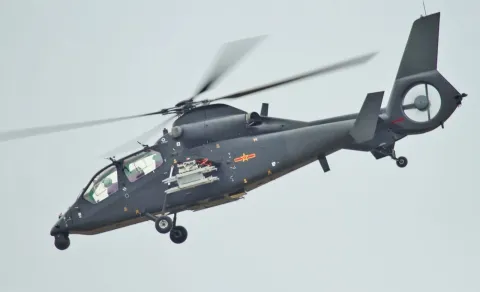
AVIC (Aviation Industry Corporation of China)
Harbin Z-19
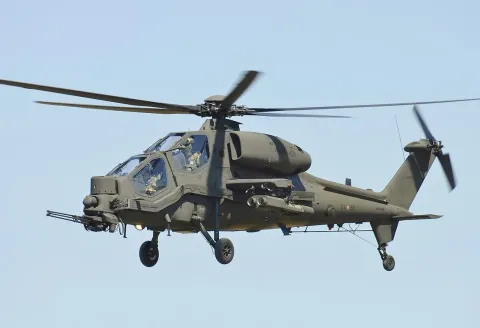
Leonardo