 Finland
 Patria
MUSCL
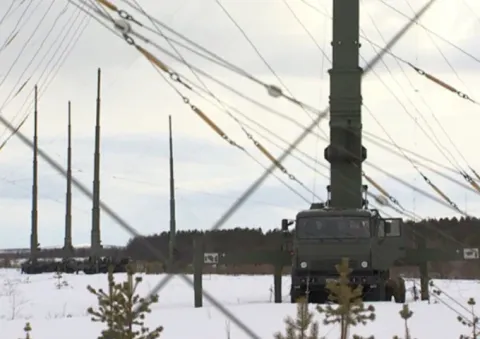
Passive coherent-location air surveillance radar that exploits FM radio and DVB-T/T2 broadcast signals as illuminators, producing a 360-degree air picture with no emissions of its own and therefore no signature for hostile SIGINT or anti-radiation missiles.
Compiled from public sources ·primary reference ↗ ·last verified 2026-08-18
Procurement snapshot
Availability & export
National export licensing
Subject to Finland export-control approval; verify eligibility with the manufacturer.
Channel: Direct commercial / G2G
Fielded & proven
Operator data not public
Status: active.
Lifecycle cost (est.)
No public unit price to model from. Why so few systems publish one →
Interoperability
No standardised NATO calibre / datalink detected in public specs.
Derived guidance from public data, export regime by country of origin, lifecycle from the GAO ~30% acquisition rule. Verify eligibility, pricing and offsets with the manufacturer and your acquisition authority.
Overview
Patria MUSCL, short for Multi Static Coherent Locator, is a passive radar system for air surveillance. Rather than transmitting, it uses existing FM radio and DVB-T/T2 television broadcasts as illuminators of opportunity and processes the reflected energy with passive coherent location techniques, so the system produces no signal footprint and cannot be located by adversary signals intelligence or engaged by anti-radiation missiles. Patria states a detection range of up to 250 to 300 km depending on target type, with typical figures of under 150 km against a fighter aircraft, under 80 km against a helicopter (usually limited by terrain shadowing) and over 10 km against NATO Class 1 mini and small UAVs. The headline range recorded here is the upper bound of the manufacturer's quoted band. Azimuth coverage is 360 degrees or a defined sector, tracking capacity is more than 100 simultaneous targets, and the air situation picture updates in under one second. Target classification is supported through rotor-modulation analysis and radar cross-section estimation. Stations operate either standalone with a single locally-operated site or networked as a multistatic constellation managed entirely remotely; in both cases the system runs unattended once a surveillance mission is launched. Patria positions it for wide-area passive air surveillance such as border coverage, for filling low-altitude and geographic gaps in an existing active radar network, for providing covert local air surveillance and target acquisition to ground-based air defence units, and for passive maritime surveillance when coastally deployed. The use of low frequencies and multistatic geometry is claimed to help against small, slow and low-flying targets as well as those relying on stealth shaping. Stations can be fixed or transportable, and output integrates into customer C2 environments over Eurocontrol ASTERIX or MIL-STD 3011 JREAP-C interfaces, with a boundary-protection option when elements sit in different security zones.
Full specifications
Sensors & avionics
Radar, sensor suite and datalinks.
| Radar range Published detection range against a typical fighter-sized target. Higher sees first. | 300 km |
|---|---|
| Sensors IRST, EO/IR turrets, laser designators, sniper pods, thermal sights. | Passive coherent location (PCL) receiver exploiting FM and DVB-T/T2 broadcast illuminators simultaneously, 360-degree or sector azimuth coverage, Rotor-modulation and RCS-based target classification |
| Datalink Network connectivity: Link 16, MADL, national datalinks. Enables cooperative engagement. | Eurocontrol ASTERIX, MIL-STD 3011 JREAP-C |
Specifications compiled from public Patria and reference sources ↗. Published defense figures are approximations, treat comparisons as directional. Last verified 2026-08-18.
Compare with rivals
See how it stacks up
 Rostec Repellent-1
  Roketsan Alka
 Frequently asked questions
What is the Patria MUSCL used for? +
The Patria MUSCL is a electronic warfare typically used for air surveillance, early warning, coastal surveillance, target acquisition.