 Iran
Iran Iran Aerospace Industries Organization
Khalij Fars
An anti-ship ballistic missile derived from the Fateh-110 short-range ballistic missile airframe, fitted with an electro-optical seeker for terminal guidance against moving naval targets, presented by Iran as a threat to carrier strike groups in the Strait of Hormuz. Range and accuracy figures are Iranian government claims not independently verified.
In service since 2011
Compiled from public sources ·primary reference ↗ ·last verified 2026-07-02
300
km range
3
Mach
450
kg warhead
Pricing: Anti-ship targeting accuracy claims are Iranian government statements, not independently verified
Procurement snapshot
Availability & export
Sanctioned origin
Under multilateral sanctions; acquisition carries severe legal/financial exposure for most buyers.
Channel: State channel
Fielded & proven
Operator data not public
In service since 2011. Status: active.
Lifecycle cost (est.)
No public unit price to model from. Why so few systems publish one →
Interoperability
No standardised NATO calibre / datalink detected in public specs.
Derived guidance from public data, export regime by country of origin, lifecycle from the GAO ~30% acquisition rule. Verify eligibility, pricing and offsets with the manufacturer and your acquisition authority.
Full specifications
Performance
Speed, range, altitude and engagement capability.
| Max speed (Mach) Maximum speed as a multiple of the speed of sound. Mach 2+ is typical for air-superiority fighters. | 3 Mach |
|---|---|
| Range Maximum distance: ferry range for aircraft, operational range for vehicles, maximum engagement distance for missiles. Higher means more standoff or persistence. | 300 km |
Firepower
Armament, payload and guidance.
| Warhead Warhead mass. Heavier generally means larger effect radius, at the cost of range. | 450 kg |
|---|---|
| Warhead type Blast-fragmentation, shaped charge (HEAT), penetrator, thermobaric or nuclear-capable. | High-explosive fragmentation |
| Guidance How the weapon finds its target: inertial, GPS/GLONASS, active/semi-active radar, infrared, laser, TV, wire. | Inertial navigation, Terminal electro-optical/infrared homing |
Physical
Dimensions, weight and crew.
| Length Overall length including gun/probe where applicable. | 8.86 m |
|---|---|
| Combat weight Fully loaded weight. Lighter eases transport and bridging limits; heavier often means more armor. | 3,600 kg |
Propulsion
Engine, power and fuel.
| Propulsion type Turbofan, turboshaft, diesel, gas turbine, solid-fuel rocket, ramjet… | Single-stage solid-fuel rocket |
|---|
Specifications compiled from public Iran Aerospace Industries Organization and reference sources ↗. Published defense figures are approximations, treat comparisons as directional. Last verified 2026-07-02.
Compare with rivals
See how it stacks up
 Boeing AGM-86 ALCM
 Frequently asked questions
What is the range of the Iran Aerospace Industries Organization Khalij Fars? +
The Iran Aerospace Industries Organization Khalij Fars has a maximum range of 300 km.
How much does the Iran Aerospace Industries Organization Khalij Fars weigh? +
The Iran Aerospace Industries Organization Khalij Fars has a combat weight of 3,600 kg.
What is the Iran Aerospace Industries Organization Khalij Fars used for? +
The Iran Aerospace Industries Organization Khalij Fars is a missile typically used for deep strike.
How much does the Iran Aerospace Industries Organization Khalij Fars cost? +
Iran Aerospace Industries Organization Khalij Fars: Anti-ship targeting accuracy claims are Iranian government statements, not independently verified. Defense program costs are rarely fully public and vary by contract and configuration.
Similar systems
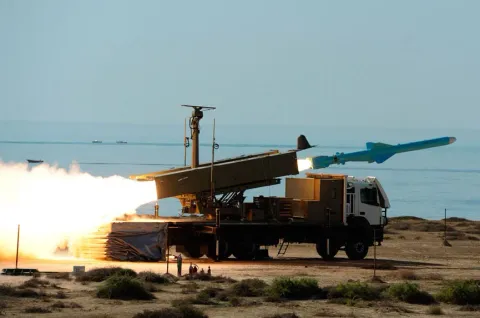
Iran Aerospace Industries Organization
Qader
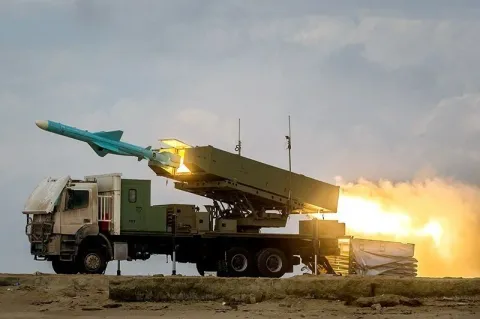
Iran Aerospace Industries Organization
Noor
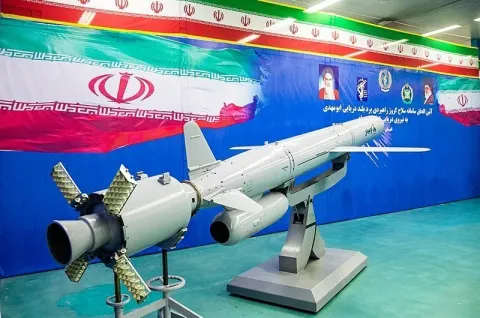
Iran Aerospace Industries Organization
Abu Mahdi
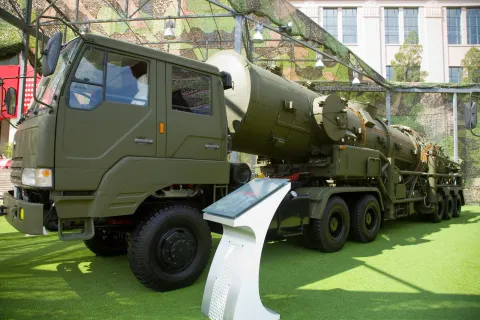
China Aerospace Science and Industry Corporation