Documents
 Australia In development
 BAE Systems Australia
Hunter-class
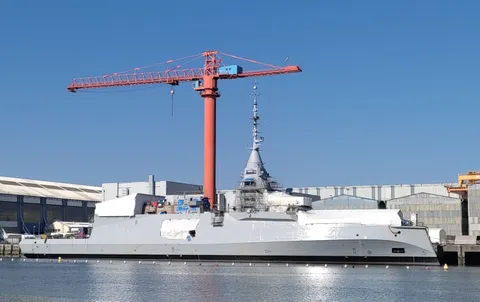
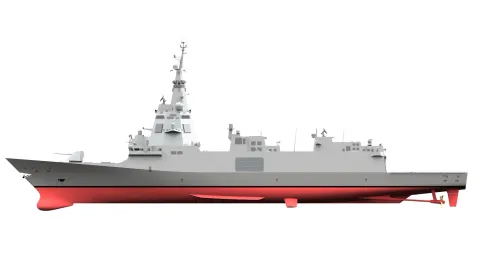
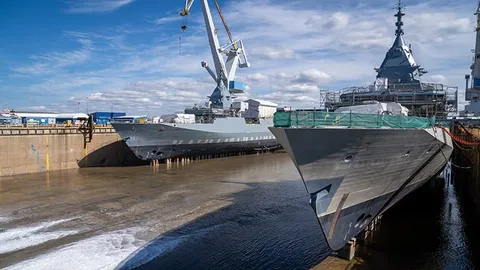
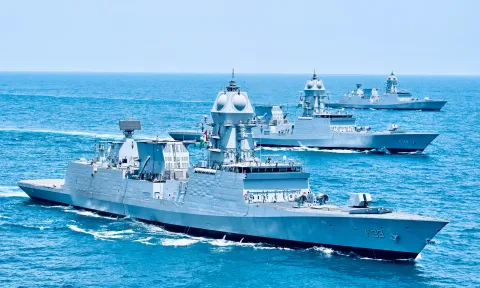
Australia's future anti-submarine warfare frigate, a locally built derivative of the UK Type 26 design fitted with the Australian CEAFAR2 radar and Aegis combat system. Nine ships are planned to replace the Anzac-class frigates from the early 2030s.
Planned service entry 2031 · 1 operator countries
Compiled from public sources ·primary reference ↗ ·last verified 2026-07-02
8,800
t
27
kn
7,000
nmi
32
VLS
180
crew
Pricing: Program cost estimated at over AUD 45 billion for 9 ships
Procurement snapshot
Availability & export
National export licensing
Subject to Australia export-control approval; verify eligibility with the manufacturer.
Channel: Direct commercial / G2G
Development status
Limited · 1 operator
Planned service entry 2031. Status: announced.
Lifecycle cost (est.)
No public unit price to model from. Why so few systems publish one →
Interoperability
Derived guidance from public data, export regime by country of origin, lifecycle from the GAO ~30% acquisition rule. Verify eligibility, pricing and offsets with the manufacturer and your acquisition authority.
Full specifications
Firepower
Armament, payload and guidance.
| Main armament Primary weapon: main gun, cannon or missile type. | 127 mm Mk 45 naval gun |
|---|---|
| VLS cells Vertical-launch missile cells on a warship, a proxy for magazine depth. Higher means more missiles before rearming. | 32 |
| Torpedo tubes Number of torpedo tubes (submarines and some surface ships). | 6 |
Physical
Dimensions, weight and crew.
| Length Overall length including gun/probe where applicable. | 149.9 m |
|---|
Sensors & avionics
Radar, sensor suite and datalinks.
| Radar Primary radar. AESA (active electronically scanned array) is the current state of the art. | CEAFAR2 AESA |
|---|
Program
Cost, production scale and operators.
| Units built Total production run. Higher means proven manufacturing, mature logistics and spares availability. | 0 |
|---|---|
| Operator countries Number of countries operating the system. More operators means broader support ecosystem. | 1 |
Specifications compiled from public BAE Systems Australia and reference sources ↗. Published defense figures are approximations, treat comparisons as directional. Last verified 2026-07-02.
Compare with rivals
See how it stacks up
 Naval Group Amiral Ronarc'h-class Frigate (FDI)
  Navantia Alvaro de Bazan class (F100)
 Frequently asked questions
What is the main armament of the BAE Systems Australia Hunter-class? +
The BAE Systems Australia Hunter-class's primary weapon is the 127 mm Mk 45 naval gun.
What is the BAE Systems Australia Hunter-class used for? +
The BAE Systems Australia Hunter-class is a warship typically used for anti ship, air defense.
How many countries operate the BAE Systems Australia Hunter-class? +
The BAE Systems Australia Hunter-class is operated by 1 countries.
How much does the BAE Systems Australia Hunter-class cost? +
BAE Systems Australia Hunter-class: Program cost estimated at over AUD 45 billion for 9 ships. Defense program costs are rarely fully public and vary by contract and configuration.