Documents
 United States
 Boeing
MH-139 Grey Wolf
A twin-engine medium-lift utility helicopter adapted by Boeing from the Leonardo AW139 for the U.S. Air Force, replacing the UH-1N Twin Huey. It is used primarily to guard intercontinental ballistic missile fields and for continuity-of-government and VIP transport.
In service since 2020 · 1 operator countries
Compiled from public sources ·primary reference ↗
325
km/h
1,300
km range
6,200
m ceiling
Procurement snapshot
Availability & export
US ITAR-controlled
Export needs U.S. State Dept (DDTC) approval; end-use & re-transfer restrictions apply.
Channel: Foreign Military Sales (FMS) or Direct Commercial Sale
Fielded & proven
Limited · 1 operator
In service since 2020. Status: active.
Lifecycle cost (est.)
No public unit price to model from. Why so few systems publish one →
Interoperability
No standardised NATO calibre / datalink detected in public specs.
Competitive field
1 comparable system from 1 other manufacturer
Counted in the WeaponSpecs database: helicopters built by another manufacturer that share at least one published role with this system. A count of what this catalog holds, not a survey of the whole market. See the alternatives →
Derived guidance from public data, export regime by country of origin, lifecycle from the GAO ~30% acquisition rule. Verify eligibility, pricing and offsets with the manufacturer and your acquisition authority.
Full specifications
Performance
Speed, range, altitude and engagement capability.
| Max speed Maximum level speed. For aircraft this is at optimal altitude; for ground vehicles, top road speed. Higher means faster response and better kinematic performance. | 325 km/h |
|---|---|
| Range Maximum distance: ferry range for aircraft, operational range for vehicles, maximum engagement distance for missiles. Higher means more standoff or persistence. | 1,300 km |
| Service ceiling Maximum operating altitude. Higher gives energy advantage and sensor horizon. | 6,200 m |
Physical
Dimensions, weight and crew.
| Length Overall length including gun/probe where applicable. | 16.65 m |
|---|---|
| Height Overall height. Lower profile is harder to spot and hit for ground vehicles. | 5 m |
| Empty weight Weight without fuel, ammunition or crew. | 3,700 kg |
| Combat weight Fully loaded weight. Lighter eases transport and bridging limits; heavier often means more armor. | 6,500 kg |
| Crew Personnel required to operate. Fewer reduces exposure; autoloaders trade a loader for mechanical complexity. | 2 |
Propulsion
Engine, power and fuel.
| Engine Powerplant model and type. | 2x Pratt & Whitney Canada PT6C-67C turboshafts |
|---|---|
| Engines Number of engines. Twin-engine gives redundancy at higher cost. | 2 |
| Engine power Engine output power. Higher moves more weight faster. | 1,750 hp |
| Propulsion type Turbofan, turboshaft, diesel, gas turbine, solid-fuel rocket, ramjet… | Turboshaft |
Program
Cost, production scale and operators.
| Operator countries Number of countries operating the system. More operators means broader support ecosystem. | 1 |
|---|
Specifications compiled from public Boeing and reference sources ↗. Published defense figures are approximations, treat comparisons as directional. Last verified 2026-07-05.
Compare with rivals
See how it stacks up
Frequently asked questions
What is the top speed of the Boeing MH-139 Grey Wolf? +
The Boeing MH-139 Grey Wolf has a maximum speed of 325 km/h.
What is the range of the Boeing MH-139 Grey Wolf? +
The Boeing MH-139 Grey Wolf has a maximum range of 1,300 km.
How much does the Boeing MH-139 Grey Wolf weigh? +
The Boeing MH-139 Grey Wolf has a combat weight of 6,500 kg.
How many crew does the Boeing MH-139 Grey Wolf require? +
The Boeing MH-139 Grey Wolf requires a crew of 2.
What engine does the Boeing MH-139 Grey Wolf use? +
The Boeing MH-139 Grey Wolf is powered by the 2x Pratt & Whitney Canada PT6C-67C turboshafts.
What is the Boeing MH-139 Grey Wolf used for? +
The Boeing MH-139 Grey Wolf is a helicopter typically used for transport, security.
How many countries operate the Boeing MH-139 Grey Wolf? +
The Boeing MH-139 Grey Wolf is operated by 1 countries.
Similar systems

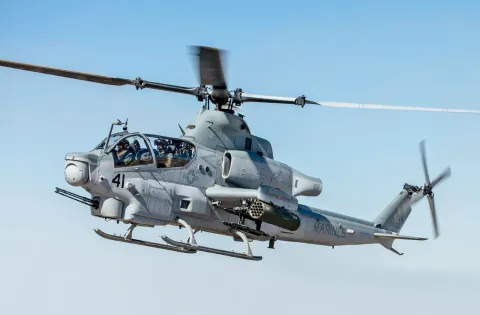
Bell
UH-1Y Venom
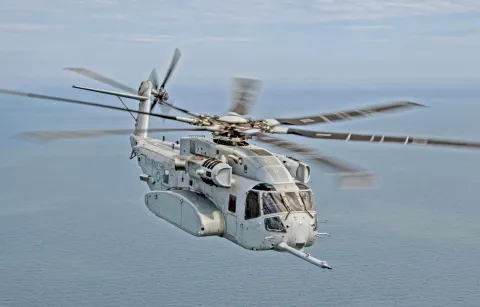
Lockheed Martin
CH-53K King Stallion
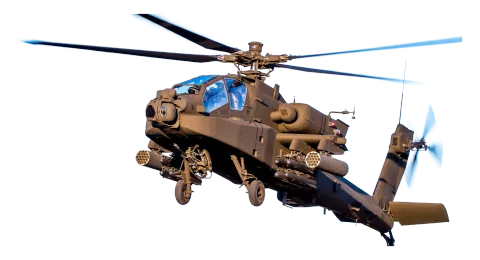
Boeing
AH-64E Apache Guardian
Bell