Iron Dome vs David's Sling vs Arrow 3: Israel's Layers
Israel's layered air defense spans three tiers: Iron Dome at 70 km, David's Sling at 300 km, and Arrow 3 at 2,400 km for exo-atmospheric intercepts.

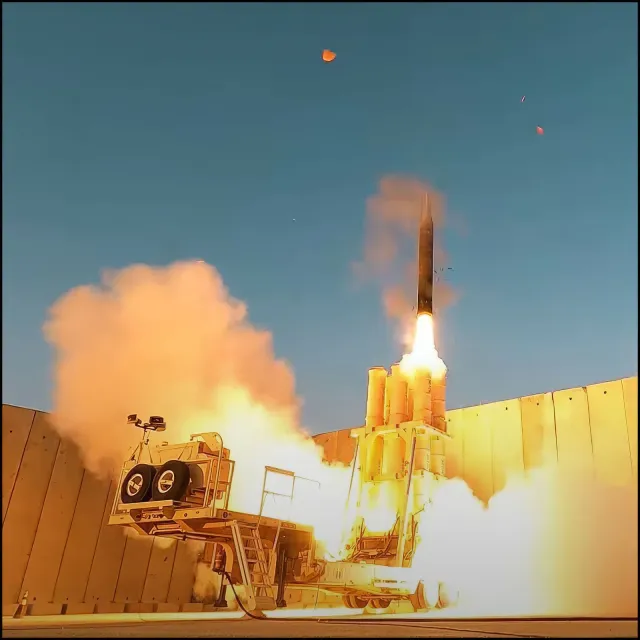
Via Wikipedia, Arrow 3 (shown for identification)
Israel’s air defense is not three systems competing for the same job, it is one architecture split across three altitude and range bands, and the cost of the interceptors tells you why. Iron Dome engages short-range rockets, artillery, and mortars out to roughly 70 km. David’s Sling reaches medium and long-range rockets, cruise missiles, and aircraft out to roughly 300 km. Arrow 3 intercepts ballistic missiles outside the atmosphere, with an engagement envelope reported at roughly 2,400 km. The published per-interceptor cost spans from about $50,000 for Iron Dome’s Tamir to about $2.2 million for Arrow 3’s interceptor, a roughly 44x difference that is the real argument for layering rather than building one system to do everything.
What threat does each tier actually cover?
The three systems are sorted by what they’re shooting at, not by how “advanced” each one is. Iron Dome was built for the short-range, high-volume threat: unguided rockets, artillery shells, and mortar rounds fired from a few kilometers to around 70 km away, the kind of barrage fire that comes in fast, cheap, and in large numbers. David’s Sling sits in the middle tier, built for medium and long-range rockets, cruise missiles, and aircraft, threats that travel farther and often faster than what Iron Dome is designed to stop, out to a reported 300 km. Arrow 3 occupies the top tier entirely: ballistic missile interception outside the atmosphere, engaging a threat during its midcourse phase before it re-enters and begins its terminal descent.
Each tier assumes the threat below it has already been handled by a cheaper system, and each tier assumes the threat above it is someone else’s job. That division of labor is the entire point of a layered architecture, and it only works if the ranges and altitudes don’t overlap in ways that waste interceptors.
Why does the cost per interceptor jump so much between tiers?
Here is where the manufacturer and government figures, treated as claims rather than settled fact, tell a consistent story. Iron Dome’s Tamir interceptor runs at roughly $50,000 per unit. David’s Sling’s Stunner interceptor runs at roughly $1,000,000. Arrow 3’s interceptor runs at roughly $2,200,000. That is not a linear scale, it is a 20x jump from Iron Dome to David’s Sling and another roughly 2.2x jump from David’s Sling to Arrow 3, for a combined 44x spread from the cheapest tier to the most expensive.
The jump tracks the physics of the intercept, not just the sophistication of the electronics. A longer engagement range means more propellant and a bigger airframe. Higher closing speeds against a ballistic target mean a faster, more capable seeker. Exo-atmospheric intercept, which is what Arrow 3 is built to do, means guidance and propulsion systems that function outside the atmosphere entirely, a much harder engineering problem than anything Iron Dome or David’s Sling has to solve. None of that comes cheap, and none of it is optional if the mission is stopping an incoming ballistic missile rather than a rocket.
Why not build one interceptor that does all three jobs?
Because the economics break immediately. A single system capable of Arrow 3’s exo-atmospheric intercept would, by necessity, cost close to Arrow 3’s reported $2.2 million per unit, even when used against a threat Iron Dome handles for about $50,000. Firing a $2.2 million interceptor at a mortar shell that costs a few hundred dollars to build is not a defensible trade in any engagement that runs longer than a single salvo, and a sustained rocket barrage of the kind Iron Dome is built for can run into the hundreds of interceptors fired in a single event.
There’s a physical constraint layered on top of the economic one. Iron Dome’s Tamir interceptor is a terminal-phase, within-atmosphere system. It has no capability to reach an incoming ballistic missile at Arrow 3’s exo-atmospheric engagement altitude; the missile is already outside the physical envelope Iron Dome was designed to operate in. So even setting the cost question aside, Iron Dome cannot substitute for Arrow 3 against a ballistic missile threat, and Arrow 3 would be an absurd economic choice against the rocket and mortar fire Iron Dome is built to stop. The layered design is not a legacy artifact or a procurement accident. It is the only arrangement that is both physically capable across the full threat spectrum and economically sustainable under repeated use.
The numbers side by side
| System | Engagement range | Approx. cost per interceptor | Threat tier |
|---|---|---|---|
| Iron Dome | 70 km | $50,000 | Short-range rockets, artillery, mortars |
| David’s Sling | 300 km | $1,000,000 | Medium/long-range rockets, cruise missiles, aircraft |
| Arrow 3 | 2,400 km | $2,200,000 | Exo-atmospheric ballistic missile intercept |
Arrow 3's bar dwarfs the other two not because it is simply the better system, but because its 2,400 km reflects an exo-atmospheric midcourse intercept, a different engagement geometry than Iron Dome's short-range terminal defense.
The bar for Arrow 3 dwarfing the other two makes the layered-defense argument better than any paragraph in this piece could. That’s not because Arrow 3 is simply “better,” it’s because the figure represents an entirely different kind of intercept, exo-atmospheric midcourse engagement at extreme altitude, not a lateral reach comparable to a cruise missile’s range. Iron Dome’s short bar isn’t a weakness, it’s a system doing exactly the job it was built and priced for. Put a $2.2 million interceptor’s capability requirement on every rocket that crosses the border and the economics of layered defense collapse instantly, which is the whole reason the three tiers exist as separate systems rather than one.
The bottom line
Treat every figure here as a manufacturer or government claim rather than an independently audited result, standard practice for any defense spec sheet, Israeli or otherwise. What the numbers consistently show, though, is a coherent design logic: assign the cheapest interceptor capable of stopping a given threat to that threat, and reserve the most expensive, most technically demanding tier for the one threat, exo-atmospheric ballistic missiles, that nothing else can touch. Iron Dome, David’s Sling, and Arrow 3 aren’t rivals. They’re a division of labor built around a 44x cost spread that only makes sense as three layers, not one.
Compare these systems directly in the Compare tool, browse the full air-defense category for other layered and single-tier systems, run your own threat profile through the Advisor, or read more procurement-focused breakdowns like this one in the WeaponSpecs articles.
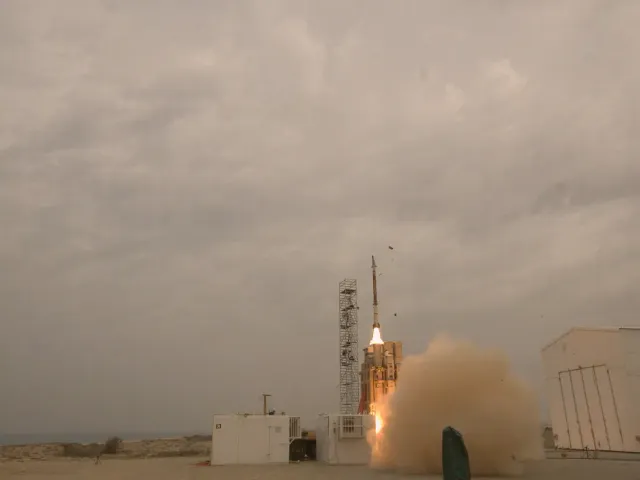
Systems in this comparison
Every system covered above, with its photo and, where available, a video. Tap a card to open the full spec sheet.
Compare these side by side →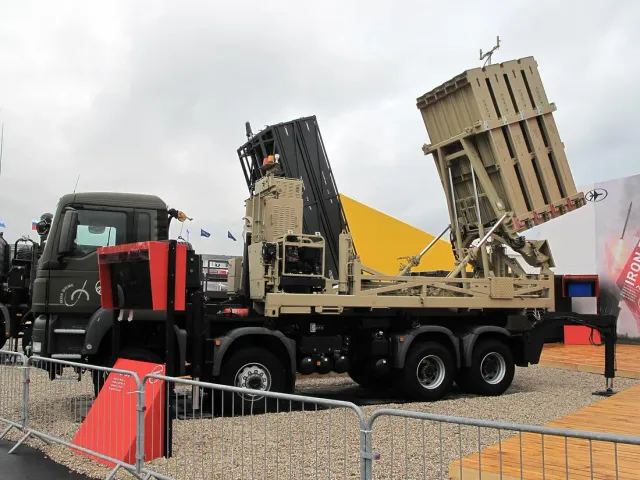
Frequently asked questions
Are Iron Dome, David's Sling, and Arrow 3 competing systems? +
No. They are tiers of a single layered architecture, not alternatives competing for the same contract. Iron Dome handles short-range rockets and mortars out to 70 km, David's Sling covers medium and long-range rockets and cruise missiles out to 300 km, and Arrow 3 intercepts ballistic missiles outside the atmosphere. Israel operates all three simultaneously because each is built for a threat band the others cannot address.
Why does Iron Dome cost so much less per interceptor than Arrow 3? +
The published figures put Iron Dome's Tamir interceptor at roughly $50,000, David's Sling's Stunner at roughly $1,000,000, and Arrow 3's interceptor at roughly $2,200,000, a 44x spread from cheapest to most expensive. Cost scales with the physics of the intercept: reaching higher altitude, longer range, and faster closing speeds against a ballistic target requires more propellant, more sophisticated seekers, and exo-atmospheric guidance, none of which a short-range interceptor needs.
Could Arrow 3 replace Iron Dome for rocket defense? +
Not economically, and not physically. Arrow 3 is built to intercept ballistic missiles in their midcourse phase at exo-atmospheric altitude, a completely different engagement geometry than a short-range rocket or mortar shell fired from a few kilometers away. Even setting aside the physics, using a reported $2.2 million interceptor against a rocket that costs a few hundred dollars to build would be an indefensible cost trade in any sustained engagement.
What does Arrow 3's 2,400 km range figure actually mean? +
It does not mean Arrow 3 reaches out 2,400 km sideways the way a cruise missile's range works. The figure reflects Arrow 3's exo-atmospheric intercept envelope, engaging ballistic missile threats in space during their midcourse phase, at extreme altitude. That altitude and the geometry of a midcourse intercept produce a much larger reach number than a terminal-phase interceptor like Iron Dome's Tamir, which operates entirely within the atmosphere against short-range threats.
Why does Israel need three separate systems instead of one? +
Because no single interceptor can be cost-efficient and physically capable across the full threat spectrum, from a homemade mortar shell to an exo-atmospheric ballistic missile. A layered defense assigns each threat type to the cheapest interceptor that can reliably stop it, reserving the most expensive, most capable tier for the threats that actually require it.
Related reading

