Bayraktar TB2 vs MQ-9 Reaper: Combat Drone Showdown
Bayraktar TB2 vs MQ-9 Reaper: different weight classes, the Reaper is a heavier, longer-range hunter; the TB2 is the budget export king.

Bayhaluk, CC BY-SA 4.0
The Bayraktar TB2 and the MQ-9 Reaper aren’t really competitors, they’re different weight classes wearing the same “armed drone” label. The MQ-9 is a heavier, longer-range MALE (Medium-Altitude Long-Endurance) hunter-killer built by General Atomics for the U.S. military and a short list of vetted allies, flying higher, farther, and with a heavier weapons load than almost anything else in its category. The Bayraktar TB2 is a smaller, cheaper, export-friendly tactical UCAV from Turkey’s Baykar that never tried to match the Reaper spec-for-spec, and in doing so, rewrote the economics of who gets to fly armed drones at all. This isn’t a story about which one wins a dogfight. It’s a story about cost, access, and what “good enough” firepower did to a market that used to be gated by a handful of exporting nations.
Two different design philosophies
General Atomics built the MQ-9 as an evolution of the MQ-1 Predator, scaled up for persistence and payload. It’s a turboprop-powered aircraft designed to loiter for a full day over a target area, watching, then striking with precision munitions when ordered, a platform built around patience and depth of magazine. Its size and sensor suite make it expensive to build, expensive to operate, and, under U.S. export-control policy (the Missile Technology Control Regime historically limited who could buy MALE-class armed drones), expensive to acquire even if a country has the cash.
Baykar built the TB2 for a narrower, blunter job: give a medium-sized or smaller military an armed reconnaissance drone that can loiter for the better part of a day, spot a target, and drop a small precision munition on it, without the price tag or the political strings attached to buying American. It’s smaller, slower, flies lower, and carries far less than the Reaper, deliberately. The TB2’s entire value proposition is that most customers don’t need a Reaper; they need something that works, that they can afford in quantity, and that they can actually buy.
The numbers, side by side
| Category | Bayraktar TB2 | MQ-9A Reaper |
|---|---|---|
| Endurance | ~24-27 hours (manufacturer claim) | ~27 hours unarmed / ~14 hours combat load |
| Payload | ~150 kg (four MAM-series smart munitions) | ~1,700 kg (external/internal combined) |
| Service ceiling | ~8,230 m (~27,000 ft) | ~15,240 m (~50,000 ft) |
| Primary weapons | MAM-L / MAM-C mini smart munitions | AGM-114 Hellfire, GBU-12/38 JDAM, AIM-9X (select variants) |
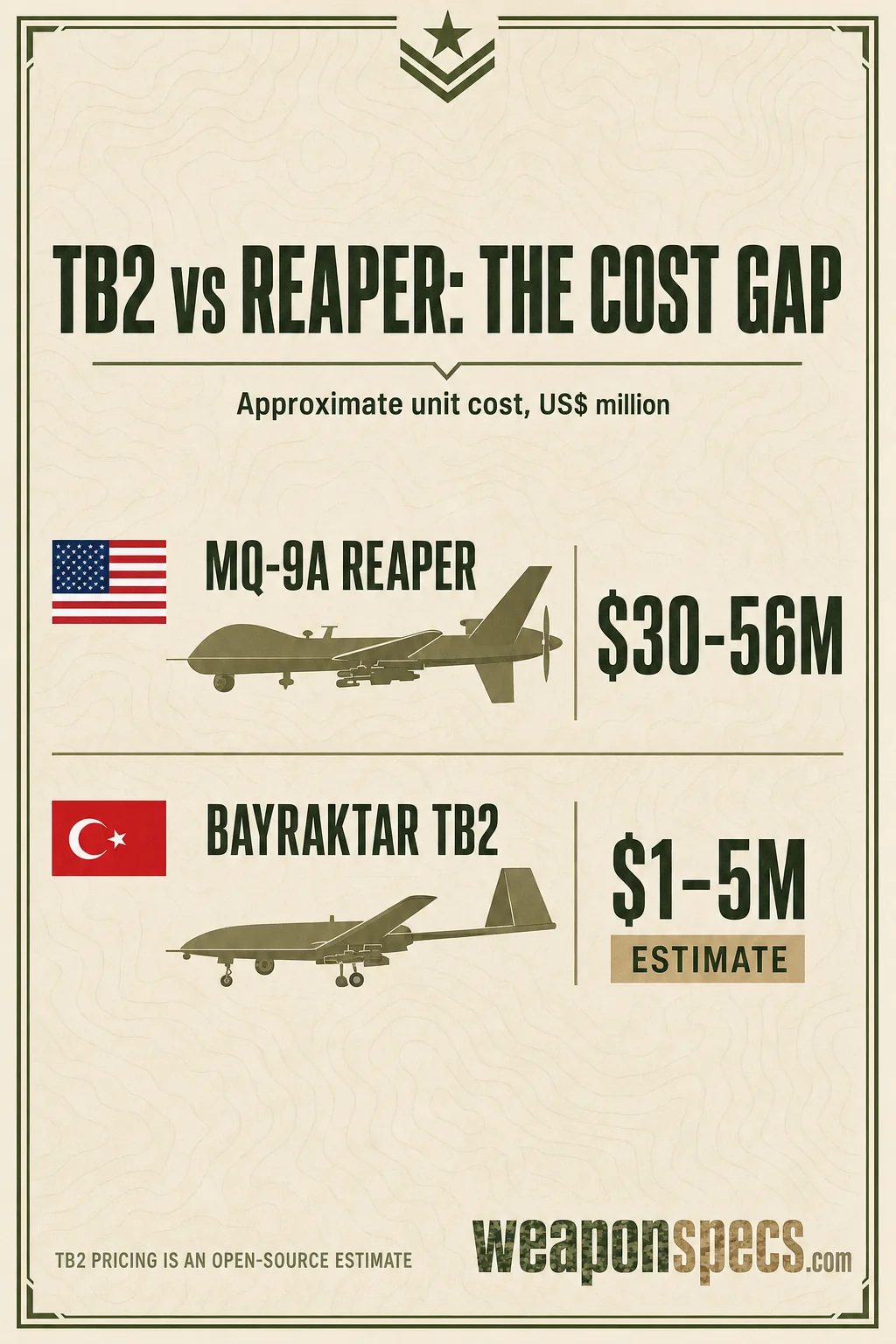
| Approx. unit cost | ~$1-5 million (system-dependent, public estimates) | ~$30-56 million (publicly disclosed program figures) |
| Known/reported operators | 30+ countries (Ukraine, Azerbaijan, Turkey, several African and Gulf states) | U.S. and a short list of vetted allies (UK, France, Italy, Spain, Australia, India, among others) |
The roughly 11x cost gap matters less than the export-approval gap behind it: Reaper sales stay gated to vetted allies while the cheaper TB2 has reached 30-plus countries.
Treat every TB2 figure as a manufacturer-published or open-source estimate rather than an audited number, Baykar doesn’t publish pricing with the granularity the Pentagon does for the Reaper, and system cost varies heavily with ground stations, munitions load, and support packages bundled into a given deal.
Payload and altitude: no contest, by design
If this were purely a payload-and-ceiling comparison, it would be over in a paragraph. The Reaper flies nearly twice as high and carries more than ten times the ordnance of a TB2, giving it standoff distance from short-range air defenses and the ability to hold multiple target types, Hellfires for precision strikes, JDAMs for larger effects, even air-to-air missiles on newer configurations. The TB2’s MAM-series munitions are purpose-built miniatures: light enough for a small airframe to carry four of them, but nowhere near the effect of a 500-pound-class JDAM.
That gap is real and it matters for high-end warfighting against a peer with serious air defenses. It matters much less for the missions most TB2 operators actually fly, strikes against armor, artillery, and troop concentrations in conflicts where the opposing side doesn’t have a layered, modern integrated air defense network capable of reliably reaching an 18,000-foot loiter altitude.
Combat record: both have receipts
Neither drone is a paper airplane. The Reaper has flown thousands of hours in U.S. counterterrorism and strike operations across multiple theaters since the mid-2000s, backed by a mature kill chain, satellite relay, and years of doctrine refinement. It’s the platform other countries’ Reaper-class ambitions are measured against.
The TB2’s combat record is younger but arguably more geopolitically disruptive. Public reporting credits TB2s with playing a visible role in the 2020 Nagorno-Karabakh conflict, in Libya’s civil war, and, most prominently, in the early phase of Russia’s invasion of Ukraine, where TB2 strikes against armored columns and air-defense systems were widely covered and, per Ukrainian officials, credited with real battlefield effect before more advanced air defenses and jamming reduced their effectiveness later in the war. That evolution is itself instructive: cheap tactical drones are potent against under-defended targets and progressively less effective as the opposing side adapts its air defense and electronic warfare posture, a pattern worth remembering rather than a permanent verdict on the platform.
Export success: the TB2’s actual competitive advantage
This is where the TB2 doesn’t just compete with the Reaper, it operates in a market the Reaper mostly can’t reach. U.S. export policy on MALE-class armed drones has historically been restrictive, gating Reaper sales to a short list of vetted, typically NATO-aligned partners after lengthy approval processes. Turkey applied no such constraint to the TB2, selling it, per public reporting and Baykar’s own disclosures, to more than 30 countries across Eastern Europe, the Caucasus, the Middle East, Africa, and Central Asia.
That access gap, not raw capability, is arguably the single biggest reason the TB2 became a geopolitical phenomenon rather than a footnote. A country that will never clear the political and financial bar for a Reaper can clear the bar for a TB2 squadron, and for many air forces, a TB2 with persistent overwatch and precision strike is a categorical upgrade over having no armed drone capability at all.
What a buyer should actually pick
If the mission is high-altitude, long-range, heavy-payload strike against a capable adversary, and the budget and export approvals exist, the MQ-9 Reaper remains the more capable platform, full stop. Its altitude keeps it above most short-range air defenses, its payload variety covers everything from precision anti-armor to larger-effect munitions, and its endurance supports genuinely persistent overwatch.
For everyone else, which, numerically, is most of the world’s militaries, the calculus favors the TB2 or a comparable tactical UCAV. It’s not about matching the Reaper’s spec sheet; it’s about fielding an armed drone capability at all, at a price and export pathway that a mid-sized air force can actually clear. Buyers should also look past the airframe list price to sustainment: the TB2’s simpler logistics footprint and lower attrition cost matter as much as unit price when you’re planning to fly it into contested airspace and might lose a few.
The bottom line
The Bayraktar TB2 and MQ-9 Reaper answer different questions. The Reaper answers “how do we hold a target at range with a heavy weapons load for a full day,” a mission built for a superpower’s global strike posture. The TB2 answers “how do we get an effective, exportable armed drone into the hands of a military that can’t buy or afford a Reaper”, and it answered that question so well it reshaped who gets to fight with drones in the first place. Buyers shouldn’t ask which one is objectively better; they should ask which mission and budget they’re actually solving for.
Run the Bayraktar TB2 vs. MQ-9A Reaper breakdown yourself on WeaponSpecs, browse the full UAV class field to see where other combat drones land on cost and capability, or let the Advisor tool weigh the tradeoffs against your own mission profile. For more head-to-head breakdowns like this one, check the WeaponSpecs articles.
Systems in this comparison
Every system covered above, with its photo and, where available, a video. Tap a card to open the full spec sheet.
Compare these side by side →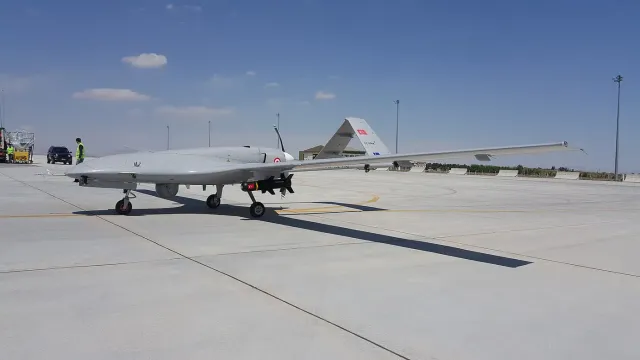
UAV / drone
Bayraktar TB2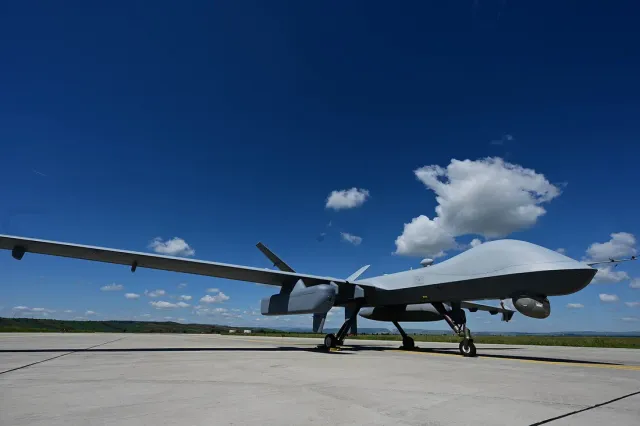
UAV / drone
MQ-9A Reaper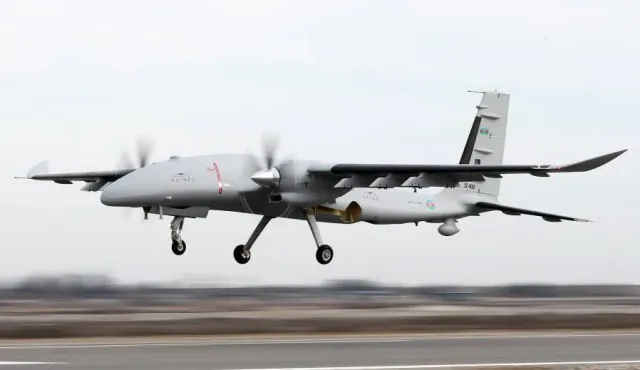
UAV / drone
Bayraktar AkinciFrequently asked questions
Is the Bayraktar TB2 better than the MQ-9 Reaper? +
Not in raw capability, the Reaper flies farther, carries more, and hits harder. But 'better' depends on the buyer's mission and budget. For nations that can't afford or can't access a Reaper-class MALE, the TB2 delivers real combat effect at a fraction of the cost and export friction.
How much cheaper is the TB2? +
Public estimates put a Bayraktar TB2 system around $1-5 million per aircraft depending on configuration, versus roughly $30-56 million publicly disclosed unit cost for an MQ-9 Reaper. Figures vary by source and package, but the gap is generally an order of magnitude, not a marginal discount.
Why is the Bayraktar TB2 so popular? +
It's cheap, exportable without the restrictions that gate U.S. MALE drone sales, combat-proven in multiple conflicts, and simple enough for smaller air forces to operate and sustain. That combination, not raw performance, is why dozens of countries have bought it.
What is the range of the MQ-9 Reaper? +
The MQ-9A Reaper has a publicly cited range of roughly 1,850 km and an endurance around 27 hours unarmed, or about 14 hours with a full weapons and fuel load, per General Atomics and USAF figures, well beyond the TB2's stated envelope.
Are these drones in the same class? +
No. The MQ-9 is a heavier MALE (Medium-Altitude Long-Endurance) hunter-killer built for persistent, long-range missions. The TB2 is a lighter tactical UCAV designed for shorter-range strike and reconnaissance at a fraction of the size, cost, and altitude ceiling.
Related reading


